Deadlines & Filing
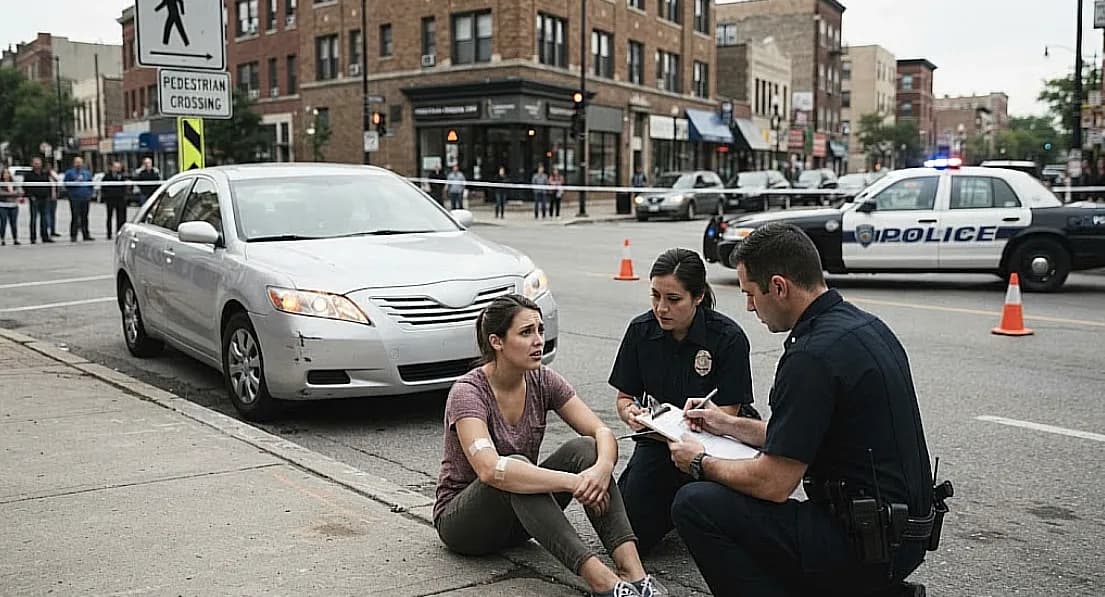
A pedestrian accident can result in serious injuries, medical expenses, lost income, and long-term consequences. Learn how pedestrian accident claims generally work, when a driver or another party may be liable, how right-of-way and comparative negligence can affect a case, and what evidence can help prove what happened. This guide also covers crosswalk accidents, parking-lot crashes, hit-and-run collisions, uninsured and underinsured motorist coverage, insurance claims, wrongful death, government liability, statutes of limitations, common defenses, and when a personal injury lawyer may be helpful.
Walking is one of the simplest ways to get around, but pedestrians are also among the most vulnerable people using public roads. Unlike occupants inside a vehicle, pedestrians have little physical protection when they are struck by a car, truck, motorcycle, or other vehicle. A collision that might result in relatively minor vehicle damage can cause devastating injuries to a pedestrian accident.
According to the National Highway Traffic Safety Administration, 7,080 pedestrians were killed and more than 71,000 were injured in traffic crashes in the United States in 2024.
When a pedestrian is injured because another person acted negligently or violated a legal duty, the injured person may have the right to pursue compensation. A pedestrian accident claim can involve medical expenses, lost income, pain and suffering, permanent disability, and other losses recognized by applicable law.
However, liability is not automatic. The fact that a vehicle struck a pedestrian does not by itself establish that the driver was legally responsible for every resulting loss. The circumstances of the collision matter, including traffic signals, right-of-way rules, driver behavior, visibility, road conditions, pedestrian conduct, and evidence showing what happened.
Pedestrian accident claims can also become complicated when the driver leaves the scene, lacks sufficient insurance, the accident occurs on private property, a dangerous roadway condition contributes to the crash, or multiple parties may share responsibility.
This guide explains how pedestrian accident claims generally work in the United States, who may be responsible, what evidence can help establish liability, what compensation may be available, how insurance claims work, and what an injured pedestrian should know before pursuing a legal claim.

A pedestrian accident claim is a legal claim arising from an accident in which a person walking or otherwise acting as a pedestrian is injured or killed.
Most claims against a negligent driver are based on some form of negligence. Generally, negligence involves failing to exercise the level of reasonable care required under the circumstances and causing harm to another person.
A pedestrian accident may involve allegations that a driver:
A pedestrian may potentially have a claim even when the collision occurs outside a traditional crosswalk. At the same time, pedestrian conduct can become relevant to determining fault, and state traffic and negligence laws differ.
The central legal questions are generally whether the defendant owed a duty, breached that duty, caused the accident, and caused legally compensable harm.
Pedestrian crashes remain a significant road-safety issue in the United States.
NHTSA reported 7,080 pedestrian fatalities and more than 71,000 pedestrian injuries from traffic crashes in 2024.
NHTSA's pedestrian-safety information also emphasizes that everyone using the road has responsibilities, including drivers and pedestrians.
These statistics do not determine liability in an individual accident. Every claim still depends on its particular facts.
A pedestrian collision can happen at an intersection, in a parking lot, on a residential street, in a driveway, near a school, outside a business, or in another location where vehicles and pedestrians interact.
Pedestrian accidents can result from many different circumstances.
A driver may fail to yield when a pedestrian has the right of way under applicable traffic law.
This can happen when a vehicle turns across a pedestrian's path, enters a crosswalk, or approaches an intersection without properly observing surrounding traffic.
The precise right-of-way rules vary by jurisdiction, so the circumstances should be evaluated under the law governing the location of the accident.
Distracted driving can prevent a driver from seeing a pedestrian in time to avoid a collision.
Distractions may involve:
Evidence of distraction can become important when determining whether the driver acted reasonably.
A driver traveling too quickly may have less time to identify a pedestrian and react.
Speed can also affect the severity of an impact.
NHTSA identifies speeding as one of the major behavioral factors associated with traffic crashes generally, while pedestrian-safety data also show the seriousness of collisions involving vulnerable road users.
A speeding violation can provide evidence relevant to negligence, although the legal effect depends on state law and the circumstances.
Alcohol or drugs can impair reaction time, attention, judgment, and coordination.
When an impaired driver strikes a pedestrian, the criminal consequences and civil consequences are separate issues.
A criminal prosecution may result from impaired driving, while the injured pedestrian may separately pursue compensation through an insurance claim or civil lawsuit.
A criminal conviction is not necessarily required for a pedestrian to pursue a civil negligence claim.
Pedestrians can be particularly vulnerable when vehicles turn through intersections or across driveways and other pedestrian paths.
A driver may be required to look for pedestrians and follow applicable right-of-way rules before completing a turn.
Evidence such as traffic-camera footage, surveillance video, witness statements, and vehicle data can help establish what occurred.
Nighttime conditions, weather, inadequate lighting, glare, parked vehicles, construction equipment, and other circumstances can affect visibility.
Poor visibility does not automatically establish that either the driver or pedestrian was negligent.
The issue is generally whether the parties acted reasonably given the conditions.
A driver who ignores a red light or stop sign may create a significant risk to pedestrians and other road users.
Traffic-camera recordings, witness statements, police reports, vehicle data, and photographs can sometimes help establish what traffic signal was displayed at the time of the collision.
Pedestrian accidents can occur almost anywhere vehicles and people share space.
Intersections are common locations for pedestrian and vehicle conflicts.
Crashes can involve:
The signal sequence and positions of the vehicles and pedestrian can become important evidence.
Crosswalk accidents can involve disputes about whether a pedestrian had the right of way and whether the driver was required to yield.
Crosswalk rules vary by jurisdiction, and pedestrians can also have legal responsibilities under state and local traffic laws.
The existence of a marked crosswalk can therefore be highly relevant but does not eliminate the need to examine the entire situation.
Pedestrian accidents do not have to occur on public streets.
Parking lots can involve pedestrians walking between vehicles, drivers backing out of spaces, delivery vehicles, poor visibility, inadequate lighting, and other hazards.
Depending on the location and circumstances, a claim might involve the driver, property owner, business operator, or another potentially responsible party.
A pedestrian can be injured when a vehicle enters or leaves a residential or commercial driveway.
Backing accidents can be especially dangerous because the driver may have limited visibility.
Evidence can include security-camera footage, vehicle-camera recordings, witness accounts, and damage patterns.
Residential areas can involve children, cyclists, pedestrians, parked vehicles, driveways, and vehicles traveling at different speeds.
A driver remains responsible for exercising reasonable care under the circumstances.
No simple nationwide rule answers every pedestrian right-of-way question.
Traffic laws governing pedestrians and vehicles are primarily established by state and local law.
Pedestrians may have a right of way in certain circumstances, such as when lawfully crossing at a controlled or appropriately governed location, but pedestrians also have legal duties under many state traffic codes.
NHTSA advises pedestrians to follow applicable rules of the road and obey signs and signals.
The precise rule depends on where the accident happened.
For example, a pedestrian's legal position can differ depending on whether the person was:
The fact that a pedestrian was not in a marked crosswalk does not automatically answer the negligence question. The applicable state and local laws must be considered.
Yes.
A pedestrian's conduct can become part of the liability analysis.
For example, a driver may argue that the pedestrian:
The effect of pedestrian fault depends on the state's negligence system.
Many states use comparative negligence, which can reduce a plaintiff's recovery according to the plaintiff's percentage of fault. Other states apply modified comparative negligence or contributory negligence rules.
Under comparative negligence, for example, a pedestrian who is assigned some percentage of responsibility may still be able to recover damages, although the amount may be reduced under the applicable law.
Because states use different approaches, an injured pedestrian should not assume that being partly responsible automatically eliminates a claim or that it will have the same effect everywhere.
Comparative negligence is a legal system for allocating responsibility among parties who contributed to an injury.
Suppose a pedestrian suffers $100,000 in legally recoverable damages and a court determines that the pedestrian was 20% responsible for the accident.
Under a pure comparative-negligence system, the pedestrian might recover $80,000.
But states differ. Some jurisdictions limit recovery when a plaintiff's percentage of fault reaches a specified threshold, while others follow different rules.
The exact calculation depends on the law governing the claim.
This makes statements such as "the pedestrian was partially at fault, so there is no case" legally unreliable without knowing the jurisdiction and facts.
The driver is often the first person considered, but the driver is not necessarily the only potentially responsible party.
Depending on the facts, a claim might involve:
Multiple parties can potentially share responsibility for a single accident.
For example, a pedestrian could be struck in an area where a driver's negligence and a dangerous roadway condition both contributed to the collision.
Determining responsibility requires examining the facts and applicable law.
Potentially, depending on the circumstances and state law.
The legal relationship between the driver and vehicle owner can matter.
Questions may include:
A vehicle owner's liability is therefore not automatically identical to the driver's liability.
If the driver was performing work-related duties when the accident occurred, an employer may potentially face liability under principles such as vicarious liability.
For example, a delivery driver, commercial driver, or employee traveling as part of work may create questions about whether the employer is legally responsible for the employee's conduct.
The answer depends on the employment relationship, what the driver was doing, and the applicable state law.
Independent contractors can raise different legal questions.
Sometimes the collision is not caused entirely by driver behavior.
A dangerous roadway condition might contribute to an accident.
Examples include:
Claims involving government entities can be particularly complicated because special statutes, procedures, immunities, and notice requirements may apply.
The identity of the entity responsible for maintaining the road or signal should be established before assuming that a government claim exists.
Potentially.
Suppose a pedestrian is struck in a store parking lot.
There may be several possible questions:
A business is not automatically responsible for every accident occurring on its property.
The legal claim must be connected to a duty and a legally actionable failure.
Evidence can make a substantial difference in determining what happened.
Photographs can document:
The scene can change quickly, so photographs taken close to the time of the accident may be valuable.
Businesses, residences, traffic authorities, parking facilities, and other locations may have cameras.
Video can sometimes show:
Because some surveillance systems automatically overwrite old recordings, identifying potentially relevant video promptly can be important.
Independent witnesses can provide information about:
Witness information should be preserved as soon as reasonably possible.
A police report may contain information concerning the accident, including statements, observations, diagrams, citations, and identifying information.
However, a police report is not necessarily the final word on civil liability.
A civil case can involve evidence that was not available to officers at the scene.
Medical records can establish the nature of injuries and treatment.
They may document:
Medical evidence can also become important when the defendant disputes whether a particular injury was caused by the accident.
If it is safe and practical, documenting the scene can be useful.
An injured pedestrian or someone assisting them may photograph:
The goal is not to conduct a complete accident investigation personally.
It is to preserve basic information that may later change.
The first priority is obtaining emergency assistance and medical care.
Once immediate safety concerns have been addressed, an injured pedestrian may consider the following steps:
A person should not delay emergency medical treatment simply to gather evidence.
Pedestrian collisions can cause serious injuries even when the injured person initially feels relatively well.
Some injuries may not be immediately obvious.
Medical professionals can evaluate the person's condition and determine whether additional testing or treatment is necessary.
Medical records can also provide contemporaneous documentation of the injuries.
That does not mean someone should seek unnecessary treatment for the purpose of creating a legal claim. Medical care should be based on actual health needs.
If a pedestrian establishes legal liability, compensation may potentially include several categories of damages.
These can include reasonable and legally recoverable costs associated with treatment of accident-related injuries.
Depending on the case, damages may involve:
The rules for recovering future medical expenses vary by jurisdiction and evidence.
A serious pedestrian injury may prevent someone from working.
Lost-income damages can potentially compensate for qualifying wages that the injured person could not earn because of the accident.
Evidence may include:
A permanent injury can affect a person's ability to earn income in the future.
This is different from simply calculating wages already missed.
For example, an injury could prevent someone from returning to the same occupation or reduce their ability to work full-time.
Calculating diminished earning capacity can require detailed evidence about the person's work history, education, skills, medical limitations, and expected future employment.
Many states permit damages for pain and suffering in appropriate personal injury cases.
These damages are generally intended to compensate for non-economic harm associated with the injury.
The value of such damages cannot be determined from a universal formula because state law and individual circumstances differ.
A pedestrian may suffer permanent disability, scarring, disfigurement, loss of mobility, or other lasting consequences.
Such injuries can affect employment, relationships, daily activities, and quality of life.
The legal treatment of these losses varies by jurisdiction.
A fatal pedestrian accident may result in a wrongful-death claim and potentially other legal claims.
Who can bring a wrongful-death action, what damages can be recovered, and how those damages are distributed depend largely on state law.
Potential damages may involve certain funeral expenses, financial losses, loss of support, loss of companionship, or other legally recognized categories.
Some states also recognize survival claims for damages belonging to the deceased person's estate.
Because wrongful-death law is highly state-specific, family members should determine the applicable rules promptly after a fatal accident.
A pedestrian accident can become more complicated when the driver leaves without providing identifying information.
A hit-and-run investigation may involve:
An injured pedestrian should report the accident promptly.
Insurance coverage can also become an important issue if the driver cannot be identified.
Potentially.
Depending on the applicable insurance policy and state law, uninsured or underinsured motorist coverage may provide benefits in some pedestrian accident situations.
Uninsured-motorist coverage can potentially apply when the at-fault driver has no applicable liability insurance.
Underinsured-motorist coverage can potentially become relevant when the responsible driver's available insurance is insufficient to cover qualifying losses.
Whether coverage applies to a pedestrian, how much coverage exists, and what procedures must be followed depend on the policy, jurisdiction, and circumstances.
An injured pedestrian should review all potentially applicable insurance policies rather than assuming only the driver's policy matters.
An insurance claim may begin with notification of the accident and submission of supporting documentation.
The insurer may investigate:
The insurer may request medical records, bills, statements, photographs, employment records, or other information.
An insurance investigation is not the same thing as a court proceeding.
If liability or damages remain disputed, the injured pedestrian may eventually need to consider litigation.
An insurance company may request a statement about the accident.
Before providing a recorded statement, an injured person should understand:
A recorded statement can become part of the evidence in a later dispute.
An injured person should answer truthfully and avoid guessing about facts they do not know.
Yes.
Many personal injury claims are resolved through negotiation rather than a trial.
A settlement can potentially resolve issues involving:
A settlement agreement generally involves the injured person releasing specified claims in exchange for agreed compensation.
Because a release can have significant legal consequences, an injured person should understand what claims are being released before signing.
A settlement may also affect liens, medical bills, insurance claims, or other obligations.
If negotiations do not resolve the dispute, a lawsuit may be filed when legally appropriate.
A civil case may involve:
The actual process varies by jurisdiction and case.
During discovery, the parties may exchange documents, written questions, admissions, and other evidence.
Depositions can allow attorneys to question witnesses under oath before trial.
If the case reaches trial, the plaintiff generally has the burden of proving the elements of the claim under the applicable civil standard.
There is no single nationwide statute of limitations for every pedestrian accident claim.
The deadline generally depends on the state where the claim arises, the legal theory involved, the identity of the defendant, and other circumstances.
Statutes of limitations establish deadlines for filing certain legal actions, and missing an applicable deadline can prevent a claim from proceeding. The specific limitations period can vary substantially depending on the type of action and jurisdiction.
Special rules can apply to:
Because exceptions and special rules can be complicated, an injured pedestrian should determine the applicable deadline promptly.
Potentially, but government claims can be substantially different from ordinary claims against private individuals.
Suppose a pedestrian is injured because of an allegedly dangerous intersection, defective traffic signal, roadway condition, or sidewalk.
A claim may potentially involve a city, county, state, or other government entity.
Government defendants may have special legal protections, notice requirements, procedural deadlines, and limitations on liability.
Some government claims require an administrative claim or other notice before a lawsuit can be filed.
The rules vary by jurisdiction, so an injured pedestrian should investigate government-claim requirements quickly.
Being struck in a crosswalk can provide important evidence concerning the accident, but the legal analysis still depends on the circumstances and applicable law.
Relevant evidence may include:
A driver who failed to yield when required by applicable law may face significant liability issues.
However, the precise right-of-way rules must be determined under the law of the location where the collision occurred.
Crossing outside a marked crosswalk does not necessarily answer every liability question.
A pedestrian's location and conduct can be relevant to fault, but the driver may still have independent duties under applicable traffic and negligence law.
For example, a driver may still be required to exercise reasonable care under the circumstances.
The legal effect of crossing outside a crosswalk varies by state.
An injured pedestrian should therefore avoid assuming that being outside a marked crosswalk automatically eliminates a claim.
Accidents involving children can involve additional legal considerations.
Children may not be held to exactly the same standard of conduct as adults under every state's negligence law.
Special rules can apply to child trespassers, including doctrines concerning attractive nuisances.
The child's age, understanding, conduct, location, and the defendant's conduct can all become relevant.
Parents or guardians should obtain appropriate medical attention and preserve evidence after a serious accident involving a child.
A driver or insurer may raise several defenses.
The defendant may argue that the pedestrian violated a traffic rule or acted unreasonably.
The effect depends on the state's negligence law.
A driver may argue that the pedestrian entered the roadway suddenly and that the collision could not reasonably have been avoided.
Evidence concerning speed, visibility, distance, lighting, and reaction time can become important.
The defendant may argue that reasonable care would not have prevented the collision.
Whether that argument succeeds depends on the evidence.
A driver may argue that another vehicle, pedestrian, road condition, or third party was responsible.
Multiple parties can sometimes share fault.
The defendant or insurer may dispute causation.
Pre-existing conditions can become relevant, but having a prior medical condition does not automatically prevent an injured person from recovering for a new injury or aggravation when the applicable law recognizes such damages.
Medical evidence can become critical.
Some injuries are not immediately obvious.
Appropriate medical evaluation should not be delayed simply because symptoms initially appear manageable.
Conditions can change rapidly.
Photographs, video, witness information, and other evidence can become harder to obtain later.
Social-media posts, photographs, comments, or videos can potentially become relevant evidence in litigation.
An injured person should be cautious about posting statements that contradict medical records, accident reports, or later claims.
An early settlement offer may arrive before the full extent of an injury is known.
A person should understand the long-term consequences of signing a release before accepting a settlement.
There may be multiple potentially relevant policies.
The driver's liability insurance may not be the only possible source of coverage.
Waiting can make investigation more difficult and can create problems if the applicable statute of limitations or notice deadline is shorter than expected.
Not every pedestrian accident requires a lawsuit or attorney.
A legal consultation may be particularly useful when:
A personal injury lawyer can investigate the accident, identify potentially responsible parties, evaluate evidence, communicate with insurers, calculate damages, negotiate a settlement, and pursue litigation when appropriate.
The decision to hire an attorney should depend on the circumstances of the particular claim.
You do not need a perfectly organized case before consulting an attorney.
If available, useful materials may include:
A lawyer can help identify additional evidence that may be necessary.
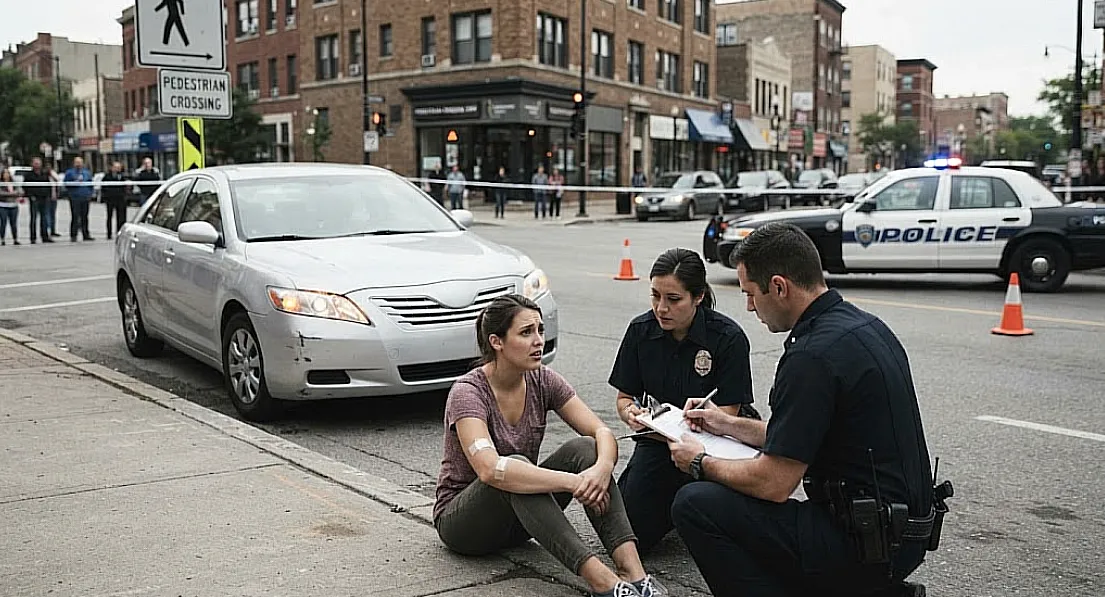
A pedestrian accident can cause serious physical, financial, and emotional consequences, particularly because pedestrians have little physical protection when struck by a vehicle. NHTSA reported 7,080 pedestrian deaths and more than 71,000 pedestrian injuries in U.S. traffic crashes during 2024.
When a pedestrian is injured because another person or entity acted negligently, the injured person may have a personal injury claim. Depending on the circumstances, potential defendants can include drivers, vehicle owners, employers, businesses, property owners, contractors, government entities, or other responsible parties.
However, liability is never determined simply by looking at who was hit.
The investigation may need to examine traffic signals, crosswalks, right-of-way rules, driver behavior, pedestrian conduct, road conditions, visibility, witness statements, video footage, vehicle evidence, and other circumstances surrounding the collision.
A pedestrian's own conduct can also affect the claim. Depending on state law, comparative or contributory negligence rules may reduce or otherwise affect the injured person's ability to recover damages.
Potential compensation can include medical expenses, lost wages, diminished earning capacity, pain and suffering, disability, disfigurement, and other legally recognized losses. In fatal accidents, state wrongful-death and survival laws may allow certain family members or an estate to pursue additional claims.
Insurance coverage is another important part of many pedestrian accident cases. The at-fault driver's liability insurance may be relevant, while uninsured or underinsured motorist coverage can potentially provide another source of recovery depending on the policy and applicable law.
Timing matters as well. There is no single nationwide statute of limitations for pedestrian accident lawsuits, and special deadlines may apply to claims involving government entities or other circumstances.
Anyone injured in a pedestrian accident should prioritize medical care, preserve available evidence, identify witnesses, document the accident scene when safe, and avoid assuming that liability or compensation is automatic.
Because pedestrian accident law varies from state to state, particularly concerning right of way, comparative negligence, insurance coverage, government liability, and filing deadlines, a person with significant injuries or a disputed claim should consider consulting a qualified personal injury attorney familiar with the applicable jurisdiction.
This article provides general legal information and is not a substitute for legal advice about a specific accident or claim.
