Deadlines & Filing
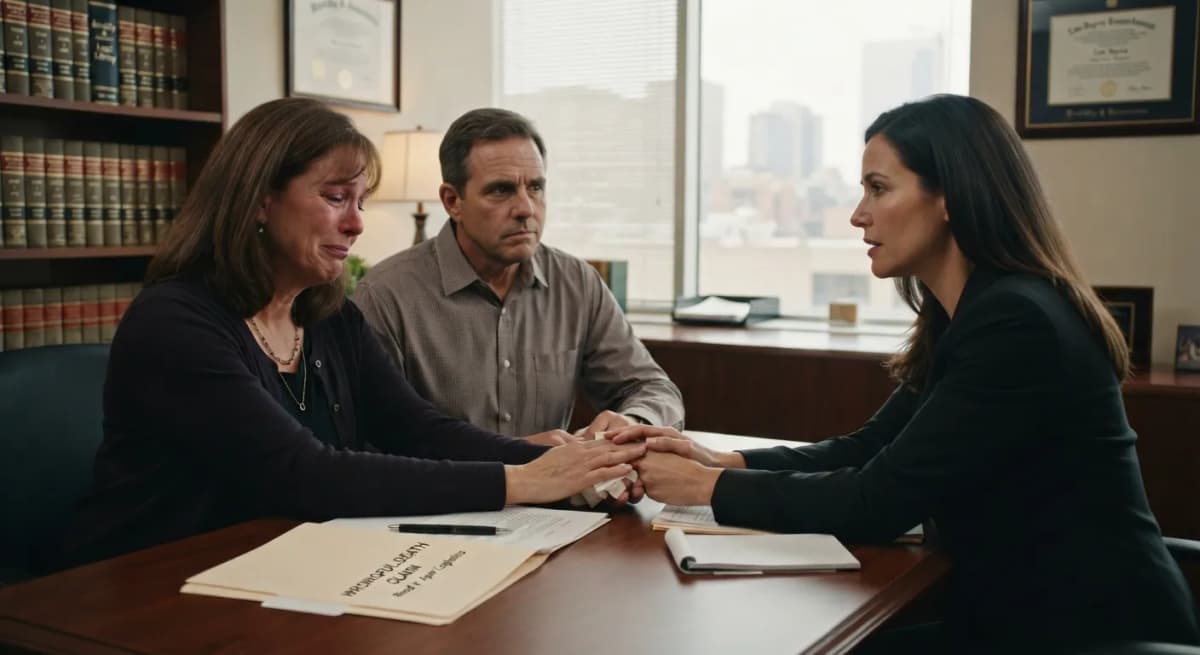
Wrongful death occurs when a person's death is caused by another person's alleged negligence, wrongful conduct, or legally actionable behavior. Learn who may be able to file a wrongful death claim, what must generally be proven, common causes of wrongful death, available damages, survival actions, insurance claims, settlements, statutes of limitations, and how wrongful death lawsuits work. Find out what families should do after a wrongful death and when legal representation may be appropriate.
Losing a family member is difficult under any circumstances, but a wrongful death caused by another person's negligence, wrongful conduct, or unlawful actions can create additional legal and financial challenges. Families may have to deal with funeral expenses, lost income, medical bills, insurance claims, and other losses while also trying to understand whether they have a legal claim.
A wrongful death claim is a civil lawsuit brought when a person's death is allegedly caused by another person's or organization's wrongful act, negligence, or other legally actionable conduct. These claims are governed primarily by state law, which means the rules concerning who may sue, what must be proven, what damages are available, and how long a family has to file can vary considerably across the United States.
Wrongful death can arise from many situations, including motor vehicle crashes, medical malpractice, unsafe premises, defective products, workplace incidents, and other forms of negligence. In some circumstances, the same incident may also result in a criminal investigation or prosecution. A civil wrongful death case, however, is separate from a criminal case and has different legal standards and purposes.
Understanding the basics can help families recognize what questions need to be addressed after a death. This guide explains what wrongful death means, who may be able to file a claim, what must generally be established, what damages may be available, how wrongful death differs from a survival action, how insurance and settlements work, and when legal assistance may be appropriate.
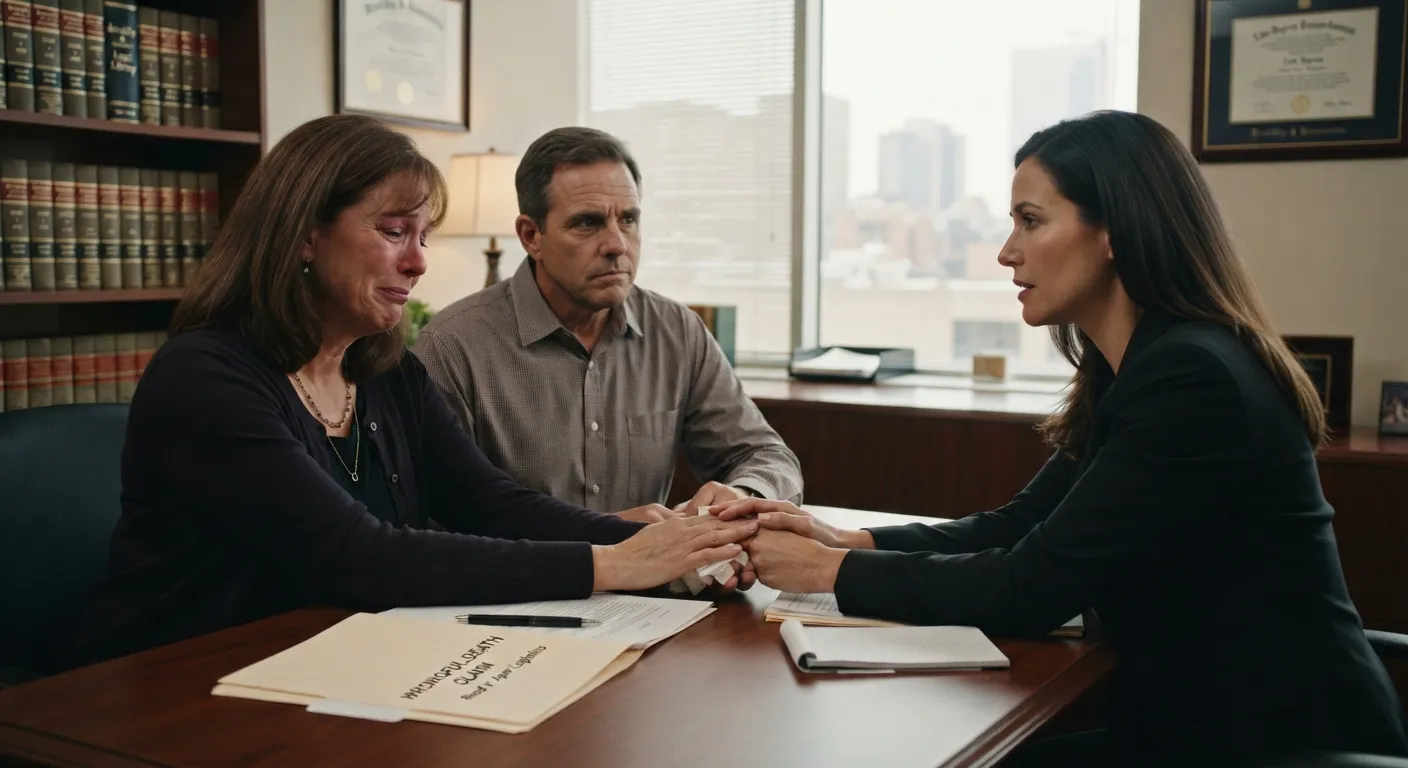
Wrongful death is generally a civil cause of action that allows certain surviving family members, beneficiaries, or representatives to seek compensation when another person's wrongful conduct causes a death.
The underlying conduct can involve negligence, an intentional act, or another legally recognized basis for liability. Cornell Law School's Legal Information Institute explains wrongful death as a civil cause of action generally brought by family members or dependents against individuals whose knowing or negligent conduct caused another person's death.
For example, a wrongful death claim might arise after:
The precise legal requirements depend on the applicable state's wrongful death statute and other relevant laws.
The term "wrongful" does not necessarily mean that the defendant committed a crime. A person or company can potentially face civil liability even when no criminal charges are filed or when criminal charges do not result in a conviction. Civil cases generally use a lower burden of proof than criminal prosecutions.
A wrongful death lawsuit is a civil matter, while homicide charges are generally criminal matters.
The two can arise from the same incident but serve different purposes.
A criminal case is brought by the government against an accused person. Depending on the offense, potential consequences can include imprisonment, fines, probation, or other criminal penalties.
A wrongful death lawsuit is generally brought by legally eligible survivors or an authorized representative seeking compensation for losses resulting from the death.
The standards of proof are also different. Criminal prosecutors generally must prove the required elements of the offense beyond a reasonable doubt. Civil plaintiffs generally must satisfy the applicable civil burden of proof, often described as a preponderance of the evidence.
As a result, a person can potentially be found civilly liable for wrongful death even if criminal charges were never filed or the defendant was acquitted in a criminal case.
Likewise, the existence of a criminal investigation does not necessarily prevent a family from pursuing a civil claim.
This is one of the most important questions, and there is no single nationwide answer.
Wrongful death statutes determine which surviving relatives, beneficiaries, or representatives may bring a claim. States generally identify eligible claimants through their statutes, and those rules can differ.
A surviving spouse and children are commonly included among people who may have rights under wrongful death laws. Depending on the state, eligible claimants may also include parents, other relatives, dependents, or individuals who can establish a qualifying relationship with the deceased.
Some states organize the claim around a personal representative of the deceased person's estate, while others allow specified surviving family members to bring the claim directly.
The order of priority can also matter. For example, a surviving spouse may have rights that take priority over more distant relatives.
Because eligibility is state-specific, families should not assume that being related to the deceased automatically gives someone the right to file a wrongful death lawsuit.
In some wrongful death cases, the deceased person's estate or personal representative plays an important role.
A personal representative may be called an executor, administrator, or another title depending on state law and the circumstances of the estate.
The personal representative's role can include handling claims belonging to the estate and taking legal steps required under state law. However, the exact relationship between an estate claim and a wrongful death claim differs among jurisdictions.
This distinction matters because not every claim arising from a person's death necessarily belongs to the same person or entity.
For example, a wrongful death statute may provide a claim for certain survivors' losses, while a separate survival action may preserve claims that belonged to the deceased person before death.
Families should therefore determine whether they are dealing with a wrongful death claim, a survival action, an estate claim, or more than one type of legal proceeding.
The elements of a wrongful death claim depend on the applicable state law and the underlying conduct.
When the case is based on negligence, the plaintiff generally needs to establish concepts similar to those found in an ordinary negligence claim.
These may include:
The precise elements and terminology can vary.
For example, in a fatal car accident case, the family might argue that the driver owed a duty to operate the vehicle reasonably, breached that duty by driving negligently, and caused the collision that resulted in the person's death.
In a medical malpractice case, the applicable professional standard and medical causation requirements may be more complicated.
In a defective-product case, product liability principles rather than ordinary negligence may provide the legal basis for the claim.
The family therefore needs to identify both what happened and which legal theory applies.
Wrongful death claims can arise from many different circumstances.
Fatal motor vehicle crashes are a common setting for wrongful death claims.
A case may involve allegations of:
Evidence can include police reports, photographs, video footage, vehicle data, witness statements, medical records, and accident reconstruction evidence.
A death may potentially support a wrongful death claim when a healthcare provider's negligence causes fatal harm.
Potential allegations can involve:
Medical wrongful death cases can be particularly complex because the plaintiff may need qualified medical evidence to establish the applicable standard of care and causation.
State medical malpractice laws may also impose special procedural requirements, deadlines, expert-review requirements, or damage limitations.
Property owners, landlords, businesses, and other parties may sometimes face liability when dangerous property conditions contribute to a fatal accident.
Examples can include:
Whether liability exists depends on the property's circumstances, the defendant's legal duty, notice of the danger, causation, and state premises-liability law.
A manufacturer, distributor, seller, or another party may potentially face product-liability claims when a defective product causes a fatal injury.
A case may involve a:
Product-liability laws vary by jurisdiction, and determining who can be sued may require tracing the product's distribution and identifying the legal theory involved.
A fatal workplace incident may lead to workers' compensation benefits as well as other potential claims depending on the circumstances.
Workers' compensation laws generally provide benefits to eligible employees and surviving family members following covered workplace deaths, but workers' compensation does not necessarily eliminate every possible claim against every third party.
For example, a fatal workplace accident could potentially involve an employer, equipment manufacturer, subcontractor, property owner, or another third party.
The interaction between workers' compensation and third-party liability is highly dependent on state law and the facts.
Damages in wrongful death cases vary by state and by the circumstances of the death.
The purpose is generally to compensate legally recognized losses resulting from the person's death rather than simply assign a monetary value to the life itself.
Potential damages can include economic and noneconomic losses.
Some wrongful death laws permit recovery of reasonable funeral, burial, or related expenses.
These costs may be significant, particularly when the death follows a serious accident requiring emergency treatment before death.
Depending on the applicable law and whether the claim is part of a wrongful death action or survival action, medical expenses incurred before death may be recoverable.
The distinction between survivor damages and estate damages can matter, so families should determine which claim is being pursued.
A wrongful death can eliminate income and financial support that surviving family members depended upon.
Depending on state law, damages may consider the deceased person's earnings, expected future contributions, benefits, and other financial support.
Courts may consider factors such as age, occupation, income history, expected working life, and the relationship between the deceased and surviving dependents.
Some wrongful death laws permit recovery for the value of services the deceased would have provided to family members.
Those services could include household assistance, childcare, or other contributions recognized by applicable law.
Many states allow some form of compensation for noneconomic losses such as loss of companionship, society, guidance, or similar relationship-based harms. However, the terminology and availability of these damages vary by state.
Some jurisdictions permit compensation for emotional or psychological losses resulting from the death.
The rules differ substantially. Some states place limits on who can recover and what kinds of emotional damages are recognized.
Punitive damages are different from ordinary compensatory damages.
They are intended in appropriate cases to punish or deter particularly wrongful conduct rather than simply compensate the family for economic or noneconomic losses.
Whether punitive damages are available in a wrongful death case depends on state law and the nature of the defendant's conduct. Some states permit them in certain circumstances, while others impose restrictions.
Potential damage limitations vary by state and by the type of claim.
Some jurisdictions impose statutory limits on particular categories of damages or particular types of cases, such as medical malpractice claims.
Other jurisdictions may have different rules concerning noneconomic damages, punitive damages, or the calculation and distribution of wrongful death compensation.
The existence of a damage cap should therefore be determined under the law applicable to the specific case.
A family should not assume that the amount of compensation available in one state will apply in another.
A survival action is related to wrongful death but is not necessarily the same claim.
A survival action generally preserves certain legal claims that belonged to the deceased person before death. Instead of creating a new claim based solely on the survivors' losses, a survival action allows qualifying claims to continue through the person's estate.
For example, if a person suffered injuries in an accident and later died from those injuries, there may be questions about both:
The exact treatment of survival actions is determined by state law.
This distinction can affect damages, who brings the claim, and how a settlement is distributed.
The difference can be summarized generally:
Wrongful death claim: Focuses on legally recognized losses suffered by surviving beneficiaries or family members because of the person's death.
Survival action: Generally continues a claim that belonged to the deceased person before death and is pursued through the estate.
The two may arise from the same incident.
For example, a person injured in a car crash may experience medical treatment and pain before eventually dying. Depending on state law, the estate could potentially pursue claims associated with the deceased person's injuries, while eligible family members could pursue damages resulting from the death.
Because the rules differ from state to state, families should not assume that one claim automatically replaces the other.
Insurance is often an important part of wrongful death cases.
For example, a fatal automobile accident may involve liability insurance carried by the driver. A business-related death may involve commercial liability insurance. A medical malpractice claim may involve professional liability coverage.
The existence of insurance does not automatically establish liability.
An insurer may investigate:
Families may also have claims under insurance policies connected to the deceased person, such as life insurance or certain accident-related coverage.
These insurance claims are separate from a wrongful death lawsuit and can involve different rules concerning beneficiaries, policy limits, exclusions, and deadlines.
Yes. Many civil wrongful death claims are resolved through settlement rather than trial.
A settlement is an agreement in which the parties resolve the dispute without continuing to a final trial judgment.
A settlement may occur before a lawsuit is filed, after litigation begins, during discovery, or later in the process.
A settlement may address issues such as:
The parties may also need to determine how settlement proceeds are distributed among eligible beneficiaries or between an estate and surviving claimants.
In cases involving minors or certain protected beneficiaries, court approval may be required under state law.
Families should understand the proposed settlement, applicable liens, attorney fees and costs, tax implications where relevant, and distribution rules before agreeing to a final resolution.

A wrongful death lawsuit generally begins when an eligible plaintiff files a complaint in the appropriate court.
The defendant is then served and given an opportunity to respond.
The litigation may involve several stages.
Before filing, the family or attorney may investigate the circumstances of the death.
This can involve collecting:
The complaint identifies the parties, explains the factual basis of the claim, identifies the legal theories being asserted, and requests damages or other relief.
The defendant may deny the allegations, raise defenses, challenge the claim, or assert other legal arguments.
During discovery, the parties exchange information and evidence.
Discovery can involve:
The purpose is generally to allow each side to obtain relevant evidence before trial.
The parties may negotiate throughout the case.
Settlement can occur at many points and does not necessarily require the parties to wait until trial.
If the case does not settle, it may proceed to trial.
The plaintiff generally must prove the elements required by the applicable law and establish entitlement to damages.
The court or jury then decides the issues presented under the applicable procedural and substantive rules.
Evidence is central to a wrongful death case.
The relevant evidence depends on the circumstances, but may include:
Financial evidence can be especially important when the family seeks damages for lost income or financial support.
Medical evidence may be necessary to establish the cause of death or the relationship between an injury and death.
Expert witnesses may be used in complicated cases involving medicine, accident reconstruction, economics, engineering, or other specialized subjects.
A deceased person's own conduct can sometimes become an issue in a wrongful death lawsuit.
Many states use comparative-fault systems that can reduce recovery based on the claimant's or decedent's share of responsibility, while other jurisdictions use different approaches.
The exact effect depends on the applicable state's law and the type of claim involved.
For example, if evidence shows that the deceased person contributed to the accident, the defendant may argue that the family's recovery should be reduced or that the claim is otherwise limited under the applicable fault rules.
These issues can become complicated because the law governing the deceased person's fault may interact with the state's wrongful death statute and the legal rights of individual beneficiaries.
Wrongful death claims are subject to statutes of limitations, but there is no single nationwide deadline.
The applicable period depends on state law and sometimes on the identity of the defendant, the type of claim, and when the cause of action accrued.
Some states provide a specific wrongful death limitations period. Other cases may be governed by a different limitations rule.
Special rules can also apply when the defendant is a government entity, when medical malpractice is involved, when the deceased was a minor, or when the circumstances affect when the claim accrued.
Because the statute of limitations can determine whether a lawsuit can proceed at all, families should identify the applicable deadline as early as possible.
Waiting until the deadline is approaching can create serious problems because an attorney may need time to investigate the death, identify responsible parties, obtain records, and prepare the claim.
Not necessarily.
The appropriate court and applicable law can depend on where the accident occurred, where the defendant lives or conducts business, where the deceased lived, and other jurisdictional considerations.
Cases involving different states can become especially complicated.
For example, a person might live in one state, work in another, and die in a third state following an accident involving a company based elsewhere.
Courts may need to determine which court has jurisdiction and which state's law applies.
This is one reason interstate wrongful death cases can require specialized legal analysis.
Claims against government entities can involve special rules.
Federal, state, county, and municipal governments may have different immunity laws, notice requirements, claim procedures, and deadlines.
For example, a claim involving a federal agency may be governed by the Federal Tort Claims Act and its specific procedural requirements rather than ordinary state wrongful death procedures.
State and local governments can have their own statutory requirements.
Because government claims may require action much earlier than an ordinary civil lawsuit, families should not assume that the standard wrongful death deadline applies.
A fatal incident can involve more than one potentially responsible party.
For example, a commercial truck accident might involve questions concerning:
Similarly, a medical death could potentially involve multiple healthcare providers or organizations.
The legal responsibility of each party must be analyzed separately.
State law also determines how damages and fault are allocated among multiple defendants.
Identifying every potentially responsible party can therefore be an important part of the investigation.
Settlement distribution depends on the applicable state law, the type of claim, the identities of eligible beneficiaries, and the terms of the settlement.
Some states provide specific statutory rules governing which beneficiaries receive compensation and how the proceeds are allocated.
In other circumstances, a court may need to approve the settlement or determine distribution.
The deceased person's will does not necessarily determine who receives wrongful death damages. Wrongful death rights arise under applicable law, and the rules governing the claim may differ from the rules governing the deceased person's estate.
This is an important distinction between wrongful death litigation and ordinary inheritance.
Potential creditor claims can depend on whether the compensation belongs to the estate, the surviving beneficiaries, or another legally recognized claimant.
Money recovered through a wrongful death action may therefore need to be analyzed separately from ordinary estate assets.
The treatment of settlement proceeds can also depend on the nature of the damages and the applicable state law.
Families should not assume that all wrongful death proceeds are automatically treated as estate property or automatically protected from every creditor.
A lawyer handling the claim can help determine how the proceeds should be characterized and distributed.
Tax treatment depends on the nature of the payment and the applicable federal and state tax rules.
Certain compensatory damages for personal physical injuries or physical sickness may receive different federal tax treatment from punitive damages or interest.
A wrongful death settlement can contain different categories of compensation, so the tax consequences should not be assumed based solely on the fact that the payment resulted from a wrongful death claim.
Large settlements may justify consultation with both a lawyer and a tax professional before the agreement is finalized.
The period immediately following a death can be overwhelming, but preserving evidence can become important later.
Families should consider taking several practical steps.
First, obtain and preserve important records. Depending on the circumstances, these can include medical records, police reports, insurance documents, employment information, photographs, and other relevant materials.
Second, avoid destroying potentially relevant evidence. If a product, vehicle, equipment, or other physical object may be involved, it may need to be preserved.
Third, be careful when discussing the case publicly. Statements on social media can potentially become evidence in litigation.
Fourth, notify relevant insurance companies when appropriate, while avoiding assumptions about what the insurance company will ultimately cover.
Finally, consider obtaining legal advice before signing a release or accepting a settlement, particularly when the death may involve substantial damages or disputed liability.
Families dealing with a wrongful death case can make mistakes without realizing the legal consequences.
The statute of limitations can prevent a claim from being filed after the applicable deadline.
An early insurance offer may not reflect all legally recoverable losses, particularly when the family's future financial losses have not been fully evaluated.
A settlement release may eliminate future claims connected to the incident.
Families should understand exactly what rights they are giving up before signing.
Evidence can disappear over time. Surveillance footage may be overwritten, physical evidence may be altered, and witnesses' memories can fade.
A criminal prosecution is not generally a prerequisite to pursuing a civil wrongful death claim.
Wrongful death beneficiaries are determined by applicable law, which may not be identical to the beneficiaries named in a will.
Social media posts, messages, or public statements can potentially become relevant evidence.
Eligibility and priority among family members vary by state.
A wrongful death attorney can help investigate the circumstances surrounding the death, identify potentially responsible parties, determine which claims may be available, and evaluate potential damages.
Depending on the case, an attorney may:
Legal representation can be especially important when liability is disputed, multiple defendants are involved, the damages are substantial, or the case involves complicated medical, product, employment, or government-liability issues.
If you meet with an attorney, bring as much relevant information as reasonably available.
Useful documents can include:
You do not need to have the entire case prepared before contacting a lawyer.
An attorney can help identify what additional information is needed.
There is no universal timeline.
Some claims may resolve through insurance negotiations relatively quickly. Others can take months or years, particularly when liability is disputed or the case proceeds through extensive discovery and trial.
Factors that can affect the timeline include:
Families should therefore be cautious about anyone who promises that a wrongful death case will definitely resolve within a particular period.

Wrongful death law provides a civil legal mechanism through which certain surviving family members, beneficiaries, or representatives may seek compensation when another person's wrongful conduct causes a death. These claims can arise from car accidents, medical negligence, defective products, dangerous property, workplace incidents, and other circumstances.
The rules are highly dependent on state law. Each state can determine who is eligible to bring a wrongful death claim, what damages may be recovered, how compensation is distributed, and how long a family has to file a lawsuit.
A wrongful death lawsuit is also separate from a criminal prosecution. A civil claim can potentially proceed even when criminal charges are not filed or do not result in a conviction because the two legal systems have different purposes and standards of proof.
Families should preserve evidence, keep important records, pay attention to insurance communications, and identify applicable filing deadlines as soon as possible. They should also understand the distinction between a wrongful death claim and a survival action, particularly when the deceased person survived for a period after the injury.
When a death may have resulted from another person's negligence or wrongful conduct, consulting a qualified attorney can help the family understand which claims may be available and how the applicable state law affects the case.
This article provides general legal information for educational purposes and is not a substitute for advice from a qualified attorney. Wrongful death laws, deadlines, eligible beneficiaries, damages, and procedures vary by state and can depend on the specific circumstances of a death.

Written by
BeastBeast is a seasoned legal content creator and law research specialist with 15+ years of experience in legal writing, legal research, and publishing educational law content. Specializing in Personal Injury, Family, Business, Immigration, Criminal, Tax, and Real Estate Law, Beast creates accurate, well-researched, and SEO-optimized legal guides that help readers understand complex legal topics with confidence. Every article is written with a focus on accuracy, trust, and Google's E-E-A-T guidelines, making Jurnza.com a reliable source for legal information and legal services.
