Deadlines & Filing
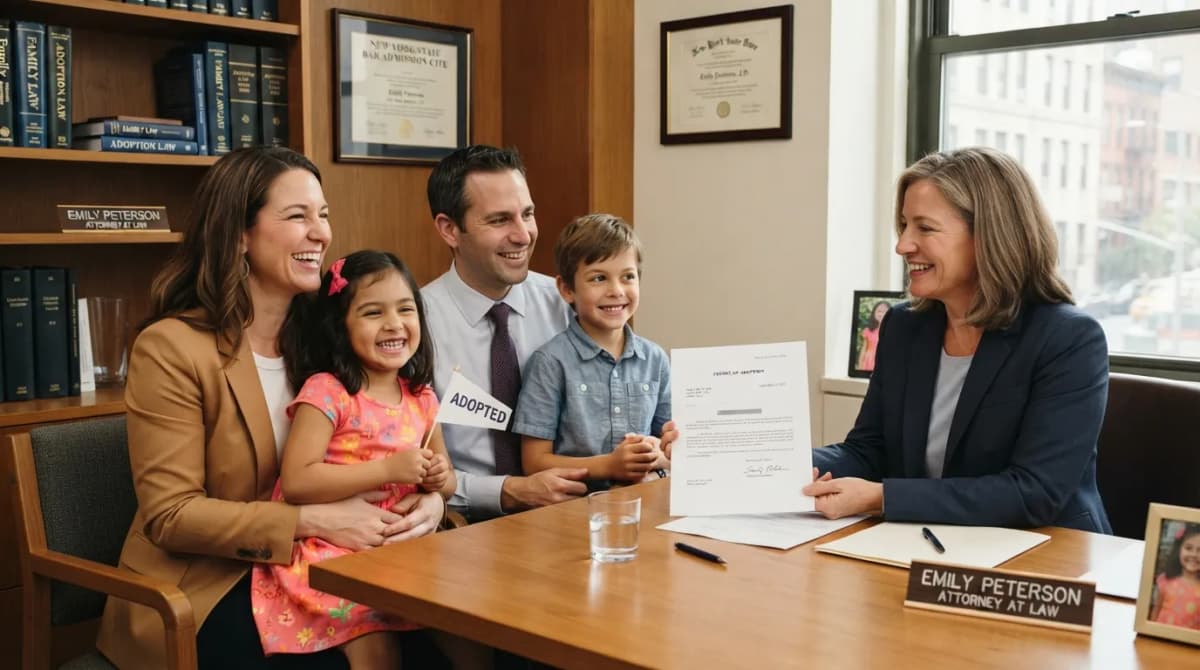
Adoption is a legal process that creates a permanent parent-child relationship between a child and adoptive parents. The process can vary significantly depending on whether the adoption involves foster care, a private agency, an independent arrangement, a stepparent, a relative, or an international placement. Prospective adoptive parents may need to complete background checks, a home study, legal paperwork, and court proceedings before an adoption is finalized. Birth-parent consent and termination of parental rights can also play important roles, depending on the circumstances and state law. This guide explains the major types of adoption, who may qualify, how the adoption process generally works, what happens during finalization, and why intercountry adoptions involve additional U.S. immigration requirements.
What is adoption? It is a legal process that creates a permanent parent-child relationship between a child and an adoptive parent or parents. Once an adoption is finalized, the adoptive parents generally assume the legal rights and responsibilities of parents, while the child's legal relationship with the birth parents may be altered or terminated according to applicable law. Adoption can provide a child with a permanent family and can give prospective parents a legal pathway to become responsible for a child.
Although adoption is recognized throughout the United States, there is no single nationwide procedure that applies to every adoption. State law generally controls important parts of a domestic adoption, including who may adopt, consent requirements, home studies, court procedures, expenses, post-placement requirements, and finalization. Intercountry adoptions involve additional federal immigration requirements and may also be governed by the laws of the child's country of origin. The U.S. Department of State explains that intercountry adoptions can involve U.S. federal law, the adoptive parent's state law, and the law of the child's country of origin.
Because adoption permanently changes legal relationships, prospective parents and birth parents should understand the process before making important decisions. The exact requirements can differ considerably depending on whether the adoption is through a public agency, private agency, independently arranged, a stepparent adoption, a relative adoption, or an international adoption.
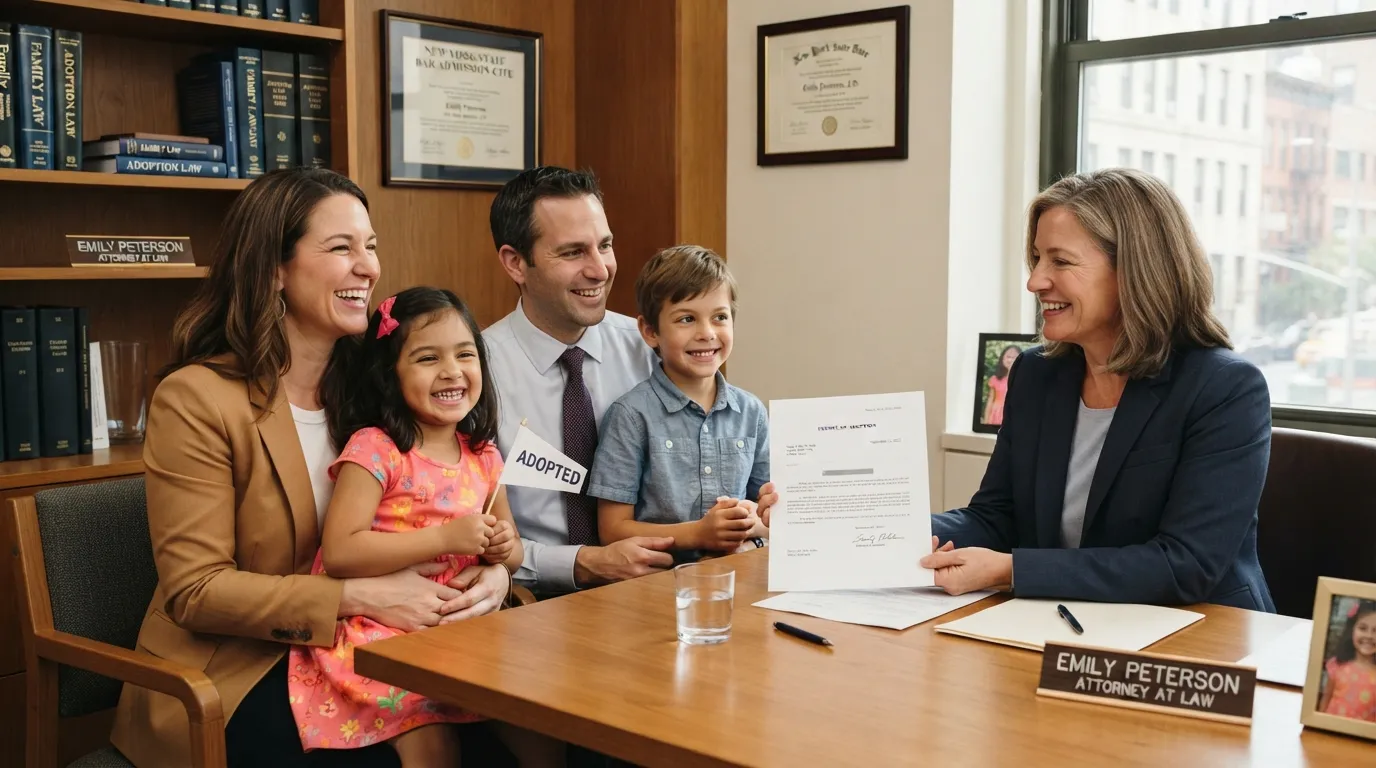
Adoption is a legal process through which an individual or couple becomes the legal parent of a child who is not their biological child. The adoption creates a legally recognized parent-child relationship and gives the adoptive parent legal responsibilities and rights concerning the child.
Adoption is different from foster care, guardianship, and informal caregiving. A foster parent may care for a child while the child remains legally connected to the biological or legal parents and under the authority of a child welfare agency or court. Guardianship can give an adult legal responsibility for a child without necessarily creating the same permanent parent-child relationship as adoption. Adoption, by contrast, is generally intended to establish a permanent legal family relationship.
The legal effect of adoption can include responsibility for the child's care, education, financial support, and medical needs. Depending on the circumstances and state law, an adopted child may also acquire inheritance rights from the adoptive parents in the same way as a biological child.
Adoption also affects the legal rights of birth parents. In many adoptions, the birth parents must provide legally valid consent or have their parental rights terminated through a court proceeding before an adoption can be finalized. The rules governing consent, withdrawal of consent, termination, and notice vary by state and by the type of adoption.
There is no single nationwide eligibility rule that allows every adult in the United States to adopt under identical conditions. Adoption eligibility depends on state law and the circumstances of the adoption.
States may establish requirements involving age, marital status, residency, criminal background, financial circumstances, household conditions, and the ability to provide appropriate care. Some adoptions may also have additional requirements established by an agency or by the child's circumstances.
For example, prospective adoptive parents may be required to complete background checks and a home study before an adoption can proceed. A home study generally evaluates whether the prospective home is appropriate for a child and may examine matters such as the household, finances, health information, personal history, references, and criminal background.
Requirements can also differ depending on whether someone is adopting through the public foster-care system, a private agency, an independent arrangement, or as a stepparent or relative.
For intercountry adoptions, additional federal requirements apply. The U.S. Department of State explains that prospective adoptive parents seeking to bring a child from another country into the United States must satisfy U.S. immigration requirements in addition to applicable state and foreign-country requirements.
Because eligibility rules can change by jurisdiction, prospective parents should check the requirements of the state where the adoption will be handled rather than relying on a general nationwide assumption.
Adoption can take several forms. The legal process and people involved depend heavily on the type of adoption.
An agency adoption involves an adoption agency that helps arrange the placement of a child with prospective adoptive parents. Agencies may be public or private.
Public agency adoptions commonly involve children who are in the child welfare or foster-care system. A public child welfare agency may have legal or physical custody of the child and may work toward finding a permanent adoptive family when reunification with the child's birth family is not possible or is no longer the permanency goal.
Private agencies may facilitate domestic adoptions involving infants, children, or other placements. Child Welfare Information Gateway explains that licensed agencies can provide services such as counseling, adoption support, assessments of prospective adoptive parents, and preparation for placement.
Agency adoption can therefore involve substantially more than matching a child with a prospective parent. The agency may assist with screening, counseling, placement, legal documentation, and post-placement requirements.
An independent adoption, sometimes called a private adoption, generally involves prospective adoptive parents and birth parents working through attorneys or other professionals rather than having the placement arranged by an adoption agency.
The precise rules governing independent adoption vary by state. Some states regulate who may facilitate an adoption, what expenses prospective parents may pay, how birth-parent consent must be obtained, and what information must be provided to the court.
Independent adoption should not be confused with an informal agreement between adults. A legally valid adoption still requires compliance with applicable law and court procedures.
Foster-care adoption involves adopting a child who has been involved with the child welfare system.
Many children in foster care are not immediately available for adoption because the legal system may still be working toward reunification with a parent or another permanency option. A child generally becomes available for adoption only after the legal circumstances allow adoption to proceed.
The process can involve foster-parent licensing or approval, background checks, training, home studies, placement, supervision, and ultimately court finalization. Requirements differ among states and agencies.
A person who becomes a foster parent does not automatically become the child's adoptive parent. Foster care and adoption are legally different arrangements, even though a foster placement may sometimes lead to adoption.
A stepparent adoption occurs when a spouse adopts the child of the other spouse.
Stepparent adoption can be different from other types of adoption because the child may already be living with the prospective adoptive parent and the child's biological parent. The major legal issue may involve the rights of the other biological parent.
Depending on state law and the circumstances, the other parent's consent may be required. If the parent does not consent, a court may consider whether the legal requirements for terminating that parent's rights have been satisfied.
Stepparent adoption can also affect inheritance, custody, financial responsibilities, and the legal relationship between the child and the biological parent whose rights are terminated. Because those consequences can be significant, families should understand the specific rules of their state before beginning the process.
Relative adoption occurs when a family member adopts a child. Kinship arrangements may involve grandparents, aunts, uncles, adult siblings, or other relatives, depending on the state's legal definitions.
Relative adoptions may sometimes have procedures or preferences that differ from unrelated placements. Child welfare systems may also prioritize relatives when determining placement for children who cannot safely remain with their parents.
A relative caregiver should not assume that having a biological relationship automatically creates legal custody or adoption rights. Legal authority generally depends on the specific court order or adoption process.
Intercountry adoption involves adopting a child who is habitually resident in another country and bringing the child to the United States.
This type of adoption is more complicated because several legal systems may apply. The U.S. Department of State states that intercountry adoption is governed by U.S. federal law, the law of the prospective adoptive parent's state of residence, and the law of the child's country of origin.
If the child's country is a party to the Hague Adoption Convention, additional procedures apply. The United States has been a party to the Convention since April 1, 2008.
The Hague process includes federal suitability and eligibility determinations, referral of a child, immigration review, completion of the adoption or legal custody process, and obtaining the appropriate immigrant visa.
Intercountry adoption therefore requires careful coordination between adoption professionals, U.S. authorities, foreign authorities, and courts.
A home study is an evaluation of prospective adoptive parents and their household. It is a major part of many adoption processes.
The purpose is generally to determine whether the prospective parents and their home are suitable for a child. The precise requirements vary by state and type of adoption.
A home study may involve interviews, documentation, background checks, references, financial information, medical information, and an assessment of the home environment. The evaluator may also discuss the prospective parents' reasons for adopting, parenting plans, household relationships, and ability to meet a child's needs.
The home study is not simply a test of whether someone owns a large house or earns a particular income. The central concern is generally whether the prospective family can provide an appropriate and stable environment consistent with applicable legal requirements.
For intercountry adoption, the home study has additional importance because it forms part of the federal immigration process. For Hague Convention cases, USCIS requires a home study as part of the application used to determine whether prospective parents are suitable and eligible to adopt.
Although procedures differ, many domestic adoptions involve several broad stages.
The first step is usually determining which type of adoption is being pursued and identifying the applicable state requirements. Prospective parents may then work with a licensed agency, adoption attorney, public child welfare agency, or another authorized professional.
The prospective parents may complete an application, provide personal and financial documentation, undergo background checks, and complete a home study. Depending on the type of adoption, training or other preparation may also be required.
The next stage can involve identifying or being matched with a child. The way matching occurs varies significantly. In a foster-care adoption, a public agency may identify an appropriate placement. In a private adoption, the process may involve an agency or independent arrangement.
At this stage, the prospective parents should understand that a match or placement does not necessarily mean the adoption has already been finalized. Legal requirements may remain before the adoptive relationship becomes permanent.
Consent is one of the most important legal issues in adoption.
In many situations, the child's birth parents must consent to the adoption or their parental rights must otherwise be legally terminated. Consent requirements are governed primarily by state law for domestic adoptions.
The law may specify who must consent, how consent must be given, when it can be given, what information must be provided, and whether consent can later be withdrawn.
Some states have special rules concerning consent by minors, incarcerated parents, alleged fathers, parents whose whereabouts are unknown, or parents who have failed to maintain a relationship with the child. The consequences can also differ depending on whether the adoption is stepparent, agency, independent, relative, or foster-care related.
A prospective adoptive parent should never assume that a verbal agreement is sufficient. Adoption consent is a formal legal matter, and failure to follow the required procedure can create serious problems for everyone involved.
Yes, parental rights can sometimes be terminated without voluntary consent, but termination is a serious legal action governed by state law and constitutional protections.
A court may terminate parental rights when the statutory requirements for termination have been established. Depending on the state and circumstances, grounds may involve abandonment, serious neglect or abuse, failure to address conditions that led to removal, or other circumstances defined by law.
Termination of parental rights and adoption are separate legal steps. A court may first determine that a parent's legal rights should be terminated, after which the child may become legally available for adoption.
The exact grounds and procedures differ by state. Courts generally do not treat termination as a routine administrative step because it permanently changes the legal relationship between parent and child.
Placement does not necessarily mean the adoption is immediately final.
Depending on the state and type of adoption, there may be a period during which the child lives with the prospective adoptive parents while the agency or court monitors the placement.
The purpose of this period can include confirming that the placement is working, ensuring that required services have been provided, and allowing professionals to report to the court before finalization.
Post-placement requirements may include agency visits, reports, additional documentation, or other supervision. The precise rules depend on state law.
Prospective parents should therefore distinguish between placement and finalization. A child may be physically living with prospective adoptive parents before the court has entered the final adoption order.

Finalization is the legal process that makes the adoption permanent under the applicable law.
In many domestic adoptions, finalization occurs through a court proceeding. The judge reviews the required documents and determines whether the legal requirements for adoption have been satisfied.
The court may consider matters such as the child's best interests, consent or termination of parental rights, required reports, the home study, placement requirements, and compliance with state law.
If the court approves the adoption, it enters a final adoption order. The legal consequences of that order can include establishing the adoptive parents as the child's legal parents and ending or modifying the previous legal parent-child relationship as provided by law.
The timing of finalization varies. Some adoptions may be finalized relatively quickly after placement, while others take longer because of court schedules, statutory waiting periods, required reports, interstate issues, or unresolved legal matters.
Once an adoption is legally finalized, adoptive parents generally have the legal rights and responsibilities associated with parenthood.
These can include responsibility for the child's care and support and authority over important decisions involving education, healthcare, residence, and other matters recognized under state law.
Adoptive parents may also have inheritance relationships with the child. In many jurisdictions, an adopted child has legal inheritance rights from adoptive parents comparable to those of a biological child, although specific estate-planning consequences should be reviewed under the applicable state law.
Finalization also generally gives adoptive parents a permanent legal relationship with the child. That is one reason adoption is different from temporary foster care or certain forms of guardianship.
Adoption can significantly affect inheritance.
Once an adoption is finalized, state law generally determines how the child is treated for purposes of inheritance from the adoptive parents and other relatives. In many jurisdictions, an adopted child is treated as a legal child of the adoptive parents for inheritance purposes.
The effect on inheritance from biological relatives can be more complicated and varies by state and circumstances. A person's will, trust, beneficiary designations, and other estate-planning documents may also affect what happens to property.
Families completing an adoption should therefore review existing wills, trusts, life insurance policies, retirement accounts, and beneficiary designations. An adoption can be a major life event that makes previously prepared estate documents outdated.
An open adoption generally involves some form of continuing communication or contact between the adoptive family and the child's birth family.
The degree of openness can vary significantly. It might involve letters, photographs, emails, phone calls, video communication, or in-person visits.
Open adoption does not necessarily mean that the birth parents retain legal parental rights. The adoptive parents can become the child's legal parents while some form of communication with the birth family continues.
The enforceability of post-adoption contact arrangements varies by state. Child Welfare Information Gateway notes that post-adoption contact agreements can range from informal understandings to written agreements and that state law determines important questions involving their enforcement, modification, and termination.
Families considering an open adoption should therefore distinguish between contact and legal custody or parental authority.
A closed adoption generally involves little or no direct contact between the adoptive family and the birth family.
Historically, closed adoptions were more common, but adoption practices vary considerably today. Some families choose limited contact, while others maintain ongoing communication.
The amount of information available to an adopted person about their birth family can also depend on state law, adoption records, court orders, and the circumstances of the adoption.
Access to adoption records is a separate legal issue from the adoption itself. Adopted individuals and birth relatives may have different rights to obtain records depending on the jurisdiction and the type of information requested.
There is no single nationwide adoption price.
Costs vary depending on the type of adoption, agency or attorney fees, location, travel, court costs, home-study expenses, required services, and other circumstances.
Public foster-care adoptions can involve different financial arrangements from private domestic or intercountry adoptions. Private adoption expenses can include professional fees and certain pregnancy-related or placement expenses where permitted by state law.
Intercountry adoption can involve additional costs associated with adoption service providers, documentation, travel, foreign legal processes, immigration processing, and other requirements.
The legality of particular adoption-related expenses also varies. Child Welfare Information Gateway has documented that state laws may regulate expenses such as agency fees, attorney fees, and certain expenses associated with birth mothers in private domestic adoptions.
Prospective parents should obtain a detailed fee schedule and determine which expenses are permitted by the law governing the adoption rather than assuming that every expense associated with an adoption is legally permissible.
Adoption timelines vary widely.
A straightforward stepparent adoption may follow a different timeline from a private infant adoption, foster-care adoption, or international adoption. Factors affecting timing can include the home study, background checks, matching or placement, parental consent, court scheduling, statutory waiting periods, interstate issues, and whether any legal dispute arises.
Intercountry adoption can take particularly long because the process may involve two or more legal systems and immigration requirements. The Department of State notes that, in some countries, a referral for a suitable child may take months or years.
Anyone considering adoption should therefore be cautious about promises of a guaranteed timeline. A professional can provide a more realistic estimate after reviewing the specific type of adoption and jurisdiction.
Intercountry adoption requires several additional legal steps beyond a typical domestic adoption.
For a Hague Convention adoption, the U.S. Department of State describes a six-stage process that generally includes selecting an accredited or approved adoption service provider, obtaining a U.S. determination of suitability and eligibility, receiving a referral, obtaining federal approval concerning the child's immigration eligibility, completing the adoption or legal custody process, and obtaining the child's immigrant visa.
USCIS plays a central role in determining whether prospective parents are suitable and eligible under U.S. immigration law. For Hague Convention cases, prospective parents generally begin with Form I-800A, while Form I-800 is used after a specific child has been identified to seek classification of the child as a Convention adoptee.
Adoptions from countries that are not parties to the Hague Convention follow a different process. The Department of State explains that non-Convention cases generally involve eligibility review, referral, adoption or legal custody, immigration processing, and an immigrant visa, with specific requirements depending on the country and the applicable U.S. immigration rules.
Importantly, completing an adoption in another country does not by itself guarantee that the child can immediately immigrate to the United States. Immigration eligibility must also be satisfied under U.S. law.
The Hague Adoption Convention is an international agreement designed to establish safeguards for intercountry adoption.
The Convention seeks to protect children, birth families, and prospective adoptive parents and to reduce risks such as child abduction, sale, trafficking, and improper adoption practices. The United States implemented the Convention through federal legislation and regulations, and the Convention entered into force for the United States in 2008.
One important feature of the Hague system is that prospective adoptive parents must work with an accredited or approved adoption service provider in Convention cases. The Department of State explains that these providers are subject to federal accreditation standards.
The Convention also creates procedures intended to identify immigration or adoption problems before the adoption is completed. That can help prospective parents avoid situations in which an adoption has been finalized but the child cannot meet U.S. immigration requirements.
The documents required depend on the type of adoption and jurisdiction, but adoption cases can involve substantial paperwork.
Common documents may include applications, identity and marital-status records, financial information, background-check records, medical documentation, references, home-study reports, consent or termination documents, placement agreements, court petitions, and final adoption orders.
Intercountry adoptions may require additional documents, including immigration forms, foreign records, certified translations, passports, birth certificates, and visa documentation.
The exact paperwork matters because adoption law is highly procedural. A missing signature, incorrect form, improper consent, or failure to follow a required waiting period can delay the case or create a legal problem.
Adoption is generally intended to be permanent.
That does not mean that every adoption-related dispute is impossible after finalization, but reversing or undoing a finalized adoption is legally very different from ending a temporary placement.
The availability of challenges, appeals, vacatur, termination, or other extraordinary remedies depends on state law and the specific circumstances. Courts generally treat final adoption orders as serious legal judgments rather than arrangements that can simply be canceled because circumstances later become difficult.
This is one reason prospective parents should fully understand their legal obligations before finalization.
One common mistake is assuming that adoption law works the same way in every state. It does not. Domestic adoption requirements can vary significantly by jurisdiction and by adoption type.
Another mistake is treating a match or placement as equivalent to finalization. A child may be placed with prospective parents before the legal process is complete.
Prospective parents can also make problems for themselves by using an unlicensed or unauthorized intermediary, failing to document expenses, overlooking consent requirements, or relying on informal promises about the adoption process.
In international cases, one of the most serious mistakes is assuming that a foreign adoption automatically gives the child the right to immigrate to the United States. U.S. immigration requirements must be satisfied separately.
Families may also fail to update estate-planning documents after an adoption. Wills, trusts, insurance policies, retirement accounts, and beneficiary designations should be reviewed because adoption can change a family's legal and financial circumstances.
An adoption attorney can help explain the law applicable to a specific adoption and identify procedural requirements that may not be obvious to someone unfamiliar with adoption law.
Legal assistance can be particularly important when parental consent is disputed, a birth parent cannot be located, the adoption involves interstate issues, the child has another legal parent whose rights must be addressed, the adoption involves a stepparent or relative, or the adoption is international.
An attorney may also help review adoption agreements, court filings, consent documents, expenses, and finalization requirements.
For international adoption, legal advice may need to be coordinated with an accredited or approved adoption service provider and professionals familiar with the child's country of origin. The U.S. Department of State specifically emphasizes the importance of using qualified adoption service providers in Hague Convention cases.
Legal advice is especially valuable when the situation is contested or unusual. Adoption creates permanent legal relationships, so correcting a mistake after finalization can be considerably more complicated than addressing the issue beforehand.
Adoption is fundamentally about establishing a permanent legal family relationship for a child. Courts and child welfare systems therefore consider the child's interests when evaluating adoption arrangements.
The precise legal standard and factors differ by state, but adoption proceedings can involve consideration of the child's safety, stability, relationships, needs, and circumstances.
This is also reflected in the Hague Adoption Convention, whose safeguards are designed around the principle that intercountry adoption should serve the child's best interests while protecting against unlawful or abusive practices.
For prospective parents, understanding this principle helps explain why adoption can involve extensive screening and legal procedures. The process is not merely about determining whether an adult wants to adopt. It is also about determining whether the proposed legal placement complies with the law and serves the child's needs.

Adoption is a permanent legal process that creates a parent-child relationship and carries significant rights and responsibilities for everyone involved. Although the basic purpose of adoption is consistent throughout the United States, the actual requirements can vary considerably depending on state law, the type of adoption, the child's circumstances, and whether the adoption crosses international borders.
Agency adoptions, independent adoptions, foster-care adoptions, stepparent adoptions, relative adoptions, and intercountry adoptions can involve very different procedures. Home studies, background checks, consent requirements, placement rules, court proceedings, and finalization are common features of many adoption cases, but the details must be determined under the law governing the specific adoption.
Intercountry adoption adds another layer because U.S. federal immigration law and the law of the child's country of origin may apply alongside state adoption law. Hague Convention cases have specific safeguards and procedures that must generally be followed in the required sequence.
Because adoption permanently changes legal relationships, prospective adoptive parents and birth parents should not rely solely on general information when handling a specific case. Understanding the applicable state requirements and obtaining qualified legal or adoption-professional guidance can help families navigate the process with a clearer understanding of their rights, responsibilities, and legal obligations.

Written by
BeastBeast is a seasoned legal content creator and law research specialist with 15+ years of experience in legal writing, legal research, and publishing educational law content. Specializing in Personal Injury, Family, Business, Immigration, Criminal, Tax, and Real Estate Law, Beast creates accurate, well-researched, and SEO-optimized legal guides that help readers understand complex legal topics with confidence. Every article is written with a focus on accuracy, trust, and Google's E-E-A-T guidelines, making Jurnza.com a reliable source for legal information and legal services.
