Document Generators
Injury & Compensation
Fees & Support
Deadlines & Filing
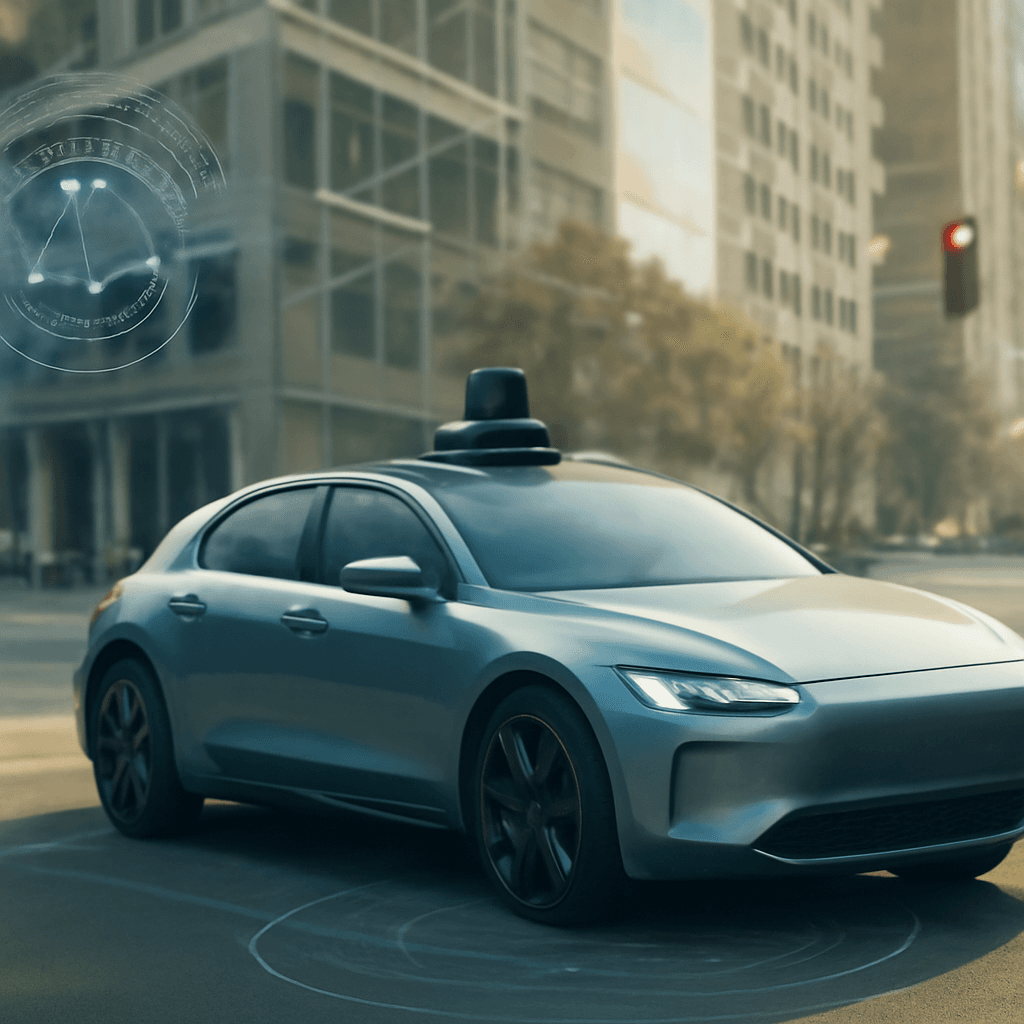
A self-driving car accident can pull the automaker, the software developer, and the driver into one legal fight. Here is how fault is determined in 2026 — and what data decides the outcome.
A self-driving car accident raises a question our courts never had to answer before: when a computer does the driving, who is liable? Millions of vehicles on American roads now include some form of automated driving system, from basic lane-keeping assistance to full self-driving modes that handle acceleration, braking, and steering with minimal human input. As these systems spread, self-driving car accident claims are multiplying too — and each one pushes traditional car accident law to adapt to a world where the "driver" may be software.
Unlike a conventional crash, where liability usually comes down to which driver broke a traffic rule, a self-driving car accident can involve the vehicle owner, the automaker, the company that built the self-driving software, the maker of a faulty sensor, or even a third-party mapping or connectivity provider. Untangling these overlapping responsibilities requires a very different legal strategy than a standard rear-end collision claim.
Traditional car accident claims rely on negligence law: a driver owed a duty of care to others on the road, breached that duty (by speeding, running a red light, texting, and so on), and that breach caused the crash. When a human is behind the wheel and in full control, this framework works well because there is a clear, single decision-maker whose conduct can be evaluated.
Autonomous and semi-autonomous vehicles disrupt that framework because the "decision" to accelerate, brake, or swerve may be made entirely by software, based on sensor data, mapping information, and an algorithm designed by engineers who were never anywhere near the crash scene. This shifts many self-driving accident cases away from pure negligence and toward product liability law, which focuses on whether a product was defectively designed, manufactured, or marketed, rather than on the moment-to-moment conduct of a driver.
Not all "self-driving" cars are the same, and the level of automation involved in a crash has a major effect on who can be held liable. The auto industry — tracked and classified by regulators such as the National Highway Traffic Safety Administration — generally recognizes six levels of driving automation:
Most vehicles currently on the road, including popular driver-assist packages, sit at Level 2. This matters legally because manufacturers of Level 2 systems generally maintain that the human driver is still responsible for supervising the vehicle at all times, which can shift blame back toward the driver even when the automated system made an error.
Depending on the circumstances, one or more of the following parties may share responsibility for a crash involving an autonomous or semi-autonomous vehicle:
Even in a car equipped with advanced driver-assist features, the person behind the wheel can still be held liable if they were misusing the system, ignoring alerts to take control, distracted, impaired, or otherwise failing to supervise the vehicle as instructed by the manufacturer. Courts generally look at whether the driver's own conduct fell below what a reasonable person would have done under the circumstances, separate from any defect in the technology.
If the accident resulted from a defect in how the vehicle or its automated systems were designed or built, the manufacturer may be liable under product liability law. This can include flawed sensor placement, inadequate fail-safes, or a design that does not react appropriately to common road hazards.
In many modern vehicles, the company that builds the physical car is different from the company that develops the self-driving software or the artificial intelligence that interprets sensor data and makes driving decisions. If the software itself made a flawed decision — misidentifying a pedestrian, failing to detect a stopped vehicle, or ignoring a traffic signal — the software developer can be named as a defendant.
Self-driving systems depend on cameras, radar, lidar, and other sensors supplied by third-party manufacturers. If one of these components failed or provided inaccurate data that led to the crash, the company that built that specific part may share liability.
A dealership or repair shop that improperly installed, calibrated, or serviced an autonomous driving system can also be held responsible if that negligent work contributed to the malfunction that caused the accident.
In rarer cases, poor road markings, malfunctioning traffic signals, or infrastructure that confuses a vehicle's sensors may support a claim against a government agency responsible for maintaining that infrastructure, though these claims come with unique procedural hurdles such as shorter filing deadlines.
Because self-driving accident cases often involve a defective product rather than a careless driver, claims frequently proceed under one or more product liability theories:
These product liability claims can sometimes work in an injured person's favor because they often do not require proving the manufacturer was careless — only that the product was defective and that the defect caused the injury. However, they also tend to involve complex engineering evidence, expert witnesses, and lengthy litigation against companies with significant legal resources. A good starting point is understanding how a car accident injury lawyer approaches an ordinary crash claim, because every self-driving car accident claim adds a product liability layer on top of those same fundamentals.
One factor that makes self-driving accident cases different from ordinary crashes is the sheer volume of data these vehicles generate. Modern vehicles with automated features typically record:
This data is often stored by the manufacturer and can be difficult for an individual to access without a formal legal request. An attorney can send preservation letters to prevent this data from being deleted or overwritten, and can use the discovery process in a lawsuit to obtain it. This data is frequently the single most important piece of evidence in determining whether the vehicle's automated system, rather than the driver, caused the crash.
There is no single federal law governing liability for autonomous vehicle accidents. Instead, states have taken different approaches, with some passing specific statutes addressing self-driving vehicle testing and operation, and others relying entirely on existing traffic and product liability law. Some states require manufacturers to carry specific insurance coverage or file safety data with state regulators before testing autonomous vehicles on public roads, which can create additional avenues for liability if a company failed to comply. Because these rules vary significantly, the state where an accident occurs can meaningfully affect the legal strategy available to an injured person.
In a typical self-driving car accident investigation, the first 30 days matter more than anything that follows. Attorneys move quickly to send preservation letters to every company in the vehicle's supply chain, because automated systems routinely overwrite camera footage and sensor logs within weeks. The claim itself usually names two or three defendants at the outset — the driver (or the owner's insurer), the automaker, and the software provider — and then narrows as the vehicle data reveals who was actually in control at the moment of impact.
Most self-driving car accident claims settle long before trial, but settlements in these cases tend to run higher than ordinary crash claims because corporate defendants carry large product liability policies and are motivated to avoid public discovery of internal safety documents. For the injured person, that means patience during the investigation phase is often rewarded — but only if the critical driving data was locked down early in the process.
If you are involved in a crash with a vehicle that was operating in an autonomous or driver-assist mode, taking the right steps early can protect both your health and your legal claim:
Self-driving accident claims come with unique obstacles that traditional car accident cases do not typically involve:
Auto insurance policies were built around the assumption that a human driver is in control of the vehicle, and many policies have not fully caught up with autonomous technology. Depending on the level of automation involved, a claim may implicate the driver's personal auto policy, the manufacturer's product liability insurance, or both. Some manufacturers of higher-level autonomous systems have stated they will accept liability for crashes that occur while their system is fully engaged, though these commitments vary by company and are often contested after a serious accident.
Yes. If a defect in the design, manufacturing, or software of an automated driving system contributed to your self-driving car accident, you may be able to bring a product liability claim against the manufacturer or software developer, in addition to or instead of a claim against the driver. Choosing the right counsel matters here — see our guide on what a personal injury lawyer does and when to hire one.
It depends on the level of automation. For most Level 2 systems currently on the market, the driver is still expected to actively supervise the vehicle and may be held liable for failing to do so, even if the automated system also contributed to the crash.
In many cases, fault is shared between multiple parties. An attorney will typically investigate the vehicle's data logs, maintenance history, and the specific automated feature involved to determine what percentage of fault, if any, belongs to the driver, the manufacturer, or another party.
Vehicle sensor and camera data, software logs showing whether the automated system was engaged, the vehicle's maintenance and recall history, and eyewitness accounts are typically the most critical pieces of evidence in these cases.
As autonomous and driver-assist technology becomes more common on American roads, the legal system is still catching up with the unique questions these vehicles raise. If you have been injured in a self-driving car accident, the party responsible may not be limited to the other driver — it could include the automaker, a software company, or a component manufacturer. Because these cases often hinge on technical data that can be lost or altered quickly, getting legal advice as soon as possible after the crash is one of the most important steps you can take to protect your case.
Written by
Frankly