Deadlines & Filing
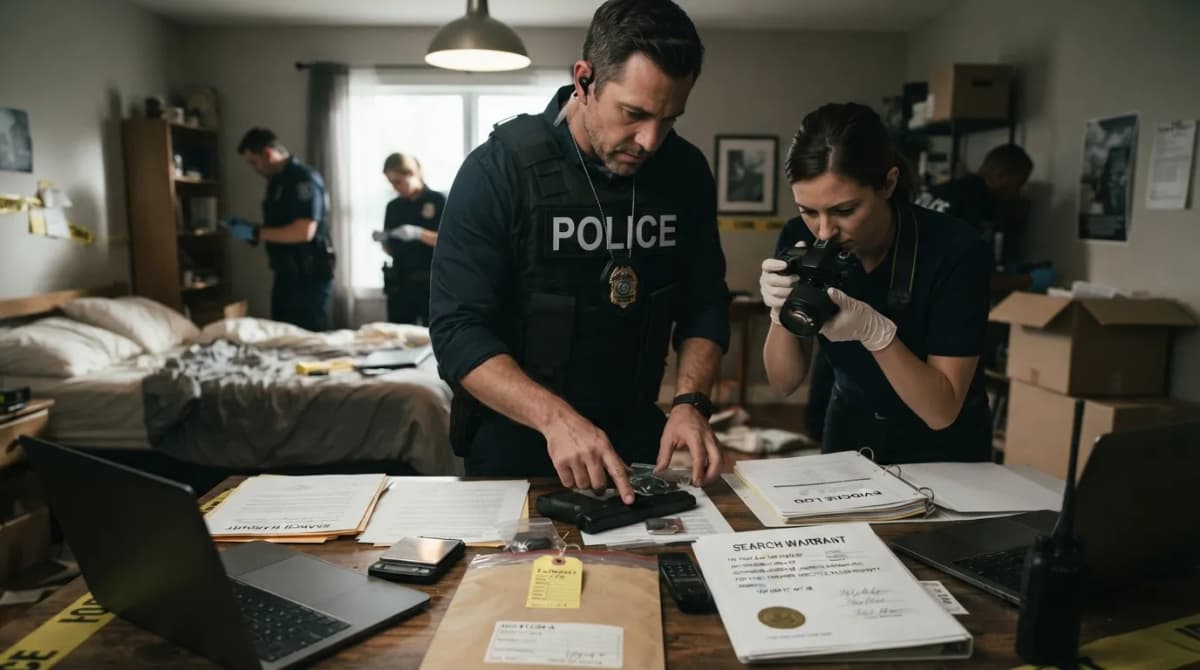
A search and seizure involves police examining or taking control of a person, property, or information during a criminal investigation. The Fourth Amendment protects against unreasonable searches and seizures, but police do not always need a warrant. Learn when warrants are required, what probable cause means, common exceptions to the warrant requirement, and how illegally obtained evidence may be challenged in a criminal case.
The Fourth Amendment to the U.S. Constitution protects people against unreasonable search and seizure by the government. This protection is an important part of criminal law because evidence collected during a police investigation can sometimes become central to a criminal case. Whether officers were legally permitted to search a home, vehicle, phone, person, or other property can therefore become an important issue in a criminal defense.
A search generally involves government intrusion into an area where a person has a legally recognized privacy interest. A seizure generally involves the government taking control of a person or property, or restricting a person's freedom of movement. The Fourth Amendment does not prohibit every search or seizure. Instead, it prohibits unreasonable searches and seizures and establishes requirements for warrants, including probable cause and particularity.
Although warrants are an important part of Fourth Amendment protection, police do not need a warrant for every search. Courts have recognized several exceptions to the warrant requirement, including searches based on valid consent, certain searches connected to an arrest, some vehicle searches, exigent circumstances, and other circumstances recognized under Fourth Amendment law. The exact rules can depend heavily on the facts of the case and the type of property involved.
Understanding these rules can help explain why a criminal defense attorney may examine not only what evidence police found, but also how they found it.
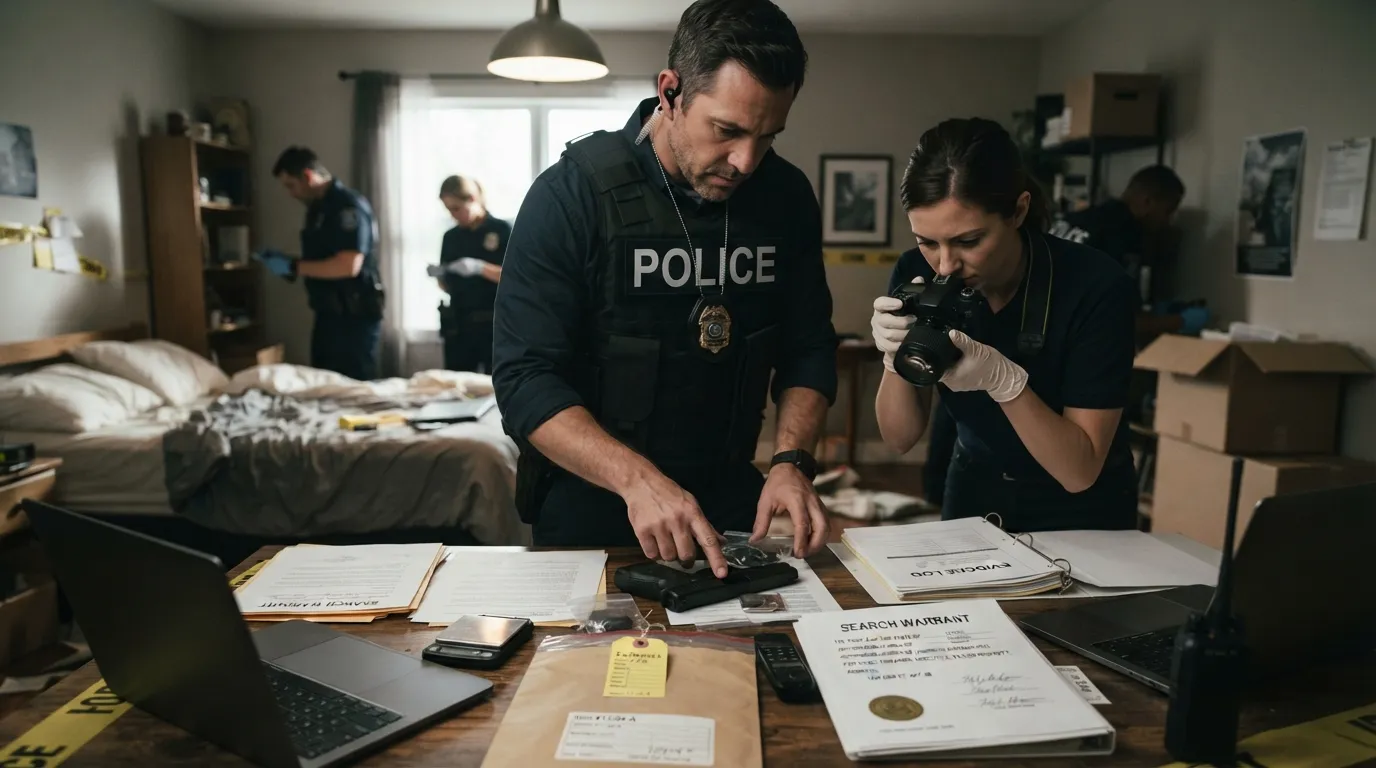
A search occurs when government officials intrude on interests protected by the Fourth Amendment. The concept is not limited to physically entering someone's home.
The Fourth Amendment protects people against unreasonable government searches involving their persons, houses, papers, and effects. Modern Fourth Amendment law can also involve questions about privacy and government access to information or technology.
For example, depending on the circumstances, Fourth Amendment issues may arise when police:
Whether something qualifies as a Fourth Amendment search can depend on the circumstances, including the person's privacy interest and the nature of the government's conduct.
This is one reason search-and-seizure law can become complicated very quickly. A rule that applies to a person's home may not apply in exactly the same way to a vehicle, a public place, a phone, or property that has been abandoned.
A seizure can involve property or a person.
When police take possession or control of property, that can constitute a seizure. For example, officers may seize suspected drugs, firearms, documents, computers, or other physical evidence during an investigation.
The Fourth Amendment also protects against unreasonable seizures of people. The constitutional protection therefore extends beyond physical property and can affect police stops and arrests. The Supreme Court's Fourth Amendment doctrine recognizes protection against arbitrary arrests as well as unreasonable searches.
The distinction between a search and a seizure matters because different constitutional rules may apply depending on what police did.
The Fourth Amendment provides that people have a right to be secure against unreasonable searches and seizures. It also establishes requirements for warrants.
A search warrant generally must be supported by probable cause and must particularly describe the place to be searched and the person or things to be seized.
This means a warrant is not supposed to function as unlimited permission for police to search anywhere and take anything they want.
A properly issued warrant identifies the scope of the authorized search. The constitutional requirement of particularity is intended to prevent overly broad searches.
However, the warrant requirement has important exceptions. A search without a warrant is not automatically unconstitutional. Courts determine whether the search was reasonable under the circumstances and whether a recognized exception applied.
Probable cause is one of the most important concepts in search-and-seizure law.
Under Fourth Amendment doctrine, probable cause generally requires facts and circumstances that would lead a reasonable person to believe that a crime has been committed or that evidence of a crime is present in a particular location. It is generally a higher standard than reasonable suspicion.
Probable cause does not mean police must already possess enough evidence to prove the defendant guilty beyond a reasonable doubt.
For a search warrant, the information presented to the judge or magistrate must establish a sufficient basis for believing that evidence of criminal activity will be found in the specified location. The warrant application must also satisfy constitutional requirements concerning particularity.
Probable cause can also become relevant to warrantless searches and arrests, although the precise legal requirements depend on the circumstances.
A search warrant is a legal authorization issued by a judge or other authorized judicial officer that permits law enforcement to conduct a specified search.
The warrant process is intended to place a judicial officer between the police and the proposed search. Police generally provide information establishing probable cause, and the judge determines whether the legal standard for issuing the warrant has been satisfied.
A warrant normally identifies the location to be searched and the property or evidence police are authorized to seek. The Fourth Amendment's particularity requirement is an important limitation on the scope of warrants.
For example, a warrant authorizing a search for particular evidence at a specified residence does not necessarily give officers unrestricted authority to search every person, location, or object unrelated to the warrant.
The details matter.
The home receives particularly strong Fourth Amendment protection.
As a general constitutional principle, police ordinarily need a warrant to conduct a search of a home unless an established exception applies. The Supreme Court has recognized that warrantless entry into a home is generally unreasonable unless circumstances justify an exception.
However, "no warrant" does not automatically mean "illegal."
Several circumstances can potentially justify warrantless entry or a search. Examples can include:
For example, exigent circumstances can arise when officers reasonably believe immediate action is necessary, such as responding to an emergency or preventing the imminent destruction of evidence. The precise requirements are fact-specific.
Because the home generally receives strong constitutional protection, the circumstances surrounding police entry can be particularly important in a criminal case.
Vehicle searches involve a different set of Fourth Amendment rules from searches of homes.
Under certain circumstances, police may be able to search a vehicle without first obtaining a warrant. Probable cause can be important in determining whether a warrantless vehicle search is constitutionally permissible, and other exceptions may also apply.
The Supreme Court has addressed numerous vehicle-search situations, demonstrating that the legality of a particular search depends heavily on the circumstances rather than simply whether police had a warrant.
Factors that may matter include:
A traffic stop therefore does not automatically give police unlimited authority to search everything inside a vehicle.
Consent can be an important exception to the warrant requirement.
If a person voluntarily consents to a search, police may be able to conduct the search without obtaining a warrant, subject to the constitutional and factual requirements governing consent.
This makes consent an important issue in criminal cases.
A person should not assume that police must always obtain a warrant before asking for permission to search. Officers may ask for consent even when they do not have a warrant. Whether the resulting search was constitutionally valid can depend on whether consent was actually voluntary and what the person authorized.
Consent can also affect the scope of a search. If someone gives permission to search a particular area or property, the circumstances may determine what officers reasonably understood that permission to cover.
Because state laws and the specific facts can affect the analysis, a person facing criminal charges should have an attorney review the circumstances rather than assuming that consent automatically made a search legal or illegal.
Exigent circumstances are situations in which the need for immediate police action can justify a warrantless search or entry.
The rationale is that waiting for a warrant may sometimes create an unacceptable risk, such as a serious threat to someone's safety or the imminent destruction of evidence.
The Supreme Court has recognized exigent-circumstances principles in Fourth Amendment cases, but the exception is not a general license for warrantless searches. The government generally must establish circumstances that actually justified immediate action.
For example, courts may consider whether officers reasonably believed that:
The precise boundaries depend on the facts and applicable case law.
Another recognized exception involves searches connected to a lawful arrest.
The doctrine is not unlimited permission to search everything around an arrested person. The permissible scope depends on the circumstances and governing Fourth Amendment law.
Search-incident-to-arrest rules can become particularly important when police find evidence after taking someone into custody. A defense attorney may examine whether the arrest was lawful, what police searched, where the search occurred, and whether the search fell within the constitutionally permitted scope.
The fact that an arrest occurred therefore does not automatically answer every question about a subsequent search.
The plain-view doctrine can allow police to seize certain evidence that is already exposed to their lawful observation.
The important word is lawful.
Police generally cannot manufacture an illegal search and then rely on plain view to justify what they discovered. The circumstances surrounding how officers came into the position to observe the item can matter.
For example, if officers are lawfully present in a location and observe evidence that falls within the requirements of the plain-view doctrine, they may be able to seize it without obtaining another warrant.
But if officers unlawfully enter a private area solely to discover the evidence, the government may face a different constitutional problem.
A brief police stop is different from a full custodial arrest, and a limited pat-down is different from a full search.
Fourth Amendment doctrine recognizes that police may conduct certain brief investigative stops when they have reasonable suspicion supported by specific and articulable facts indicating that criminal activity may be occurring. A limited protective frisk can also be permissible under particular circumstances.
Reasonable suspicion is generally a lower standard than probable cause.
That distinction matters because police do not necessarily need probable cause to conduct every temporary investigative stop. At the same time, a stop does not automatically authorize an unlimited search.
The scope and duration of the encounter can become important constitutional questions.
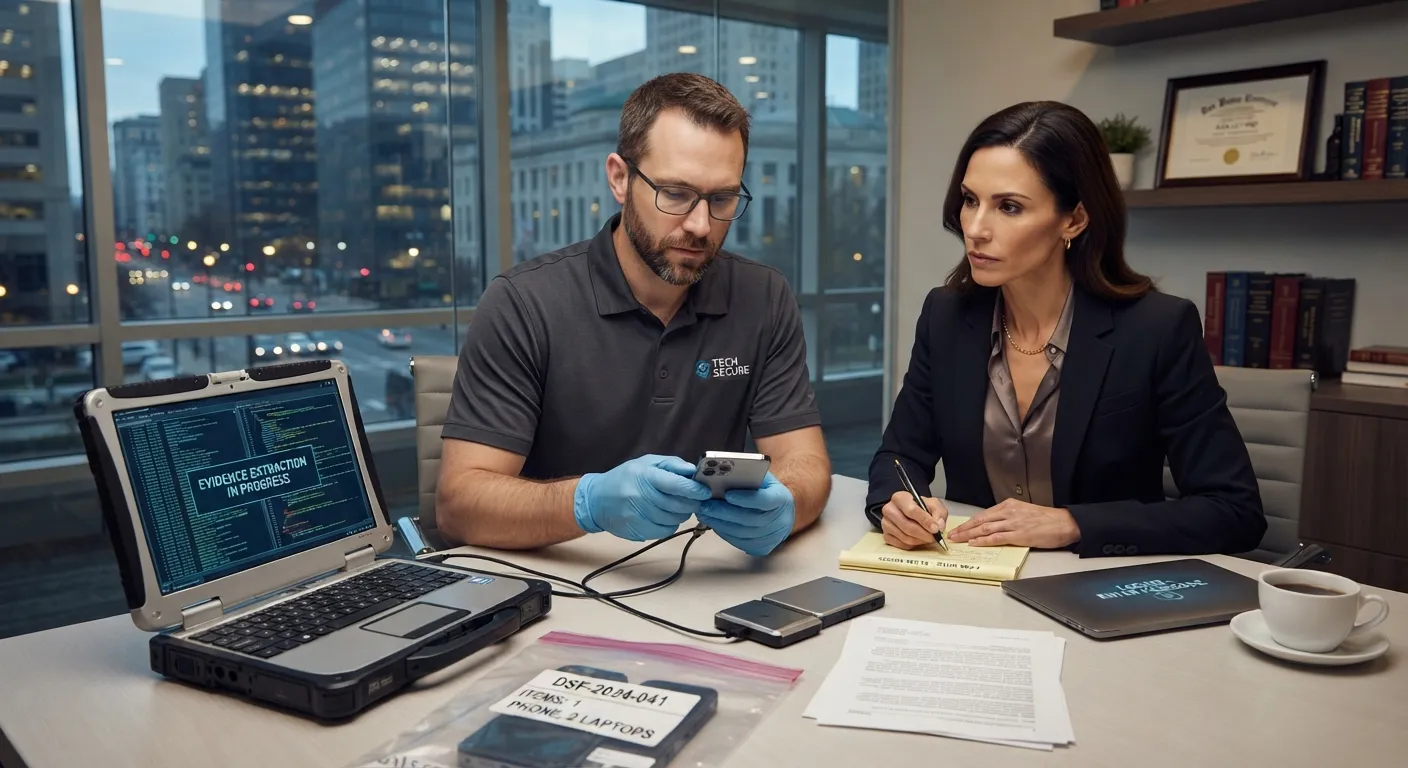
Searches involving smartphones and digital information can raise significant Fourth Amendment questions.
A phone can contain large amounts of personal information, including communications, photographs, location information, financial records, and other data. Whether and how police can search that information depends on the circumstances and applicable constitutional doctrine.
A physical search of a person is not necessarily the same thing as a search of the digital contents of a phone. Courts have recognized important distinctions between physical objects and digital information.
Because technology and Fourth Amendment doctrine continue to develop, a criminal defense attorney may need to examine the specific device, information sought, method of access, warrant language, consent, and applicable case law.
A warrantless search is not automatically unlawful.
The key question is generally whether the search was reasonable under the Fourth Amendment and whether a recognized exception to the warrant requirement applied.
A defense attorney evaluating a warrantless search may ask questions such as:
The answers can determine whether evidence is subject to a constitutional challenge.
The exclusionary rule is an important remedy associated with unconstitutional searches and seizures.
Generally, the rule can prevent the government from using certain evidence obtained in violation of constitutional protections. The Supreme Court's decision in Mapp v. Ohio established the application of the exclusionary rule to evidence obtained through unreasonable searches or seizures in violation of the Fourth Amendment.
However, the exclusionary rule is not absolute.
Courts have recognized exceptions under which evidence may remain admissible even though constitutional problems are alleged. The law includes doctrines such as the good-faith exception and attenuation doctrine, among others.
That means a defendant should not assume that proving a technical problem with a search automatically results in dismissal of criminal charges.
The legal remedy depends on the circumstances and the evidence involved.
The good-faith exception is one limitation on the exclusionary rule.
In certain circumstances, evidence may not be excluded when police reasonably relied on a warrant that is later determined to be defective. Courts analyze whether the officers' reliance was objectively reasonable and whether exclusion would serve the deterrent purpose of the exclusionary rule.
The details can be complicated, and not every mistake by law enforcement qualifies for the exception.
A defense attorney therefore may examine the warrant itself, the information supporting it, the conduct of the officers, and the nature of the alleged constitutional defect.
The phrase "fruit of the poisonous tree" describes a related principle involving evidence discovered as a result of an unconstitutional search or seizure.
For example, if police illegally obtain information and that information directly leads them to additional evidence, the later evidence may also become subject to a constitutional challenge.
However, exceptions can apply. Courts may permit evidence when the connection between the original misconduct and later discovery has been sufficiently weakened or interrupted, among other circumstances.
This is another reason criminal defense lawyers examine the entire investigative chain rather than looking only at the final piece of evidence introduced by prosecutors.
Not necessarily.
An unconstitutional search may provide grounds for challenging particular evidence, but the outcome depends on the facts, applicable law, the evidence involved, and whether an exception to exclusion applies.
If a court suppresses important evidence, the prosecution's case may become significantly different. But suppression of one item does not automatically mean that every criminal charge disappears.
For example, prosecutors may have other admissible evidence, witnesses, statements, records, or physical evidence that can still be used.
The appropriate remedy therefore depends on the circumstances of the case.
A criminal defense attorney may begin by reconstructing what happened.
This can involve reviewing:
The attorney may then examine whether officers had the required legal justification at each stage of the investigation.
For example, a case might involve a traffic stop followed by an arrest, a vehicle search, seizure of a phone, and later examination of digital information. Each step can potentially raise different legal questions.
The defense may ask the court to suppress evidence when there is a legally sufficient basis for doing so.
A motion to suppress is a request asking a court to prevent certain evidence from being used because it was obtained in violation of applicable legal protections.
In a criminal case involving a disputed search, the defense may file a motion challenging the legality of the search or seizure.
The court may review evidence and legal arguments concerning:
The exact procedure for filing and litigating suppression motions varies by jurisdiction and court.
Not necessarily, but ownership alone is also not the entire test.
Fourth Amendment challenges generally depend on whether the person asserting the right had a constitutionally protected privacy or property interest in the place or item involved.
For example, someone may have privacy interests in a residence even when that person is not the legal owner. On the other hand, a person generally cannot challenge every search of property simply because the search produced evidence that harms them.
This issue can become especially important when evidence belongs to someone else or was found in a location shared by multiple people.
A defense attorney may therefore examine the defendant's relationship to the location or property that was searched.
A person dealing with law enforcement should avoid physically resisting an officer or attempting to destroy or hide evidence.
If officers ask for permission to search, a person can consider whether to consent, and the legal consequences of consent can depend on the circumstances. If a person does not consent, that does not mean the police are necessarily prohibited from conducting a search because an independent exception may apply.
If the person is being investigated or arrested, it is generally important to remain calm, avoid interfering with officers, and seek legal advice as soon as practical.
If police search property anyway, the legality of the search can later be challenged through the appropriate legal process.
Trying to argue constitutional law on the roadside is rarely a substitute for having a lawyer examine the situation afterward.
Search-and-seizure questions can arise in many criminal investigations.
A traffic stop may involve questions about the reason for the stop, the duration of the detention, searches of the vehicle, searches of occupants, and whether officers developed sufficient legal grounds for additional investigative action.
Drug cases frequently involve disputes concerning searches of homes, vehicles, bags, containers, phones, or other property. The existence and scope of probable cause and warrant exceptions can become significant.
In weapons prosecutions, the defense may examine where a firearm or other weapon was found and whether officers had legal authority to search that location.
Police may seize clothing, electronics, documents, surveillance-related evidence, or other property during investigations. Questions can arise about warrants, consent, probable cause, and the scope of searches.
Searches of computers, phones, cloud-stored information, financial records, and business property can create more complicated constitutional questions involving warrants and digital evidence.
Criminal defense is not limited to arguing whether a defendant committed the alleged offense.
The defense may also examine whether the government followed the Constitution and other applicable laws while investigating the case.
If officers obtained evidence through an unlawful search or seizure, the defense may have grounds to challenge the evidence. The challenge does not guarantee suppression, but it can become an important part of the defense strategy.
Search-and-seizure issues can also influence plea negotiations, case evaluation, and trial preparation because the admissibility of important evidence can affect how both sides assess a criminal case.
Not necessarily. The Fourth Amendment's warrant requirement has recognized exceptions, including consent and certain exigent circumstances.
Not necessarily. A warrant must satisfy constitutional requirements, including probable cause and particularity, and officers generally must remain within its authorized scope.
Not necessarily. The defense can challenge evidence under applicable constitutional and evidentiary rules.
Not necessarily. Suppression of evidence and dismissal of charges are different issues.
Consent can matter significantly because voluntary consent can provide an exception to the warrant requirement.
Not necessarily. Plain-view principles depend on the circumstances, including whether officers were lawfully positioned to observe the item and whether the other requirements of the doctrine are satisfied.
The Fourth Amendment establishes a federal constitutional baseline, but criminal procedure can also be affected by state constitutions, statutes, court rules, and state case law.
A state's rules may provide additional protections or impose procedural requirements beyond the federal constitutional minimum.
For this reason, a search-and-seizure article cannot provide one universal rule for every criminal case in the United States. The law can differ depending on whether a case is prosecuted in state or federal court and where the investigation occurred.
Anyone facing criminal charges should therefore have the specific facts reviewed under the law applicable to that jurisdiction.
Legal advice can be particularly important when a criminal case involves disputed evidence or questions about how police obtained information.
Consider speaking with a criminal defense attorney if:
A lawyer can review the warrant, police reports, recordings, and other evidence and determine whether a suppression issue may exist.
If you are discussing a search or seizure with a lawyer, useful information may include:
Even details that seem minor can become relevant when reconstructing the sequence of events.

Search and seizure law is an important part of criminal defense because the government generally cannot conduct unreasonable searches or seizures in violation of the Fourth Amendment. Warrants are an important constitutional safeguard and generally require probable cause and particularity, but courts have also recognized several exceptions to the warrant requirement.
The legality of a search depends heavily on the circumstances. A home search, vehicle search, traffic stop, arrest-related search, digital search, and consent-based search can involve different constitutional rules. A warrantless search is not automatically illegal, just as the existence of a warrant does not automatically resolve every constitutional question.
When potentially unlawful evidence is used in a criminal case, a defense attorney may investigate the search or seizure and, when appropriate, challenge the evidence through a motion to suppress. The exclusionary rule can prevent certain unlawfully obtained evidence from being used, although courts recognize exceptions that may allow evidence to remain admissible.
Because search-and-seizure law is highly fact-specific and state laws can provide additional protections, anyone facing criminal charges should consider obtaining advice from a qualified attorney familiar with the jurisdiction where the case is being handled.

Written by
BeastBeast is a seasoned legal content creator and law research specialist with 15+ years of experience in legal writing, legal research, and publishing educational law content. Specializing in Personal Injury, Family, Business, Immigration, Criminal, Tax, and Real Estate Law, Beast creates accurate, well-researched, and SEO-optimized legal guides that help readers understand complex legal topics with confidence. Every article is written with a focus on accuracy, trust, and Google's E-E-A-T guidelines, making Jurnza.com a reliable source for legal information and legal services.
