Document Generators
Injury & Compensation
Fees & Support
Deadlines & Filing
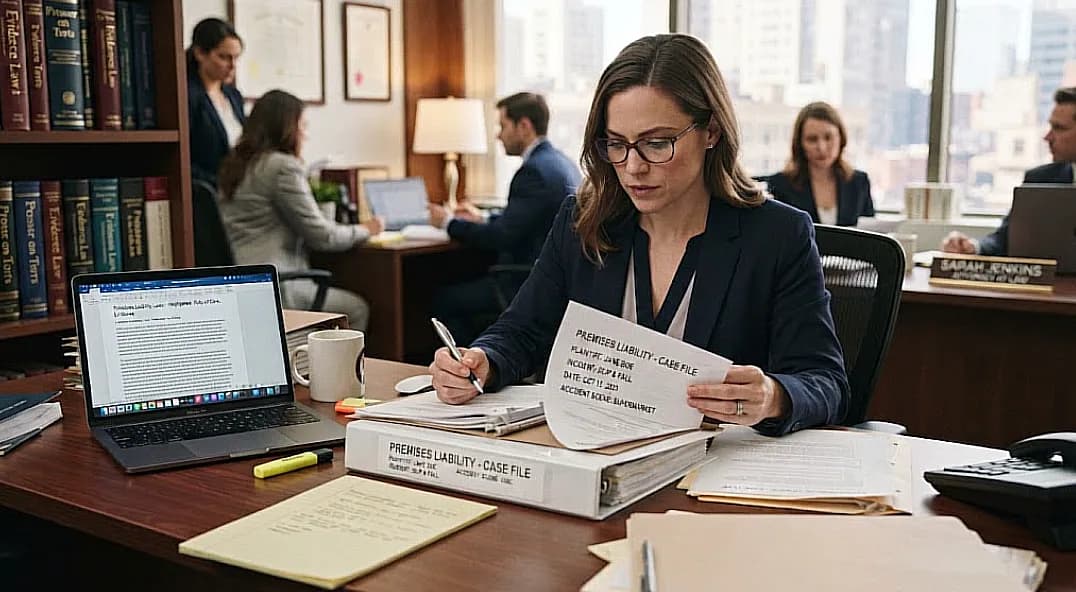
Premises liability law addresses injuries caused by dangerous conditions on property, including slip-and-fall accidents, defective stairs, unsafe walkways, falling objects, poor maintenance, and other hazards. Learn when a property owner, business, landlord, or other responsible party may be liable, why actual or constructive notice can matter, and how invitees, licensees, trespassers, and children may be treated under different state laws. This guide also explains evidence, comparative negligence, insurance claims, damages, government-property claims, filing deadlines, common defenses, and what to do after a premises-related injury.
When someone is injured on another person's property, the question is not always simply who caused the accident. In many situations, the condition of the property itself may be part of the reason the injury occurred. A customer may slip on a wet floor in a grocery store. A visitor may fall because of a broken staircase. Someone entering an apartment building may be injured because a dangerous condition was left unrepaired. A child may enter an unsafe area of private property and suffer a serious injury. A person walking through a parking lot may trip over a defect that should have been addressed. These situations can potentially give rise to a premises liability claim.
Premises liability is a part of personal injury law involving injuries allegedly caused by dangerous or defective conditions on property. The legal rules generally focus on the responsibilities of property owners or other people who control or possess property, although the exact duty owed to an injured person varies by state and by the circumstances of the person's presence on the property.
Premises liability can apply to many types of property, including stores, restaurants, apartment buildings, offices, hotels, private homes, parking lots, sidewalks, recreational facilities, and other locations.
However, simply being injured on someone else's property does not automatically make the property owner legally responsible. A successful claim generally requires proof of the elements required under the applicable state's law. Issues such as whether the owner knew about a dangerous condition, whether the condition should reasonably have been discovered, whether the owner had enough time to correct it, and whether the condition actually caused the injury can become important.
Understanding these rules can help an injured person determine what evidence may matter and what legal issues may need to be addressed.
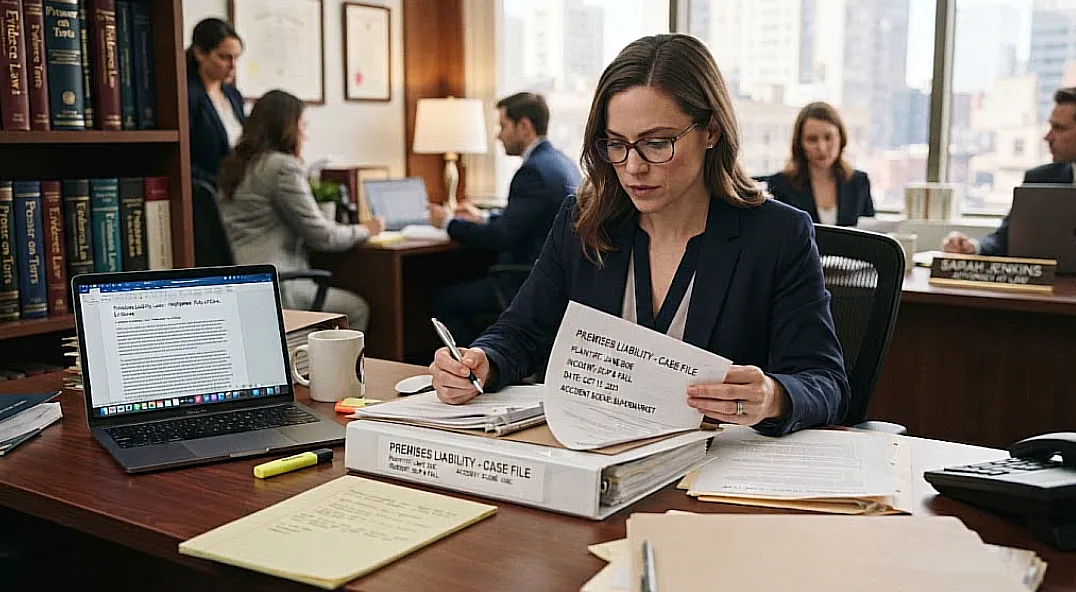
Premises liability refers generally to legal responsibility for injuries caused by conditions or activities associated with property.
In many cases, premises liability is based on negligence. Personal injury law generally recognizes negligence as a common basis for recovering compensation when someone fails to exercise the level of care reasonably expected under the circumstances and another person is injured as a result.
A premises liability claim may therefore involve allegations that a property owner, occupier, manager, or another responsible party:
The specific legal duty depends on the jurisdiction and circumstances.
Some states continue to distinguish among categories of visitors, such as invitees, licensees, and trespassers. Other states have moved toward broader reasonable-care standards rather than relying heavily on those traditional classifications.
That state-by-state variation is one of the most important things to understand about premises liability.
The property owner is not necessarily the only person or entity that can potentially be responsible.
Depending on the circumstances, a claim might involve:
The key issue is often not simply who holds legal title to the property. Courts may consider who possessed, controlled, maintained, operated, or had responsibility for the particular area or condition involved.
For example, a commercial building may be owned by one company, leased to another, maintained by a third-party contractor, and secured by a separate company.
Determining which party had a legal duty regarding the condition can therefore require examination of leases, maintenance agreements, contracts, property records, business practices, and other evidence.
Premises liability can involve many different injuries.
Common examples include:
The seriousness of the injury can affect the damages claimed, but the severity of an injury alone does not establish liability.
The injured person generally must still connect the injury to a legally actionable condition or conduct and establish the other requirements imposed by the applicable law.
Premises liability can arise in many settings.
Slip-and-fall accidents are among the situations commonly associated with premises liability.
A person might slip because of:
But the existence of a substance on a floor does not automatically establish that the property owner is legally liable.
The circumstances surrounding the hazard matter.
A key question may be whether the responsible party knew about the condition or should reasonably have discovered it and had an opportunity to address it.
People can also be injured because of physical defects in walking areas.
Examples include:
Evidence showing the condition of the property at the time of the accident can be particularly important.
Staircases can create serious injury risks when they are poorly maintained or improperly designed.
Potential hazards can include broken steps, loose railings, inadequate lighting, missing handrails, or other dangerous conditions.
Whether a particular condition creates liability depends on the applicable law and evidence.
A person may also be injured by an object that falls from a shelf, ceiling, structure, or another location.
Retail stores, warehouses, construction sites, and other properties can involve these types of risks.
A claim may depend on what caused the object to fall, who controlled the area, whether the condition was known or reasonably discoverable, and whether reasonable precautions were taken.
Swimming pools can create premises-liability issues involving inadequate barriers, unsafe conditions, defective equipment, inadequate warnings, or other hazards.
Special rules may apply to children and swimming pools depending on state law and the particular facts.
Inadequate lighting can contribute to falls and other accidents by preventing people from seeing hazards.
A claim could potentially involve dark stairwells, poorly illuminated parking areas, walkways, entrances, or other locations.
Again, the legal question is not simply whether an area was dark. The circumstances must be evaluated under the applicable duty and liability rules.
An invitee is generally someone who enters property with the express or implied invitation of the person in possession of the property.
A customer entering a store is a common example.
Under traditional premises-liability principles, property possessors generally owe invitees a duty of reasonable care to keep the premises reasonably safe and to warn of known dangerous conditions that are not open and obvious.
However, the precise legal duty varies by state.
Some jurisdictions have changed or abandoned the traditional classifications in favor of a broader reasonable-care approach. California, for example, adopted a general duty of reasonable care in Rowland v. Christian rather than retaining the traditional classifications as the primary framework.
Therefore, an article discussing invitees should not be read as establishing a uniform rule throughout the United States.
A licensee generally enters property with permission but not necessarily for a business purpose that benefits the property owner.
A traditional example is a social guest visiting someone's home.
The duties owed to licensees vary considerably among jurisdictions. Some states impose different standards than those applicable to invitees, while others use a broader reasonable-care approach.
This distinction can matter when determining whether a property owner had a legal obligation to inspect for, warn about, or correct a particular danger.
A trespasser generally enters or remains on property without permission.
Historically, property owners have often owed trespassers fewer duties than invitees or licensees.
However, that does not mean a property owner can always ignore dangers on the property when someone enters without permission.
There can be exceptions under state law, particularly where children are involved or where the property owner engages in conduct that creates a foreseeable risk of serious injury.
Because trespasser liability is highly dependent on state law and circumstances, the facts surrounding how and why the person entered the property can become important.
The attractive nuisance doctrine is a specialized premises-liability concept involving dangerous artificial conditions that may attract children onto property.
Under the traditional doctrine, certain circumstances can impose liability for injuries to children who trespass because of an artificial condition that creates a serious risk they may not appreciate. The Restatement approach considers factors such as whether the owner knows children are likely to trespass, whether the condition presents an unreasonable risk of serious harm, whether children are unlikely to recognize the danger, and whether the burden of eliminating the danger is slight compared with the risk.
The doctrine is not automatically applied to every dangerous object or feature.
Whether a swimming pool, construction area, abandoned structure, machinery, or another condition qualifies can depend on the jurisdiction and the particular circumstances.
The elements of a premises liability claim vary by state, but a negligence-based claim commonly requires evidence connecting the defendant's duty or responsibility to the dangerous condition and the resulting injury.
Depending on the jurisdiction, the injured person may need to establish issues such as:
These concepts resemble the general structure of negligence claims, but premises liability can involve additional rules concerning land ownership, possession, notice, visitor status, and the nature of the property condition.
Notice can be one of the most important issues in a premises liability dispute.
Suppose a customer slips on a puddle in a store.
The question may not simply be whether the puddle existed.
The court may need to determine whether the store knew about the puddle or whether the puddle existed long enough, or under circumstances sufficient, for the store to reasonably have discovered it.
There are generally two concepts that can arise:
Actual notice means the responsible party actually knew about the dangerous condition.
For example, an employee may have been told about a spill before the accident occurred.
A maintenance employee might have reported a broken railing.
A manager might have personally observed a dangerous condition.
Evidence of actual notice can include reports, emails, photographs, employee statements, inspection records, or surveillance footage.
Constructive notice is more complicated.
It generally involves circumstances in which the law treats the defendant as having reason to know about a condition even if there is no evidence that the defendant actually knew about it.
For example, evidence may suggest that a dangerous condition existed for enough time that reasonable inspection or maintenance practices should have discovered it.
The exact standard varies by state.
Some jurisdictions require specific proof concerning the duration of a hazard, while others analyze reasonable foreseeability and the circumstances differently.
That is why the timing and history of a dangerous condition can become extremely important.
A case can be different when the defendant actually created the hazard.
For example, imagine that a store employee carelessly leaves an object in the middle of a walkway and a customer trips over it shortly afterward.
The injured person may not need to prove that the store had a long period of time to discover the condition because the alleged negligence may involve the employee's creation of the hazard itself.
Similarly, if a property owner or contractor creates an unsafe condition during construction or maintenance, the evidence concerning how the condition was created can become central to the claim.
The specific legal requirements still depend on the jurisdiction.
A defendant may argue that the dangerous condition was open and obvious.
The basic idea is that a person should reasonably have been able to see or appreciate the danger and protect themselves.
Examples might include an obvious obstruction, clearly visible step, or condition that is plainly apparent under the circumstances.
But "open and obvious" does not automatically defeat every premises-liability claim.
The effect of an open-and-obvious condition depends on the state's law and the particular facts.
Some jurisdictions treat the issue as part of the duty analysis, while others consider whether the plaintiff acted reasonably or whether another exception applies.
The visibility of the condition, lighting, distractions, warnings, the person's purpose for being in the area, and other circumstances can all become relevant.
Yes, depending on the state's negligence rules.
A defendant may argue that the injured person failed to use reasonable care.
For example, the defendant might claim that the person:
Many states use some form of comparative negligence, under which a plaintiff's recovery may be reduced according to the plaintiff's assigned share of fault. Other states use modified comparative negligence rules or contributory negligence rules.
Because these rules differ significantly, the effect of a plaintiff's own conduct must be evaluated under the law of the relevant jurisdiction.
A warning sign can be important evidence, but its existence does not automatically eliminate liability.
A court may consider:
For example, a tiny sign placed behind an obstruction may present a different issue from a clearly visible warning placed directly before a dangerous condition.
The circumstances matter.
Evidence can make a major difference in premises-liability cases.
Useful evidence may include:
Photographs showing the dangerous condition can help establish what the property looked like after the accident.
If surveillance cameras are present, footage may be particularly valuable because it can show the condition before and during the accident.
Because businesses may routinely overwrite surveillance footage, identifying and preserving relevant recordings quickly can matter.
People who saw the accident or observed the dangerous condition beforehand may provide important evidence.
Their names and contact information can become useful later.
Businesses, property managers, security companies, and other organizations may create incident reports after an accident.
The availability and admissibility of such records depend on the circumstances and applicable evidentiary rules.
Medical records can help document the nature and extent of the injury, treatment received, and ongoing medical consequences.
They can also help establish the relationship between the accident and claimed medical expenses.
Records showing inspections, cleaning, repairs, maintenance schedules, complaints, or prior incidents may become relevant.
These documents can sometimes help establish whether a property owner or occupier knew or should have known about a condition.
For outdoor accidents involving rain, snow, ice, or other weather-related conditions, weather information can sometimes help establish the circumstances surrounding the hazard.
Generally, reporting the accident to the appropriate property manager, business, landlord, or other responsible person can create a record that the incident occurred.
If possible, an injured person should obtain a copy of any incident report or at least record when and to whom the accident was reported.
The report should accurately describe what happened without exaggeration or speculation.
An injured person should also seek appropriate medical attention for injuries rather than delaying necessary care simply because they are considering a legal claim.
After an injury, the immediate priority should be safety and medical care.
Once it is reasonably safe to do so, practical steps may include:
The exact steps depend on the circumstances.
If a premises-liability claim succeeds, damages may compensate an injured person for legally recognized losses.
Depending on the jurisdiction and facts, damages may include:
Personal injury damages can include both economic and non-economic losses.
The availability and calculation of particular damages varies by state.
An injured person should therefore avoid assuming that every type of damage is automatically recoverable in every jurisdiction.
Punitive damages are different from ordinary compensatory damages.
Their purpose is generally not simply to compensate the injured person but to punish particularly wrongful conduct and deter similar conduct.
Punitive damages are not available in every premises-liability case.
They generally require more than ordinary negligence, and the applicable standards vary by state.
A typical slip-and-fall caused by ordinary negligence should not automatically be treated as a punitive-damages case.
The defendant's conduct and the applicable state's law matter.
Apartment-related injuries can involve several potentially responsible parties.
For example, responsibility might involve:
The lease may also contain provisions concerning maintenance and responsibilities.
However, the existence of a lease provision does not automatically determine whether an injured person has a claim.
The law may impose duties based on possession, control, notice, building conditions, statutes, regulations, or other circumstances.
An apartment injury involving a broken staircase, defective railing, unsafe common area, inadequate maintenance, or another dangerous condition may therefore require examination of both the physical condition and the legal relationship among the parties.
Businesses that invite customers onto their premises can face premises-liability claims involving dangerous conditions.
Potential examples include:
A customer may have entered the property lawfully, but that alone does not prove the business was negligent.
The case may turn on whether the business had a legal duty, whether a dangerous condition existed, whether the business knew or should have known about it, whether reasonable precautions were taken, and whether the condition caused the injury.
Sidewalk cases can be especially complicated because the property owner may not be the party responsible for maintaining the sidewalk.
Depending on the location, responsibility may potentially involve:
Government entities may also be subject to special procedural requirements and legal protections.
For this reason, someone injured on a public sidewalk should determine who legally controlled and maintained the area rather than automatically assuming that the adjacent property owner is responsible.
Claims involving government property can involve additional legal issues.
Federal, state, and local governments may be subject to different statutes and procedural requirements governing lawsuits against government entities.
Depending on the jurisdiction, a claimant may have to provide a specific type of notice within a particular period before filing suit, and some claims can be subject to special statutory rules.
These requirements can be different from those governing a claim against a private business or homeowner.
Anyone injured on government property should therefore investigate the applicable rules promptly rather than relying solely on the general premises-liability rules that apply to private property.
There is no single nationwide deadline for every premises-liability claim.
The applicable statute of limitations depends on factors such as the state, type of claim, identity of the defendant, and circumstances of the injury.
A statute of limitations establishes a period in which a lawsuit generally must be filed.
Some cases can also involve special deadlines, such as claims against government entities.
There may be exceptions that affect when a limitations period begins or ends, but an injured person should not assume that an exception applies.
Because missing a filing deadline can seriously affect the ability to pursue a claim, anyone considering a lawsuit should determine the applicable deadline as early as possible.
A person can sometimes pursue a personal injury claim without an attorney, particularly when the dispute is relatively straightforward.
However, premises-liability cases can become complicated when:
A personal injury lawyer can evaluate the facts, identify potentially responsible parties, investigate evidence, communicate with insurers, calculate damages, negotiate a settlement, and pursue litigation when appropriate.
Whether hiring a lawyer makes financial sense depends on the circumstances of the claim.
Many premises-liability disputes begin with an insurance claim rather than immediately going to trial.
Depending on the property and circumstances, an insurance policy may potentially provide coverage for the claim.
An injured person may submit documentation concerning the accident, injuries, medical treatment, and financial losses.
The insurer may investigate the claim and may accept, negotiate, deny, or otherwise dispute liability or damages.
An insurance company's willingness to make an offer does not necessarily mean the offer represents the full value of a claim.
At the same time, an injured person should not assume that every claim is worth a particular amount simply because a similar accident received a particular settlement elsewhere.
The facts, injury, evidence, applicable law, insurance coverage, and liability issues can differ substantially between cases.
Property owners and insurers may raise several defenses.
A defendant may argue that another person or company was responsible for the area or condition.
The defendant may argue that there was no actual notice and that the condition was not present long enough, or under circumstances sufficient, to establish constructive notice under the applicable law.
The defendant may argue that a reasonable person should have noticed and avoided the condition.
The defendant may claim that the injured person's own conduct contributed to the accident.
The effect of that argument depends on the state's comparative or contributory negligence rules.
Even if a dangerous condition existed, the defendant may argue that it was not the actual cause of the accident or injury.
A defendant or insurer may dispute whether particular medical conditions or claimed losses resulted from the accident.
Medical records and expert evidence can become important when causation is disputed.
A dangerous condition can disappear quickly.
A spill can be cleaned. Snow can melt. A broken object can be repaired. A damaged area can be replaced.
Photographs taken soon after an accident may therefore become important evidence.
Delaying necessary medical attention can complicate both treatment and the documentation of an injury.
Medical decisions should be based on health needs, not solely on whether a legal claim might exist.
An accident occurring on someone's property does not automatically establish legal responsibility.
The applicable duty, notice, causation, and other requirements still matter.
People sometimes speculate about what caused an accident immediately afterward.
It is better to describe what was actually observed rather than guessing about facts that are not known.
Insurance companies or other parties may request statements, releases, or other documents.
An injured person should understand what they are signing and what rights may be affected before agreeing to anything significant.
Statutes of limitations and special government-claim deadlines can be critical.
Waiting until the end of a limitations period can also make evidence harder to obtain.
If you decide to consult a lawyer, useful information may include:
You do not necessarily need to have every document before speaking with an attorney.
A lawyer can help identify what additional evidence may be necessary.
There is no universal rule requiring an attorney for every premises-liability accident.
A consultation may become particularly useful when an injury is serious, the facts are disputed, the responsible party denies liability, multiple parties are involved, or the insurance company refuses to provide reasonable compensation.
It can also be important to seek legal advice quickly when a government entity may be responsible or when evidence such as surveillance footage could disappear.
A lawyer can also help determine whether the case involves premises liability, ordinary negligence, a defective product, negligent security, or another legal theory.
Premises liability is an important area of personal injury law involving injuries allegedly caused by dangerous conditions or activities associated with property. It can apply to accidents in stores, restaurants, apartment buildings, private homes, hotels, parking lots, sidewalks, recreational facilities, and many other locations.
A person is not automatically entitled to compensation simply because an injury occurred on someone else's property. The applicable law may require proof concerning the defendant's responsibility for the property or condition, the existence of a dangerous condition, notice or knowledge of the hazard, failure to take legally required precautions, causation, and actual damages.
The rules governing these claims vary significantly among states. Some jurisdictions continue to distinguish among invitees, licensees, and trespassers, while others apply broader reasonable-care standards.
Evidence can be particularly important. Photographs, surveillance footage, witness information, incident reports, maintenance records, medical records, and other documents may help establish what happened and whether the responsible party knew or should have known about the dangerous condition.
An injured person's own conduct can also affect the outcome. Many states apply comparative negligence rules that can reduce damages based on the plaintiff's share of fault, while other jurisdictions use different approaches.
Potential compensation may include medical expenses, lost wages, loss of earning capacity, pain and suffering, impairment, and other legally recognized losses. The amount and availability of damages depend on the facts and the applicable law.
Most importantly, someone injured on another person's property should pay attention to evidence and deadlines. Dangerous conditions can disappear, surveillance footage may not be preserved indefinitely, and statutes of limitations can prevent a claim from being filed after the applicable deadline.
Because premises-liability law is highly dependent on state law and individual circumstances, a person with a significant injury or disputed claim should consider obtaining advice from a qualified personal injury attorney familiar with the jurisdiction where the accident occurred.
This article provides general legal information and is not a substitute for legal advice about a specific situation.
Written by
BeastBeast is a seasoned legal content creator and law research specialist with 15+ years of experience in legal writing, legal research, and publishing educational law content. Specializing in Personal Injury, Family, Business, Immigration, Criminal, Tax, and Real Estate Law, Beast creates accurate, well-researched, and SEO-optimized legal guides that help readers understand complex legal topics with confidence. Every article is written with a focus on accuracy, trust, and Google's E-E-A-T guidelines, making Jurnza.com a reliable source for legal information and legal services.
