Document Generators
Injury & Compensation
Fees & Support
Deadlines & Filing
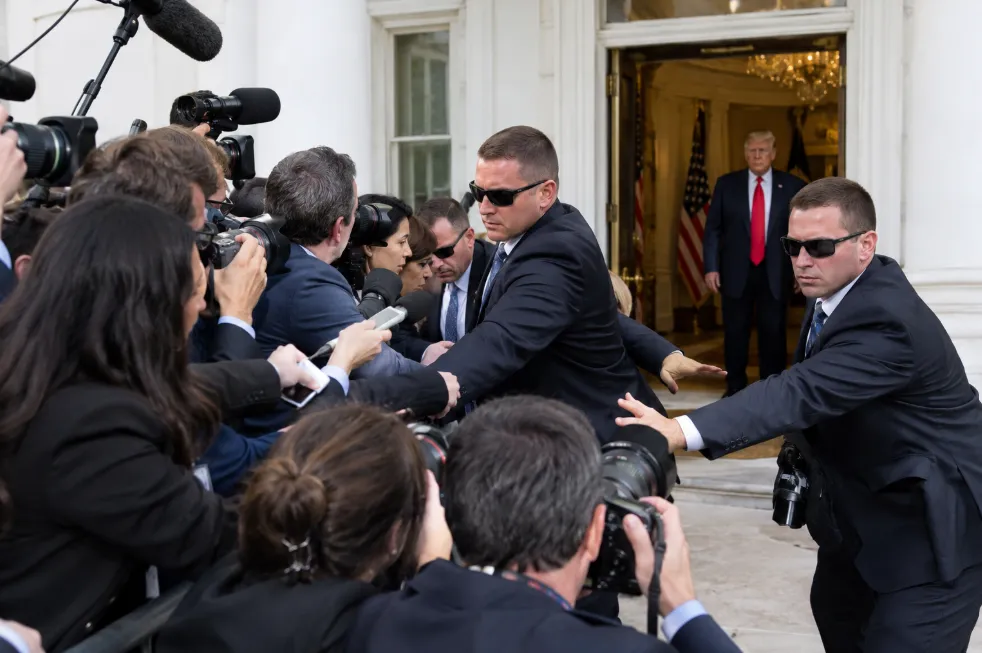
Can the government ban journalists from the White House because officials dislike their reporting? A major 2026 federal court battle involving CNN, MS NOW, and Politico is testing the limits of presidential power, press freedom, and the First Amendment. This guide explains the White House press-access dispute, viewpoint discrimination, government retaliation, Fifth Amendment due process, national-security arguments, press credentials, temporary restraining orders, preliminary injunctions, and what the case could mean for journalists and freedom of the press.
The relationship between the White House and the news media has become the subject of a major First Amendment legal battle after the Trump administration moved to revoke White House press access for journalists from CNN, MS NOW, and Politico. The dispute is now before a federal court in Washington, D.C., where the news organizations are challenging the administration's decision and seeking continued protection against being excluded/ban from the White House.
The case raises an important constitutional question: Can the government restrict a journalist's access to the White House because officials object to the journalist's reporting?
The answer is more complicated than simply saying that journalists have an absolute right to enter the White House.
The government has legitimate authority to establish security procedures, control access to government facilities, protect classified information, and organize a limited presidential press pool. But those powers operate within constitutional limits.
The media organizations argue that the administration crossed those limits by targeting them because of unfavorable reporting. They say the government's action violates the First Amendment's protections for freedom of speech and freedom of the press and also violates due-process protections under the Fifth Amendment.
The administration disputes that characterization. Government lawyers argue that White House access is a privilege rather than an unrestricted constitutional right and that national-security and professional-conduct concerns justified the restrictions.
The legal battle therefore involves several fundamental principles: freedom of the press, viewpoint discrimination, government retaliation, due process, executive authority, national security, and access to government facilities.
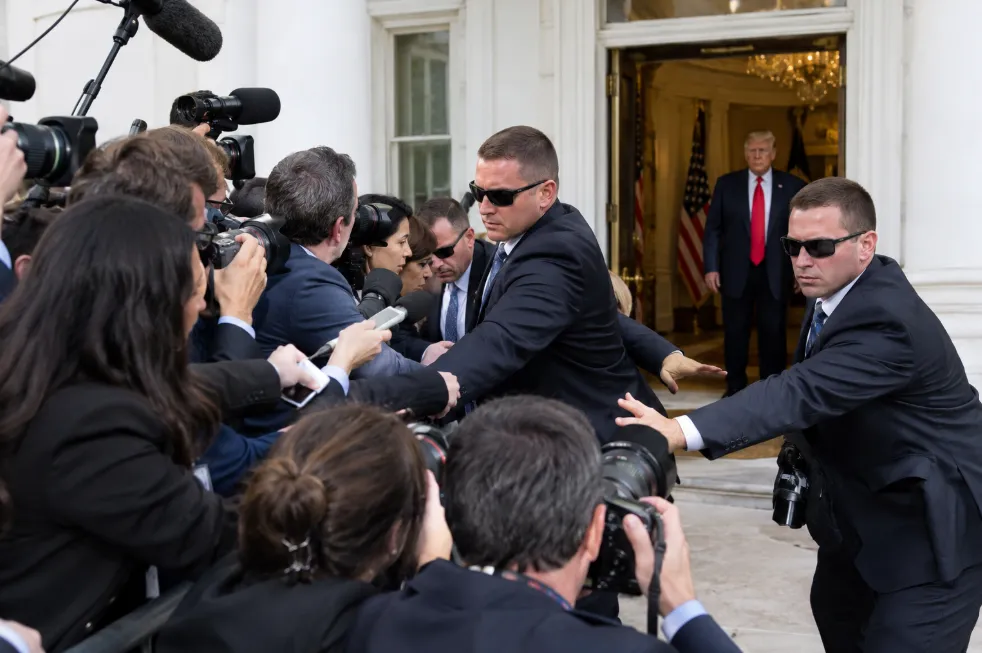
The dispute began in September 2026 when President Donald Trump announced that CNN, MS NOW, and Politico would be banned from the White House.
Trump accused the organizations of publishing what he described as "fake news" and unfavorable coverage of his administration.
Journalists from the organizations subsequently had their White House press credentials revoked or deactivated.
The three news organizations responded by filing a lawsuit in federal court in Washington, D.C.
They argued that the government had punished them because of their reporting and editorial viewpoint.
The case is formally known as Cable News Network, Inc. v. Trump.
The lawsuit quickly became a constitutional dispute over whether the government can condition access to a government facility on favorable or acceptable news coverage.
Yes.
On September 24, U.S. District Judge Timothy Kelly issued a temporary restraining order requiring the administration to restore the White House "hard pass" credentials for employees of CNN, MS NOW, and Politico.
The order temporarily prevented the administration from enforcing the ban while the case proceeded.
Judge Kelly's order was particularly significant because it found that the plaintiffs had presented sufficient grounds for immediate judicial relief.
The judge's September order focused heavily on due-process concerns. The court concluded that the journalists had not received adequate procedural protections before their credentials were revoked.
The temporary order was set to last for 14 days.
That did not end the lawsuit.
Instead, it allowed the court to consider whether the media organizations should receive longer-term protection while the underlying constitutional claims are litigated.
The legal battle continued in federal court on October 8.
CNN, MS NOW, and Politico asked Judge Kelly to extend protection against the White House ban through a preliminary injunction while the lawsuit continues.
Their lawyers argued that the restrictions amount to unconstitutional retaliation for reporting that the administration dislikes.
The government continued to defend the restrictions.
Justice Department lawyers argued that the administration has legitimate reasons for controlling access to the White House, including protecting national-security information and enforcing professional standards for journalists.
The judge has not yet issued a final decision resolving the underlying First Amendment dispute.
According to AP, Judge Kelly indicated that he expected to rule soon on whether to continue the order protecting the journalists' access.
That means the case remains active and could develop further as the court considers the constitutional claims.
Yes, the First Amendment protects freedom of speech and freedom of the press.
It provides that Congress may not abridge freedom of speech or of the press.
Those protections are fundamental to the American constitutional system.
But the existence of First Amendment protection does not mean journalists have an unlimited right to enter every government facility or attend every government event.
Government buildings can have security restrictions.
Certain areas can be restricted.
Classified information can be protected.
Presidential travel can involve limited press pools.
The constitutional question is therefore not simply whether a journalist has a general right to enter the White House.
Instead, courts may need to determine whether the government used access rules to punish protected speech or discriminate against particular viewpoints.
That distinction is central to the current lawsuit.
Viewpoint discrimination occurs when the government treats speech differently because of the opinion, perspective, or message expressed.
For example, imagine a government agency allows journalists who praise its policies to attend a briefing but excludes journalists who criticize those policies.
That could raise serious First Amendment concerns.
The media organizations in the current White House dispute argue that something similar happened to them.
They contend that the administration objected to their negative reporting and used control over press access as a way to punish or discourage that reporting.
The government rejects that characterization and points instead to alleged concerns involving accuracy, professionalism, and national security.
Determining which explanation is legally supported by the evidence is an important part of the case.
Generally, the government cannot punish someone for exercising a constitutional right simply because officials dislike the person's protected speech.
This principle is commonly referred to as First Amendment retaliation.
A retaliation claim can arise when:
The precise legal requirements depend on the circumstances.
In the White House press case, the media organizations argue that their reporting constituted protected speech and newsgathering and that the withdrawal of their access was punishment for that reporting.
The administration argues that the restrictions were based on legitimate concerns rather than an attempt to suppress criticism.
The court must therefore examine the evidence surrounding the government's decision.
This is one of the trickier parts of the case.
Journalists do not necessarily possess an unlimited constitutional right to enter every government facility.
The White House is also a highly secure government complex.
The president and federal agencies can establish reasonable rules governing physical access.
However, government authority over access does not necessarily allow officials to discriminate based on protected speech.
That is why the distinction between access control and speech-based retaliation matters.
The government may have legitimate reasons to control who enters a secure facility.
But if those rules are applied selectively because officials dislike someone's reporting, the First Amendment may become relevant.
A White House hard pass is a press credential used by eligible journalists who regularly cover the White House.
It allows authorized journalists to access certain areas of the White House complex without obtaining temporary permission for every visit.
Hard passes are particularly important for reporters who cover the president on a regular basis.
They make it possible for journalists to respond quickly to breaking developments and attend official events.
The ability to revoke a hard pass therefore can have practical consequences beyond simply preventing a reporter from entering a building.
It can affect the journalist's ability to perform ordinary reporting duties.
That is one reason courts have previously considered due-process protections in disputes involving White House press credentials.
The Fifth Amendment provides that the federal government may not deprive a person of life, liberty, or property without due process of law.
Due process generally involves fundamental procedural fairness.
Depending on the circumstances, this can include notice of the government's proposed action and an opportunity to respond.
The precise amount of process required depends on the interests involved and the government's justification for acting.
In the current press-access case, Judge Kelly's September order found significant concerns about the process used to revoke the journalists' credentials.
The media organizations argue that they were denied adequate notice and a meaningful opportunity to challenge the government's accusations before losing access.
The administration argues that it provided adequate explanations and opportunities to respond.
The court must determine whether the procedures used were constitutionally sufficient.
Because government control over access can sometimes affect speech.
Imagine two reporters covering the same government agency.
One consistently publishes favorable stories.
The other frequently criticizes the agency.
If the government allows both reporters equal access, there may be little First Amendment concern simply because the government controls physical access.
But if the government gives the favorable reporter access while removing the critical reporter specifically because of the critical reporting, the constitutional analysis changes.
The government would be using an administrative decision to distinguish between viewpoints.
That is why the media organizations argue that their case involves more than ordinary credentialing.
The Trump administration has offered several defenses.
Government lawyers argue that the White House has legitimate reasons to regulate press access.
One of those reasons involves national security.
The administration has accused the targeted organizations of publishing sensitive or classified information.
Government lawyers also point to standards of professionalism and decorum.
Their position is essentially that the president and White House officials should be able to establish reasonable standards for journalists who receive access to the presidential complex.
The government has also argued that White House access is a privilege rather than an unrestricted constitutional entitlement.
These arguments create the central conflict in the case.
The media organizations say the government is using legitimate-sounding standards as a justification for punishing unfavorable reporting.
The government says it is exercising lawful authority to protect sensitive information and maintain professional standards.
Potentially, yes.
National security is an important government interest.
The government can protect classified information and take reasonable steps to prevent unauthorized disclosure.
But invoking national security does not automatically eliminate constitutional protections.
Courts may examine whether the claimed security concern is genuine and whether the government's response is legally justified.
The timing and circumstances surrounding an access restriction can therefore matter.
If officials publicly criticize a news organization for negative coverage and then revoke its credentials, a court may examine whether the stated security rationale was actually the reason for the decision.
This does not mean every national-security justification is invalid.
It means constitutional courts can examine whether the government has acted within its legal authority.
A preliminary injunction is a court order that temporarily requires a party to do something or refrain from doing something while litigation continues.
It does not necessarily resolve the entire lawsuit.
Instead, it is designed to preserve the situation or prevent serious harm while the court considers the underlying claims.
In the White House press dispute, the media organizations are seeking continued protection against the ban while their lawsuit proceeds.
If the judge grants a preliminary injunction, the administration could be prevented from enforcing the challenged restrictions until the case reaches a later stage or the court issues another order.
The exact scope and duration would depend on the judge's ruling.
A temporary restraining order, or TRO, is generally an emergency form of judicial relief.
It can be issued quickly when a party argues that immediate action is necessary to prevent significant harm.
Judge Kelly issued a TRO in September requiring the administration to restore the journalists' White House credentials.
The order was temporary.
That distinction is important because a TRO is not the same as a final ruling on the constitutionality of the government's actions.
The underlying lawsuit can continue even after a TRO is issued.
If Judge Kelly issues a preliminary injunction, CNN, MS NOW, and Politico could retain the protections provided by the court while their broader lawsuit continues.
The government could potentially appeal aspects of the ruling.
The underlying constitutional claims could then proceed through further litigation.
The case could eventually reach a federal appeals court and potentially the Supreme Court, depending on how the litigation develops.
However, a preliminary injunction would not necessarily mean the media organizations have permanently won.
It would mean that the court believes continued protection is appropriate while the legal dispute is resolved.
Potentially.
Even if the media organizations receive continued protection against a broad ban, that would not necessarily mean every journalist has unlimited access to every presidential event.
The White House can have legitimate security and logistical restrictions.
For example, presidential travel often involves a limited press pool because physical space is restricted.
The legal question can therefore become more complicated when the government distinguishes between general White House access and access to particular events or travel arrangements.
Recent disputes involving presidential travel have demonstrated that distinction.
The administration has continued to restrict certain access even after the September court order restored broader credentials.
That could create additional legal questions for the court.
The dispute has expanded beyond the White House grounds.
The administration has also prevented certain journalists from participating in particular presidential travel activities.
For example, Politico was recently prevented from traveling on Air Force One as part of the presidential press pool.
CNN has also faced restrictions concerning presidential travel.
These events are significant because presidential travel pools are limited by physical space.
The government therefore has stronger logistical reasons to control participation.
But the media organizations argue that even limited-access systems cannot be manipulated to punish journalists because of their viewpoints.
That issue could become part of the broader constitutional debate.
The president has substantial executive authority, but presidential power is not unlimited.
The First Amendment places constitutional restrictions on government action.
The president also must comply with federal laws and constitutional requirements when exercising executive authority.
The press-access dispute demonstrates how courts can act as a check when the executive branch is accused of exceeding constitutional limits.
At the same time, courts generally recognize that the executive branch has legitimate responsibilities involving national security, presidential operations, and physical security.
The challenge is determining where lawful executive authority ends and unconstitutional retaliation begins.
The case could affect how future administrations interact with the press.
If the government could freely revoke press credentials whenever officials disliked unfavorable reporting, journalists could face significant pressure to avoid stories that anger those in power.
That could create a chilling effect.
A journalist might reasonably worry that an investigative story could result in losing access to government officials or facilities.
The media organizations argue that this possibility threatens independent journalism.
The administration responds that journalists cannot expect unrestricted access regardless of professional conduct or national-security concerns.
The court's decision could help clarify how these competing interests should be balanced under the Constitution.
Yes.
Although the lawsuit was brought by CNN, MS NOW, Politico, and individual journalists, the legal principles could extend beyond those organizations.
A ruling addressing government retaliation and press access could influence future disputes involving:
The broader question is whether government officials can use control over official access to influence journalistic behavior.
That issue is not limited to one administration.
Courts examining a constitutional retaliation claim may look closely at the circumstances surrounding the government's decision.
Potentially relevant evidence could include:
Evidence can help courts determine whether the government's stated reason was genuine or whether it was being used as a justification for another purpose.
Several outcomes are possible.
The court could continue protecting the journalists' White House access while the lawsuit proceeds.
This would allow the constitutional claims to be litigated without the journalists facing an immediate broad ban.
The court could allow some restrictions while blocking others.
For example, general access might be protected while certain security-sensitive events remain subject to additional rules.
If the court concludes that the plaintiffs have not met the legal requirements for a preliminary injunction, the temporary protection could eventually expire.
The lawsuit could still continue.
Either side could seek review of significant rulings by a federal appeals court.
Depending on the outcome and legal questions involved, the case could potentially continue through the federal appellate system.
It is possible, although that is not guaranteed.
Federal constitutional disputes involving the First Amendment can ultimately reach the Supreme Court when the legal requirements for Supreme Court review are satisfied.
However, most federal cases do not reach the Supreme Court.
The immediate focus is the district court proceedings and whether the media organizations receive longer-term protection.
The constitutional principles established by the lower courts could nevertheless become important even if the case never reaches the Supreme Court.
The case illustrates why freedom of the press is more complicated than simply allowing journalists to publish stories.
A free press also depends on journalists being able to gather information, question public officials, attend government proceedings, and report on government activity.
At the same time, governments have legitimate interests in protecting security and managing access to sensitive facilities.
The constitutional challenge is to prevent legitimate administrative authority from becoming a mechanism for suppressing disfavored viewpoints.
That is the heart of the current dispute.
It would be easy to treat the case as another political dispute between a president and news organizations.
But the underlying legal questions are much broader.
The case asks whether government officials can punish or restrict access for speech they dislike.
It asks how the First Amendment applies when government access is limited rather than completely open.
It asks how due process applies when a government credential is revoked.
It asks how courts should evaluate national-security explanations offered by executive officials.
And it asks how constitutional protections should operate when the president personally criticizes particular news organizations.
Those are legal questions that could matter regardless of which political party controls the White House.
Journalists should understand that press freedom provides important constitutional protections, but those protections operate within a broader legal framework.
Reporters can generally engage in protected speech and newsgathering.
However, government facilities can have legitimate access restrictions.
Journalists covering federal agencies should therefore understand the relevant credentialing rules and preserve records if their access is unexpectedly restricted.
If a journalist believes government officials have retaliated against them because of protected reporting, consulting an attorney experienced in constitutional or First Amendment law may be appropriate.
The public should also understand that press freedom protects more than individual journalists.
A functioning free press helps the public receive information about government activity.
When journalists investigate government officials, the public benefits from having independent reporting that can challenge official statements and uncover information.
That does not mean every news story is accurate.
Journalists and news organizations can make mistakes and may face legitimate legal consequences in appropriate circumstances.
But the government generally cannot simply decide that unfavorable reporting is unacceptable and use official power as punishment.
Determining whether that is what happened here is one of the central legal questions before the court.
The White House press-access dispute involving CNN, MS NOW, and Politico has become an important First Amendment and constitutional-law case.
The Trump administration argues that restrictions on the organizations are justified by concerns involving national security, accuracy, professionalism, and control over White House access. The media organizations argue that the restrictions are retaliation for unfavorable reporting and violate freedom of the press, free speech principles, and due-process protections.
A federal judge already ordered the administration to restore the journalists' credentials temporarily after finding serious constitutional concerns with the way the access was revoked. On October 8, 2026, the parties returned to court as the media organizations sought longer-term protection while their lawsuit continues.
The ultimate question is not simply whether the president can control access to the White House. Government officials clearly have legitimate authority to manage security and logistics.
The harder constitutional question is whether that authority can be used to punish journalists because of their reporting or viewpoint.
Whatever happens next, the case could provide important guidance about the relationship between executive power, press freedom, government access, and the First Amendment.
Written by
BeastBeast is a seasoned legal content creator and law research specialist with 15+ years of experience in legal writing, legal research, and publishing educational law content. Specializing in Personal Injury, Family, Business, Immigration, Criminal, Tax, and Real Estate Law, Beast creates accurate, well-researched, and SEO-optimized legal guides that help readers understand complex legal topics with confidence. Every article is written with a focus on accuracy, trust, and Google's E-E-A-T guidelines, making Jurnza.com a reliable source for legal information and legal services.
