Document Generators
Injury & Compensation
Fees & Support
Deadlines & Filing
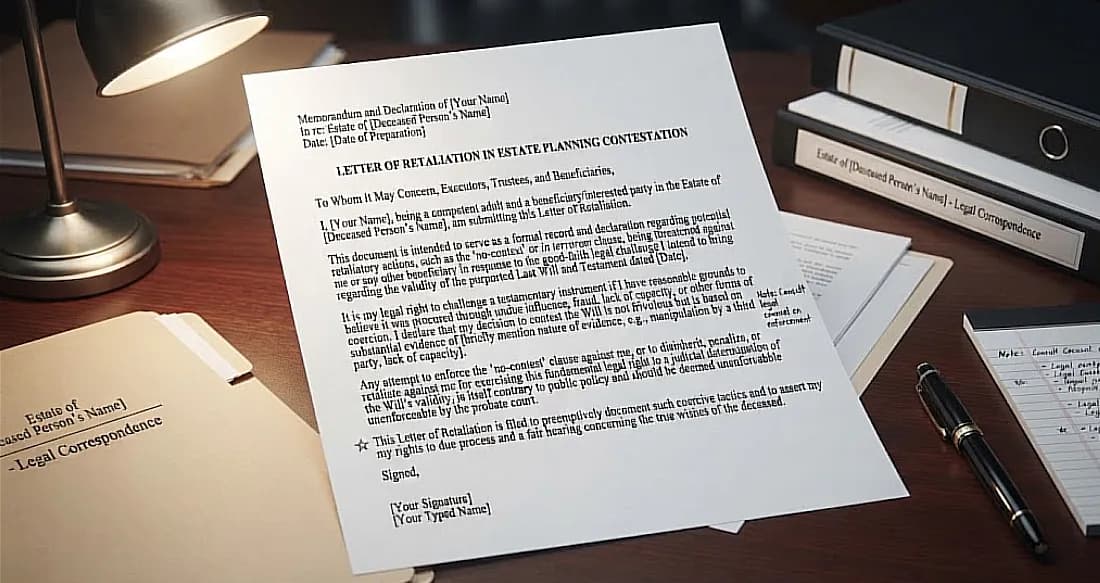
A letter of instruction can make estate administration easier by giving an executor or family members practical information about your financial accounts, property, insurance, debts, digital assets, important documents, pets, and personal wishes. Unlike a will or trust, it is generally not intended to be legally binding or to transfer property. This guide explains what a letter of instruction is, how it differs from a will, what information to include, how to protect sensitive details, when to update it, and why it should always remain consistent with your formal estate-planning documents.
Estate planning is often associated with wills, trusts, powers of attorney, beneficiary designations, and other formal legal documents. These documents are essential because they can establish legally recognized instructions for managing property, finances, health care, and other important matters include Letter of Instruction.
But even a carefully prepared estate plan may leave family members with practical questions.
Where are the important documents? Which financial institutions hold accounts? Who is the estate planning attorney Where is the safe-deposit box? Which bills are still being paid? Does the deceased person have a life insurance policy, retirement account, business interest, or valuable personal property? What should happen with pets? Are there particular funeral or memorial preferences?
A letter of instruction can help answer these practical questions. A letter of instruction is generally an informal document that provides additional information and guidance to an executor, personal representative, trustee, or family members. Unlike a will, it is generally not intended to legally transfer property or replace formal estate-planning documents. The American Bar Association notes that a letter of instruction or general statement of preferences does not substitute for the legally operative language needed in a will.
Instead, the letter can serve as a roadmap.
It can tell the people handling your affairs where to find important information and explain practical preferences that may not belong in a will. Fidelity similarly describes a letter of instruction as supplemental information for an executor, personal representative, or family members and emphasizes that it should not contradict formal estate-planning documents.
This guide explains what a letter of instruction is, what it can include, what it should not attempt to do, how it differs from a will, how to organize one, and why keeping it updated can be an important part of an overall estate plan.
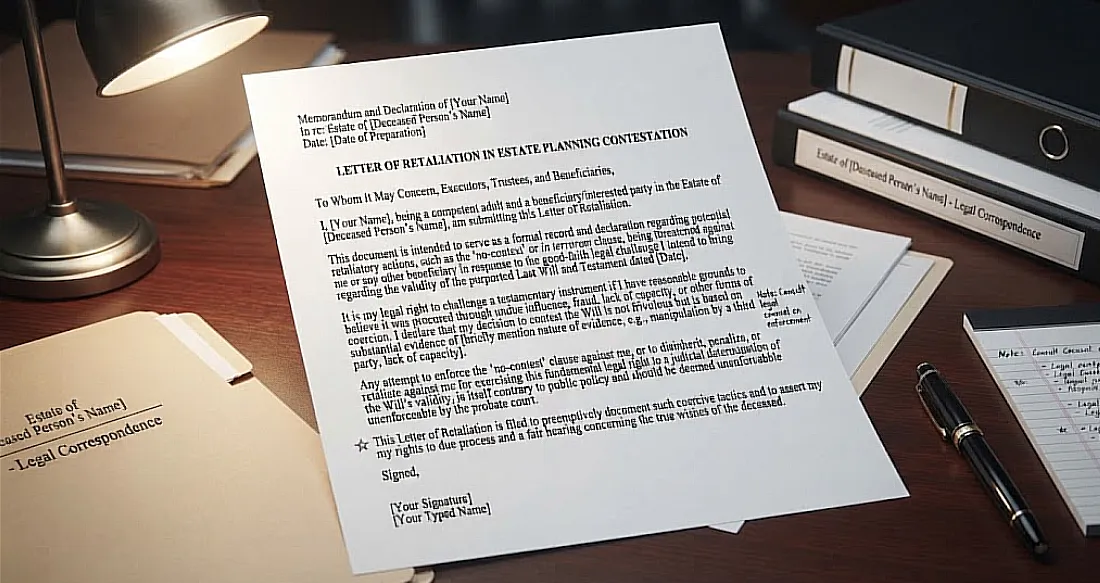
A letter of instruction is a supplemental document that provides practical information about your affairs and wishes.
It may be addressed to:
The document can explain where important information is located and provide details that make estate administration easier.
For example, a letter might say that your will is stored in a particular location, identify your financial advisor, explain where property records are kept, list insurance policies, provide information about recurring bills, or identify the location of personal items.
It can also contain personal preferences, such as funeral or memorial wishes, instructions concerning pets, or information about sentimental possessions.
The exact contents are flexible.
That flexibility is one of the reasons a letter of instruction can complement a formal estate plan.
Generally, a letter of instruction is not intended to be legally binding.
This is one of the most important things to understand.
A letter of instruction should not be treated as a substitute for a properly executed will, trust, beneficiary designation, power of attorney, health care directive, or other legal document.
The American Bar Association explains that a proper will needs appropriate testamentary language to dispose of assets. A letter expressing general preferences does not necessarily accomplish that legal function.
Similarly, Fidelity explains that a letter of instruction can supplement an estate plan but should not be used to make informal changes to a will or revocable trust.
This distinction matters because someone might write:
“I want my daughter to have my car.”
If that instruction conflicts with a valid will or does not satisfy the applicable state law for transferring personal property through a separate document, the letter may not legally accomplish the intended transfer.
A better approach is to use formal estate-planning documents for legally binding decisions and use the letter of instruction for supplemental information and practical guidance.
The main purpose is organization.
After someone dies, family members and the person responsible for administering the estate may need to locate documents, identify assets, contact institutions, address debts, communicate with professionals, and handle personal matters.
The process can be emotionally difficult while also involving significant administrative responsibilities.
The IRS explains that an estate administrator may need to collect assets, pay creditors, provide an accounting, handle tax matters, and distribute property according to applicable legal requirements.
A well-organized letter can make it easier to locate the information necessary to begin those tasks.
It can provide a central roadmap covering:
The goal is not to create another complicated legal document.
The goal is to reduce confusion.
A letter of instruction and a will serve different purposes.
A will is a formal legal document used to express legally recognized instructions concerning the disposition of property and other matters covered by state law.
A letter of instruction is generally an informal supplemental document intended to provide practical information and personal guidance.
For example, a will might legally identify beneficiaries and specify how property should be distributed.
A letter of instruction might tell the executor:
The letter should support the estate plan rather than compete with it.
Suppose your will says your collection of valuable watches goes to one beneficiary, but your letter of instruction says you want those watches divided among several other people.
That creates a conflict.
A letter of instruction should not be used as an informal way to rewrite the will.
If you want to change a legally binding distribution, consult an estate-planning attorney and update the appropriate formal document.
A trust is another formal estate-planning tool with legal consequences.
Depending on its structure, a trust can hold property, establish management instructions, identify beneficiaries, and provide rules for distributions.
A letter of instruction can instead provide additional context to the trustee.
For example, someone creating a trust for a child might provide supplemental information about educational goals, family circumstances, or personal values.
However, the letter should not attempt to override the trust agreement.
Fidelity notes that a letter of intent or side letter may provide additional context to a trustee or executor, but it is not intended to be legally binding and should be reviewed for consistency with the formal estate-planning documents.
There is no single required format.
The contents depend on your circumstances, family situation, assets, and estate plan.
A useful letter can include the following categories.
Start with the people your family or executor may need to contact.
Consider including:
Include names, phone numbers, email addresses, and company information where appropriate.
This can save family members from searching through old emails or documents to identify professional contacts.
Tell the people handling your affairs where the important documents are located.
These might include:
The American Bar Association's current estate-planning information similarly recommends gathering details about existing wills and trust documents, property deeds, tax returns, marriage or divorce documents, and safe-deposit boxes when preparing an estate plan.
You do not necessarily need to put copies of every document inside the letter.
Instead, explain where they can be found.
A letter of instruction can provide an inventory of financial accounts.
This may include:
For each account, consider recording:
Avoid putting unnecessary sensitive information in an unsecured document.
In particular, a letter of instruction should not become a master list of passwords that could expose you to identity theft during your lifetime.
If you own real estate, identify each property.
You may include:
The letter can also identify where the original property records are stored.
The actual transfer of real estate, however, should be handled according to the applicable estate-planning documents and state law.
List important insurance policies and explain where policy documents can be found.
These may include:
For life insurance, identify the insurer and policy location.
Do not assume the executor will automatically know that a policy exists.
Your family may also need to know about outstanding financial obligations.
Consider identifying:
A letter can provide contact information for creditors and indicate where statements are stored.
However, the letter does not determine who is legally responsible for a debt.
Generally, a deceased person's debts are handled through the estate, subject to applicable law and exceptions. The Consumer Financial Protection Bureau explains that relatives generally are not personally responsible for another person's debts merely because they are relatives, although exceptions can apply, including certain co-signed or jointly held debts and some state-law rules.
Taxes can become an important part of estate administration.
Identify where you keep:
The executor or personal representative may need these records when handling the estate.
The IRS explains that authorized estate representatives may need to request tax information belonging to a deceased person and generally must provide documentation proving their authority.
The letter can therefore help identify where records are located, but it does not give someone legal authority to access confidential tax information.
Business owners should consider adding information about their business interests.
This may include:
If you own an LLC, corporation, partnership interest, or another business interest, your formal business documents may contain specific rules concerning death, ownership transfers, buyouts, or succession.
The letter should identify those documents rather than attempt to replace them.
Modern estate planning increasingly involves digital property.
A letter of instruction can identify the existence and location of:
The letter can also explain what devices exist and where important digital records are stored.
However, do not assume that knowing someone's password automatically gives another person legal authority to access every account.
Digital-service agreements, privacy laws, account policies, and applicable state laws can affect access.
For cryptocurrency and other digital assets, identifying that the asset exists is particularly important because the asset may be difficult to locate without appropriate records.
The IRS currently treats digital assets as property for federal tax purposes, and its estate-tax materials specifically address digital assets among property that can be relevant to an estate.
Passwords require special care.
A letter of instruction can explain where secure login information can be accessed without placing all passwords directly into the letter.
For example, you might state:
“Password information is stored in my password manager. Instructions for accessing the emergency account are located with my estate-planning documents.”
A separate password manager, secure vault, or other appropriate system may be safer than writing every password into an ordinary document.
Also consider whether your chosen person actually has the legal authority to access the accounts in question.
People sometimes overlook personal property because it may not seem financially significant.
But sentimental possessions can become a major source of family disagreement.
Consider listing items such as:
If you have a legally valid method for directing specific personal property to particular people under your state's law, use the appropriate formal document or legally recognized separate list.
A letter can provide additional context, but it should not be relied upon to create a legally enforceable gift if the law requires something else.
Pet care is another practical issue.
Your letter can identify:
A letter can explain your wishes, but formal estate-planning arrangements may be appropriate if you want legally enforceable provisions for ongoing pet care.
Funeral or memorial preferences can be included in a letter of instruction.
You might describe preferences concerning:
A letter can be particularly useful here because practical decisions may need to be made quickly.
Fidelity notes that a letter of instruction can communicate personal wishes surrounding funeral arrangements and other information that may be difficult for family members to locate after a death.
However, state law can determine who has authority to make certain final-disposition decisions.
You may also want to create a contact list.
This can include:
For privacy reasons, think carefully about what information should be included and who should receive the document.
A letter of instruction does not have to be purely administrative.
You can include personal messages to family members or explanations of your values.
For example, you might explain:
These messages are generally not substitutes for legally binding estate instructions.
Their purpose is communication, not legal enforcement.
Knowing what to leave out is just as important as knowing what to include.
If you decide to change who receives your property, do not simply write the change into your letter.
Update the appropriate legal document.
An informal letter can create confusion or potentially contribute to disputes if it contradicts the formal estate plan. Fidelity specifically advises against using a letter of instruction to change estate-planning documents.
If you have a trust, make sure the letter is consistent with the trust agreement.
Do not use informal language to impose requirements that conflict with the trust.
A letter does not automatically make someone an executor, trustee, agent, or personal representative.
Legal authority generally comes from the applicable formal document, court appointment, or other recognized legal mechanism.
For example, the IRS explains that an executor or estate administrator generally needs documentation establishing authority when requesting certain information concerning a deceased taxpayer.
Avoid creating a document containing every password, PIN, security question, Social Security number, and account credential unless there is a secure and carefully considered reason to do so.
Instead, identify where secure information can be accessed.
You do not need complicated legal language.
Start with a simple introduction.
For example:
“I have prepared this letter to help my family, executor, trustee, and other representatives locate important information and understand my personal wishes. This letter is intended to supplement, not replace, my formal estate-planning documents.”
Then organize the information by category.
A useful structure might be:
Keep the writing straightforward.
The person reading it may be dealing with a stressful situation, so clarity is more valuable than legal-sounding language.
You can include enough information to help identify an account without unnecessarily exposing sensitive information.
For example:
“Bank of Example — checking account ending in 4821.”
Then identify where the full account documentation can be found.
The goal is to help your executor locate the account, not create a security vulnerability.
Consider giving your executor or personal representative information about where the letter is kept.
You may also provide a copy to your attorney or trustee where appropriate.
Fidelity recommends keeping the letter with estate-planning documents and considering providing copies to relevant people, including the executor, while updating it as circumstances change.
The exact approach depends on how sensitive the information is.
Choose a location that is:
Potential locations include:
A document that is perfectly written but impossible to find is not very useful.
Make sure someone who needs it knows that it exists.
Review it regularly.
There is no universal rule requiring you to update a letter every particular number of months, but annual review is a practical approach.
You should also review it after major life events.
These can include:
Estate planning documents may also need review after these events.
The ABA notes that estate-planning preparation involves identifying current assets, beneficiaries, debts, documents, and other information, while Fidelity similarly recommends reviewing estate plans when circumstances or laws change.
Nothing automatically invalidates your estate plan simply because you do not have a letter of instruction.
It is generally a supplemental organizational tool, not a required component of every estate plan.
However, without one, family members may have to spend more time figuring out:
The absence of a letter does not necessarily prevent an estate from being administered.
It can simply make the information-gathering process more difficult.
It may help reduce confusion, but it cannot guarantee that family disputes will not occur.
Clear communication can make it easier for family members to understand your intentions.
The American Bar Association has noted that communication with family members about an estate plan can help reduce surprises and misunderstandings, while also emphasizing the responsibilities associated with selecting executors and trustees.
Still, a letter should not be used as a substitute for properly drafted legal documents.
If a distribution matters legally, put it in the appropriate legal document.
If an explanation or practical detail helps people understand the plan, consider putting that information in the letter.
This is one of the situations you want to avoid.
If your letter contains instructions inconsistent with your formal estate plan, it may create confusion and potentially lead to disagreement.
For example, suppose your will leaves a particular property to your son, while your letter says you want your daughter to receive it.
Do not assume the letter overrides the will.
The legal effect of such a conflict depends on applicable law and the specific documents involved.
The safer approach is to keep the documents consistent and consult an estate-planning attorney if you want to change your wishes.
A young family may not own a complicated estate, but a letter can still be useful.
Parents might identify:
The letter can help a surviving spouse or another representative quickly understand the family's financial and practical arrangements.
For someone with a larger or more complex estate, the letter may become more detailed.
It might include:
The more complex the estate, the more valuable organization can become.
However, greater complexity also means it is especially important to coordinate the letter with formal legal and financial planning.
Business owners should give special attention to succession documents.
Your letter might explain where to find:
Do not assume that the letter itself determines who receives or controls the business.
Those rights may be controlled by formal agreements, ownership documents, estate-planning instruments, and state law.
A letter of instruction does not eliminate estate taxes.
Tax obligations depend on the applicable federal and state rules and the specific assets and circumstances involved.
Nevertheless, a well-organized letter can help an executor locate the information needed to evaluate tax issues.
The IRS states that a personal representative may have responsibilities involving the deceased person's final income tax return and, when applicable, estate tax matters.
For example, identifying the location of prior tax returns, investment records, property records, and insurance documents may help the representative gather information.
A letter can make debts easier to identify.
But it does not determine which debts are legally enforceable against the estate or who must pay them.
The CFPB explains that debts generally belong to the deceased person's estate, subject to exceptions and applicable state law. A personal representative does not ordinarily become personally liable for the deceased person's debt simply by serving as executor or administrator.
The practical value of the letter is therefore organizational.
It can help identify the creditors so the appropriate representative can address the debts through the proper legal process.
Probate procedures vary by state.
A letter of instruction does not eliminate probate simply because it contains a list of assets or wishes.
If probate is required, the executor or administrator may still need to follow the applicable court process.
The IRS explains that an estate administrator may be appointed through probate and may need formal documentation establishing authority to act for the estate.
The letter can make the process easier by helping the representative locate information, but it does not replace court authority.
The biggest mistake is assuming informal instructions legally transfer property.
They generally do not.
An old list of bank accounts and advisors can become useless if you have changed institutions.
Security is important, but so is accessibility.
Your executor should know where to find it.
Your letter should support your estate plan.
Consider using a secure password-management system instead.
Modern estates can contain valuable digital property and important online records.
Your executor needs to know about mortgages, loans, credit cards, and other obligations.
Family disputes can involve sentimental belongings even when those belongings have limited financial value.
Knowing the name of your attorney, accountant, financial advisor, and insurance professional can save significant time.
The best letter in the world is useless if nobody knows where it is.
Before considering your letter complete, review whether it addresses the following:
Not necessarily.
A letter of instruction is a practical estate-planning supplement rather than a universal legal requirement.
Someone with a very simple financial situation may have relatively little information to organize.
Someone with multiple properties, investments, businesses, insurance policies, digital assets, and personal collections may find a detailed letter much more useful.
The important question is not whether the document is long.
It is whether the people responsible for handling your affairs can find the information they need.
A letter of instruction is relatively straightforward, but it should not be used to solve complicated legal problems.
Consider professional legal guidance if you need to:
An attorney can help determine which instructions belong in legally binding documents and which are better suited to supplemental materials.
A letter of instruction can be a simple but valuable addition to an estate plan.
It is not generally a replacement for a will, trust, power of attorney, health care directive, or beneficiary designation. Instead, it provides practical information that can help an executor, trustee, personal representative, and family members understand your affairs and locate important records.
A useful letter can identify financial accounts, insurance policies, real estate, debts, tax documents, business interests, digital assets, personal property, pets, professional advisors, and funeral preferences. It can also contain personal messages or explanations that provide context for your formal estate plan.
The most important rule is to keep the letter consistent with your legally binding documents. If you want to change who receives property or modify a legal instruction, update the appropriate estate-planning document rather than relying on an informal letter.
The letter should also be secure but accessible. Sensitive information should be handled carefully, particularly passwords and account credentials. Your executor or another trusted person should know that the letter exists and know how to locate it when needed.
Finally, review the letter regularly. Accounts change, people move, businesses open and close, properties are bought and sold, and family circumstances evolve. A letter that accurately reflects your current affairs can be far more useful than one written years ago and forgotten in a drawer.
Estate planning is ultimately about more than deciding who receives property. It is also about making sure the people responsible for carrying out your plan can actually find the information they need. A well-organized letter of instruction can provide that practical roadmap while leaving the legally binding decisions where they belong: in the appropriate formal estate-planning documents.

Written by
BeastBeast is a seasoned legal content creator and law research specialist with 15+ years of experience in legal writing, legal research, and publishing educational law content. Specializing in Personal Injury, Family, Business, Immigration, Criminal, Tax, and Real Estate Law, Beast creates accurate, well-researched, and SEO-optimized legal guides that help readers understand complex legal topics with confidence. Every article is written with a focus on accuracy, trust, and Google's E-E-A-T guidelines, making Jurnza.com a reliable source for legal information and legal services.
