Deadlines & Filing
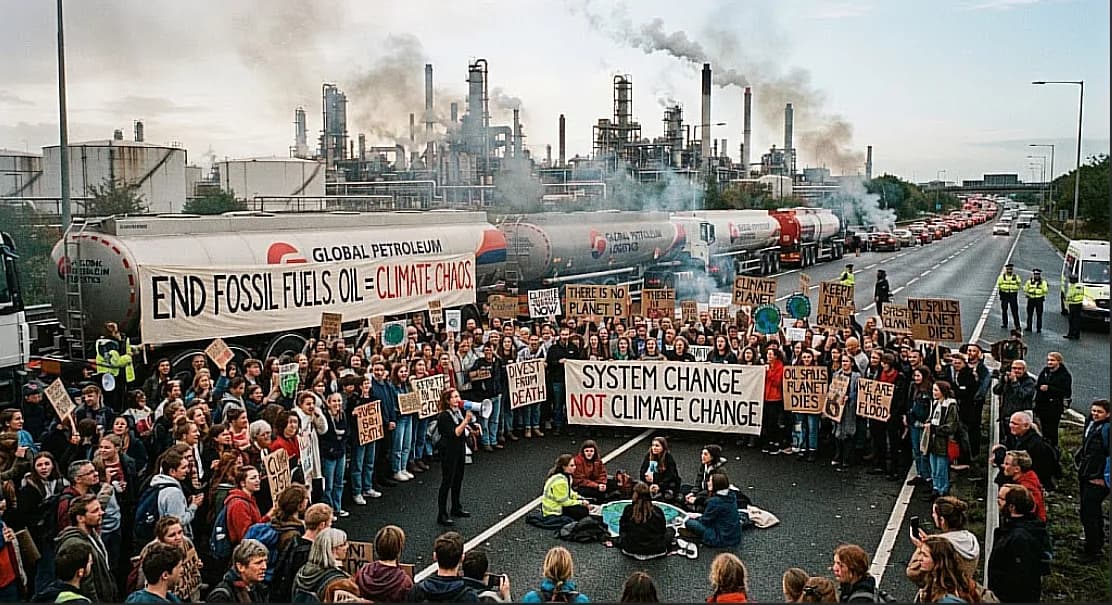
Can a city sue an oil company for climate-related damages? The U.S. Supreme Court is considering whether Boulder, Colorado's state-law lawsuit against ExxonMobil and Suncor Energy can proceed. This guide explains federal preemption, the Clean Air Act arguments, corporate liability, climate damages, and why the Court's decision could affect dozens of similar lawsuits nationwide.
The U.S. Supreme Court is taking up a closely watched climate-liability case involving the City of Boulder, Boulder County, Exxon Mobil Corporation, and Suncor Energy. The case asks an important legal question with consequences that could extend well beyond Colorado: Can state-law claims brought by a city and county over climate-related harms proceed against major fossil-fuel companies, or does federal law prevent those claims from going forward? The dispute is being watched closely because Boulder is one of dozens of state and local governments that have brought lawsuits against fossil-fuel companies seeking to hold them financially responsible for alleged climate-related harms. The lawsuits generally do not ask courts to regulate greenhouse-gas emissions directly. Instead, they seek damages under state law for alleged injuries associated with climate change and allegations that fossil-fuel companies knew about climate risks while misleading the public about those risks. The Supreme Court's case is therefore narrower than the headline question "Can cities sue Big Oil for climate change?" might suggest.
The Court is not being asked simply to determine whether ExxonMobil or Suncor caused global warming. Nor is it deciding the ultimate amount of damages Boulder might recover. The immediate dispute concerns whether federal law preempts Boulder's state-law claims and whether the Supreme Court has jurisdiction to hear the case at this stage.
That distinction matters.
If the Court allows the lawsuit to proceed, Boulder would still have to prove its claims in the underlying litigation. If the Court rules in favor of the companies, however, the decision could make it significantly harder for similar state and local climate-liability lawsuits to move forward.
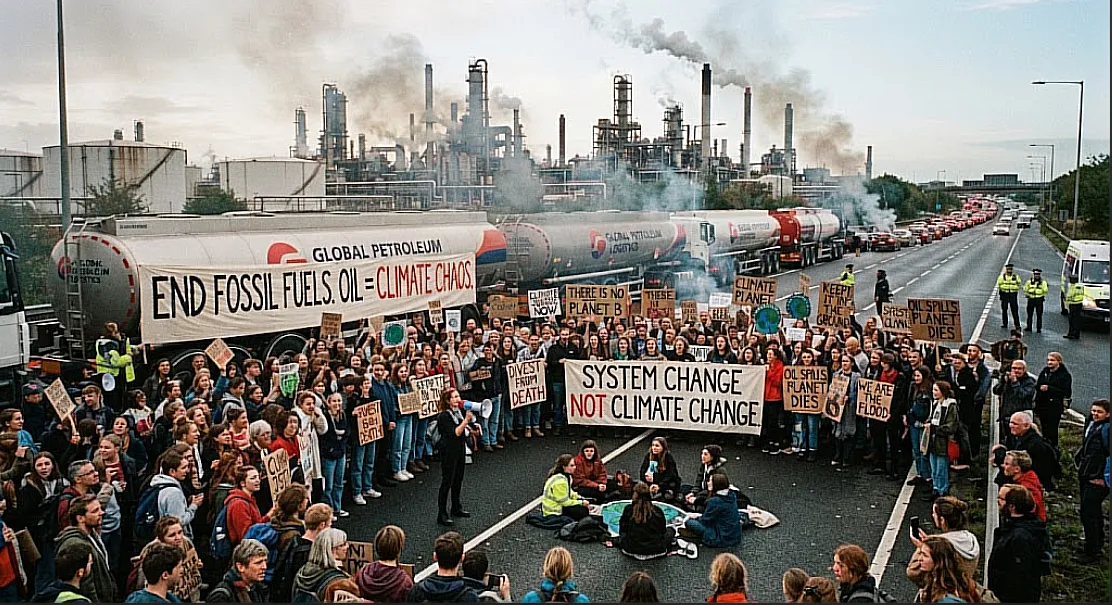
The City of Boulder and Boulder County filed their lawsuit in 2018 against ExxonMobil and Suncor entities. The plaintiffs allege that the companies' production, promotion, refining, marketing, and sale of fossil fuels contributed to climate change and that the companies concealed or misrepresented information about the risks associated with their products.
Boulder claims that climate-related changes have created costs and harms for the community.
Those alleged harms can include the financial consequences associated with extreme heat, wildfires, drought, air-quality problems, infrastructure needs, and other effects attributed to a changing climate. Boulder says the purpose of its lawsuit is not to impose a local system for regulating global greenhouse-gas emissions, but to seek compensation for alleged damage and costs under state law.
The lawsuit includes traditional tort and related claims, including public and private nuisance, trespass, unjust enrichment, and civil conspiracy. The plaintiffs' theory is that the defendants' conduct contributed to climate-related harms and that the companies should bear responsibility for at least some of the resulting costs.
ExxonMobil and Suncor dispute the legal basis for the lawsuit and argue that federal law prevents these state-law claims from proceeding.
That disagreement is what ultimately brought the case to the nation's highest court.
The Supreme Court granted review in February 2026. The case is docketed as Suncor Energy (U.S.A.) Inc. v. County Commissioners of Boulder County, No. 25-170. The Court also directed the parties to address whether the Supreme Court has statutory and Article III jurisdiction to hear the case. Oral argument is scheduled for October 5, 2026.
The central question concerns federal preemption.
In simplified terms, the Court is considering whether federal law prevents Boulder from pursuing its state-law claims against fossil-fuel companies for injuries allegedly resulting from interstate and international greenhouse-gas emissions.
That is a very different question from asking whether climate change exists or whether fossil fuels contribute to global warming.
The underlying lawsuit may eventually require courts to examine evidence concerning the companies' conduct, the alleged effects of fossil fuels, causation, damages, and other elements of Boulder's claims. But before reaching those issues, the courts must determine whether Boulder is legally allowed to pursue these state-law theories in the first place.
That makes the Supreme Court's decision potentially significant even if the Court does not resolve the ultimate question of corporate liability.
Federal preemption is a legal principle arising from the Constitution's Supremacy Clause.
The basic idea is that federal law can sometimes displace state law. When federal and state legal requirements conflict, federal law may prevail in circumstances recognized by the Constitution and federal statutes.
Preemption can take several forms.
Express preemption occurs when Congress explicitly states that federal law overrides certain state laws.
Field preemption can arise when federal regulation is so comprehensive that courts conclude Congress intended federal law to occupy an entire regulatory field.
Conflict preemption can arise when it is impossible to comply with both federal and state requirements or when state law interferes with federal objectives.
The precise preemption analysis depends on the statute, the claims involved, congressional intent, and the relevant legal precedent.
In the Boulder case, ExxonMobil and Suncor argue that federal law prevents state-law climate claims based on interstate and international greenhouse-gas emissions. Their arguments include reliance on the Clean Air Act and broader principles concerning federal authority over conduct with national and international consequences.
Boulder takes the opposite position.
The city and county argue that their claims are traditional state-law claims and that federal law does not eliminate their ability to seek damages for alleged harms to local property and residents. The Colorado Supreme Court agreed with Boulder on the preemption question in 2025.
The U.S. Supreme Court will now review that conclusion.
The Clean Air Act is central to the companies' federal-law arguments.
Federal environmental regulation of air pollution and greenhouse-gas emissions raises questions that cross state borders. Greenhouse gases emitted in one state can mix throughout the atmosphere and contribute to effects experienced elsewhere.
ExxonMobil and Suncor argue that allowing individual states or local governments to use state tort law to seek damages for global climate effects could interfere with the federal government's role in addressing interstate and international emissions. Their Supreme Court filings frame the issue as one that cannot be resolved solely through traditional state-law principles because the alleged conduct and consequences extend far beyond Colorado.
Boulder responds that its lawsuit is not an attempt to create a state-level greenhouse-gas regulatory system.
Instead, the plaintiffs characterize their claims as an effort to recover damages for alleged injuries caused by the defendants' conduct.
That distinction is critical.
There is a major legal difference between a government saying:
"You must reduce your emissions because our state has adopted this regulatory requirement."
and saying:
"Your conduct caused legally recognizable harm, and you should compensate us for that harm."
Whether Boulder's claims truly fit within the second category without improperly interfering with federal authority is one of the major issues before the Court.
The companies' arguments go beyond simply denying responsibility for the alleged climate damage.
Their position is that state-law claims based on global greenhouse-gas emissions are legally inappropriate because the regulation of those emissions and the consequences of such emissions involve federal interests.
They argue that allowing state and local governments to pursue these cases could create a patchwork of different liability rules across the country.
Imagine dozens of states and cities bringing lawsuits under different state laws against the same companies for the same global emissions.
One jurisdiction might impose different standards for liability than another. Another could calculate damages differently. A third might adopt a different theory of causation.
From the companies' perspective, that could effectively allow state courts and juries to influence national energy policy.
Their argument is therefore partly about federalism: which level of government has authority to address problems involving nationwide or worldwide conduct?
The companies also dispute the legal theories underlying Boulder's lawsuit and have repeatedly sought to move or dismiss the case. The litigation has already traveled through federal and state courts before reaching the Supreme Court.
Boulder's position starts with a different premise.
The city and county argue that they are not asking Colorado courts to regulate global greenhouse-gas emissions. Instead, they want to pursue claims under state law for alleged harms occurring within their communities.
Boulder also argues that Congress has displaced federal common law concerning interstate air pollution through the Clean Air Act, meaning that federal common law should not be used to eliminate the state-law claims at issue.
The Colorado Supreme Court accepted much of that reasoning.
In its May 2025 decision, the Colorado Supreme Court held that federal law did not preempt Boulder's claims. The court concluded that the Clean Air Act displaced federal common law in this area and rejected arguments that the Act expressly, through field preemption, or through conflict preemption prevented Boulder's claims from proceeding.
Importantly, the Colorado Supreme Court did not decide that ExxonMobil or Suncor were ultimately liable for Boulder's alleged climate damages.
It decided that the claims could proceed.
That difference is crucial.
Boulder is not the only government pursuing climate-liability litigation against fossil-fuel companies.
There are dozens of similar lawsuits involving state and local governments around the country. The Supreme Court case is therefore being closely watched because its ruling could affect how those lawsuits proceed. The Supreme Court's own case materials describe Boulder's lawsuit as one of dozens of similar state-law climate tort suits brought by state and local governments.
A decision favoring the oil companies could provide a powerful basis for challenging similar cases.
A decision favoring Boulder could allow more of those lawsuits to continue into the next stages of litigation.
That does not mean every climate lawsuit would automatically win if Boulder prevails.
Each lawsuit can involve different defendants, state laws, claims, factual allegations, and procedural histories.
But a Supreme Court ruling on federal preemption could establish an important legal framework that lower courts would have to consider.
Potentially, but only if they successfully establish the elements of their claims.
Boulder is seeking damages associated with alleged climate-related injuries and costs. The community has described expenses connected with protecting property and residents and addressing climate-related impacts.
Possible categories of alleged harm in climate-liability litigation can include:
But identifying a cost is not the same as proving legal causation.
A plaintiff generally needs to establish that the defendant's conduct satisfies the applicable legal requirements for the particular claim.
That could make causation one of the most challenging issues if Boulder's lawsuit eventually reaches a trial on the merits.
Climate change is a global phenomenon involving enormous numbers of emissions sources, natural systems, industrial activities, governments, consumers, and economic decisions over long periods.
That creates a difficult legal question:
How can a particular plaintiff connect a particular company's conduct to a particular injury?
Boulder argues that fossil-fuel companies' conduct contributed to climate change and that this contribution caused or exacerbated harms experienced by the community.
The defendants can challenge the legal and factual sufficiency of that theory.
A court could potentially have to consider scientific evidence, historical emissions, corporate conduct, alleged public statements, attribution studies, economic evidence, and the relationship between global climate changes and specific local harms.
The Supreme Court's current case, however, does not require the justices to resolve all of those questions.
The immediate question is whether the lawsuit is legally preempted before those issues are fully litigated.
Boulder's lawsuit is not based solely on the proposition that fossil fuels contribute to greenhouse-gas emissions.
The plaintiffs also allege that the companies knew about climate risks and misled the public about those risks.
That allegation is legally significant because different types of conduct can produce different legal theories.
For example, a lawsuit based solely on the production of a lawful product might raise different questions from a lawsuit alleging that a company intentionally concealed material information about the risks associated with that product.
Boulder alleges that the companies' conduct included promotion and marketing of fossil fuels and efforts to conceal or misrepresent their dangers. The Colorado Supreme Court's description of the case includes allegations concerning the companies' production, promotion, refining, marketing, and sale of fossil fuels, as well as alleged public misinformation.
Whether those allegations ultimately satisfy the elements of Boulder's individual claims remains unresolved.
The comparison is understandable, but it should be treated carefully.
Tobacco litigation and opioid litigation involved extensive claims concerning corporate conduct, public harm, causation, damages, and alleged failures to disclose or address known risks.
Climate-liability lawsuits share some conceptual similarities.
Governments are asking whether companies should bear some financial responsibility for widespread public harms allegedly connected to their products or conduct.
But climate cases present a distinct set of legal and scientific problems.
The alleged harm involves a global atmospheric system, numerous sources of emissions, decades of activity, and highly complex causal relationships.
The damages may also be spread across communities and time in ways that differ from traditional product-liability cases.
So while tobacco and opioid litigation can provide useful comparisons, a Supreme Court decision in the Boulder case would not necessarily mean climate litigation will follow the same path.
If the Supreme Court rejects the companies' preemption arguments, the Boulder lawsuit could continue in state court.
That would not mean Boulder automatically wins.
The underlying case could still involve:
The companies could continue defending the case on the merits.
Boulder would still have to establish its legal claims under the applicable Colorado law.
The practical significance would be that the courthouse door would remain open.
That alone could have major consequences because climate-liability lawsuits could continue developing through discovery and potentially toward trials or settlements.
A ruling favoring the companies could make Boulder's lawsuit substantially more difficult or end the case, depending on the precise reasoning and scope of the Court's decision.
The consequences for other climate lawsuits would depend heavily on the Court's opinion.
For example, a narrowly written decision could resolve a specific jurisdictional or procedural issue without eliminating every possible state-law climate claim.
A broader ruling could establish that federal law preempts a much larger category of lawsuits based on interstate and international greenhouse-gas emissions.
That distinction will matter enormously.
The exact wording of the Supreme Court's opinion could determine how lower courts interpret the ruling in other jurisdictions.
This distinction is particularly important for readers trying to understand the case.
A lawsuit over environmental violations may allege that a company violated a specific environmental statute, permit, regulation, or pollution-control requirement.
A climate-damages lawsuit can take a different approach.
Instead of alleging that a company violated a particular emissions limit, plaintiffs may argue that the company's conduct contributed to broader climate-related injuries and therefore violated state tort law.
Those are not necessarily the same legal claims.
A company can comply with federal environmental regulations and still face a separate lawsuit alleging that its conduct creates liability under state law—although whether such a lawsuit is legally permitted is exactly what courts may need to decide.
That is one reason federal preemption is so important.
At its core, the case also raises a question about the relationship between federal and state governments.
Climate change crosses state and national borders.
A greenhouse-gas emission does not stop at a state line.
That reality makes federal involvement logical.
But states have traditionally exercised broad authority over areas such as property, torts, public nuisances, and injuries occurring within their borders.
Boulder argues that its claims fall within those traditional state-law areas.
The oil companies argue that applying state law to global greenhouse-gas emissions could interfere with national and international policy.
The Supreme Court therefore has an opportunity to clarify how those competing principles interact.
The decision could have implications beyond environmental law because similar federalism questions arise whenever state-law claims target conduct with substantial national or international consequences.
The Supreme Court is not functioning as a trial court deciding how much climate damage Boulder has suffered.
It is reviewing legal questions arising from the procedural history of the case.
The Supreme Court's docket states that the petition was granted in February 2026 and that the parties were specifically directed to address whether the Court has statutory and Article III jurisdiction to hear the case.
The Court is also considering the broader federal-preemption question.
That means the justices can potentially decide the case without making a definitive finding about whether ExxonMobil or Suncor caused Boulder's alleged climate-related injuries.
This is why headlines suggesting that the Supreme Court is directly deciding "whether Big Oil caused climate change" can be misleading.
The legal question is narrower—and in some ways more consequential.
Corporate liability often depends not only on what a company did but also on which legal system is allowed to evaluate that conduct.
If state courts can hear certain climate-related tort claims, plaintiffs may have a path toward discovery and trial.
That can expose companies to litigation costs, document requests, expert testimony, and potential damages.
If federal preemption prevents those claims, plaintiffs may have far fewer avenues for pursuing state-law damages.
The Supreme Court's decision could therefore affect the litigation landscape even without awarding a single dollar to Boulder.
It could determine whether similar claims can move forward at all.
The country already has a substantial collection of climate-liability cases involving cities, counties, and states.
A Supreme Court ruling would likely become an important precedent for lower courts handling those cases.
If the Court broadly rejects state-law climate claims as preempted, defendants in other cases could use that ruling to seek dismissal.
If the Court rejects broad preemption arguments, plaintiffs in other cases could rely on the decision when defending their lawsuits.
But the outcome for individual cases would still depend on the details.
Different states have different tort laws.
Different plaintiffs may assert different claims.
Different defendants may raise different procedural arguments.
And courts may interpret the Supreme Court's language differently depending on the facts before them.
Therefore, the Boulder case could establish an important legal framework without automatically resolving every other climate lawsuit in the country.
It could influence settlement discussions, although no outcome should be assumed.
Litigation becomes a different economic proposition when one side knows that a lawsuit can survive dismissal and proceed into discovery.
Potential exposure can influence how defendants evaluate settlement.
At the same time, plaintiffs must consider the cost and uncertainty of proving complicated causation and damages theories.
A Supreme Court ruling that clarifies the legal landscape could therefore affect bargaining positions even before any case reaches a jury.
But whether particular cases settle would depend on their individual circumstances.
The case has implications for companies beyond the oil and gas industry.
Businesses operating in heavily regulated industries should pay attention to the relationship between federal regulation and state-law liability.
Compliance with federal regulations does not necessarily answer every potential state-law question.
At the same time, state-law claims may face constitutional or statutory limits when they attempt to regulate conduct that Congress has entrusted to the federal government.
Companies should therefore pay attention to:
The Boulder case demonstrates how historical corporate communications can become relevant years later when plaintiffs allege that companies knew about risks but failed to communicate them accurately.
Local governments watching the case have an equally important interest.
Many communities are facing growing costs associated with extreme weather, infrastructure adaptation, emergency response, and other climate-related challenges.
A favorable ruling for Boulder could encourage additional local governments to examine whether existing state-law remedies can be used to seek compensation.
But litigation is not a substitute for understanding the underlying legal requirements.
Before filing a case, a government would need to evaluate jurisdiction, applicable state law, causation, damages, limitations periods, evidence, and potential federal defenses.
The Supreme Court's ruling could change that analysis considerably.
The Supreme Court is scheduled to hear oral arguments in the case on October 5, 2026, at the beginning of its new term.
The justices will question the attorneys representing the parties and consider the competing interpretations of federal law, state authority, jurisdiction, and preemption.
The Court will then issue an opinion at a later date.
As of the opening of the 2026 term, there is no Supreme Court decision resolving Boulder's ultimate claims for damages.
That means any prediction about the final outcome should be treated as speculation.
The most important thing to watch is not simply which side appears to have the stronger argument during oral argument, but how the Court frames the legal rule in its eventual opinion.
The Boulder climate lawsuit sits at the intersection of several major areas of American law.
It involves:
That combination makes the case unusually important.
A ruling could help define the boundary between federal environmental authority and state-law remedies.
It could also determine whether state courts become an important venue for climate-liability litigation or whether federal law substantially limits that pathway.
And because similar lawsuits are pending around the country, the consequences may extend far beyond Colorado.
Can a city sue an oil company for climate change?
The answer is more complicated than a simple yes or no.
Boulder has already brought such a lawsuit. The Colorado Supreme Court concluded that federal law did not preempt the city's and county's state-law claims, allowing the case to proceed. ExxonMobil and Suncor appealed that legal issue to the U.S. Supreme Court.
The U.S. Supreme Court is now considering whether federal law prevents those state-law claims from moving forward and whether the Court has jurisdiction to hear the case. Oral argument is scheduled for October 5, 2026.
That means the Court is not simply deciding whether ExxonMobil or Suncor "caused climate change." It is deciding a threshold legal question that could determine whether Boulder gets the opportunity to litigate those allegations further.
If Boulder prevails, the case could proceed toward discovery and potentially a trial on the merits. Other state and local governments could gain an important precedent supporting similar litigation, although each case would still depend on its own facts and applicable state law.
If the oil companies prevail on broad federal-preemption grounds, many climate-liability lawsuits could face a serious obstacle.
Either way, the decision could become an important chapter in the evolving debate over corporate responsibility, environmental harm, and the limits of state authority.
For now, the key legal question remains straightforward even if the underlying issues are anything but:
When climate-related harm is allegedly caused by conduct that crosses state and national borders, who gets to decide whether a company should pay for the consequences—the federal government, state courts, or both?
The Supreme Court's answer could shape that boundary for years to come.

Written by
BeastBeast is a seasoned legal content creator and law research specialist with 15+ years of experience in legal writing, legal research, and publishing educational law content. Specializing in Personal Injury, Family, Business, Immigration, Criminal, Tax, and Real Estate Law, Beast creates accurate, well-researched, and SEO-optimized legal guides that help readers understand complex legal topics with confidence. Every article is written with a focus on accuracy, trust, and Google's E-E-A-T guidelines, making Jurnza.com a reliable source for legal information and legal services.
