Deadlines & Filing

An insurance claim is a request for benefits under an insurance policy after an event that may be covered. Learn how the claims process works, why insurers may deny or underpay claims, what to do after a denial, how appeals and insurance complaints work, what unfair claims practices can involve, and when legal help may be appropriate.
Insurance claim is designed to provide financial protection when an unexpected event causes a covered loss. A car accident, house fire, theft, serious illness, storm damage, or death may create expenses that an individual or family cannot reasonably absorb alone. An insurance policy establishes the contractual framework under which an insurer may be required to pay for covered losses, subject to the policy's terms, exclusions, limits, deductibles, conditions, and applicable law.
When a covered event occurs, the policyholder or another eligible claimant generally begins the process by submitting an insurance claim. The insurer then reviews the claim, investigates the circumstances, determines whether coverage applies, evaluates the amount of the loss, and either pays, partially pays, or denies the claim. The exact process varies according to the type of insurance, the policy, and the law of the state involved.
A claim denial does not necessarily mean that the insurer has violated the law. An insurer may have a legitimate contractual reason to deny a claim, such as an applicable exclusion, a lapse in coverage, a policy condition that was not satisfied, or evidence that the loss falls outside the policy's coverage. On the other hand, insurance laws in many jurisdictions regulate how insurers investigate and handle claims. The National Association of Insurance Commissioners (NAIC), for example, maintains model laws and regulations addressing unfair claims settlement practices, although NAIC model laws are proposals rather than automatically binding federal law. States decide whether and how to adopt them.
Understanding how insurance claims work can help policyholders protect their rights, organize evidence, respond to a denial, and recognize when a dispute may require assistance from an insurance professional or attorney.

An insurance claim is a request for benefits or payment under an insurance policy after an event that may be covered by the policy. The person making the claim may be the policyholder, an insured person, a beneficiary, or in some situations another person with a legal or contractual interest in the insurance coverage.
For example, a driver involved in a covered collision may submit an auto insurance claim for vehicle damage. A homeowner may submit a property claim after a covered fire or storm. A person covered by health insurance may submit or have a healthcare provider submit a claim for medical services. A life insurance beneficiary may submit a claim after the insured person's death.
The claim itself does not automatically establish that the insurer must pay. The insurer generally evaluates the request against the policy and applicable law.
This distinction is important because an insurance policy is a contract. Coverage depends on what the policy actually provides, not simply on whether a person experienced a financial loss.
A policy may contain:
Because these provisions can substantially affect a claim, the policy language is often central to an insurance dispute.
Although procedures differ by insurance type and state, many claims follow a general sequence.
The process begins with an event that may trigger insurance coverage.
Examples include:
Not every event that causes damage or expense is covered. The first legal question is usually whether the policy provides coverage for the particular event and circumstances.
The policy may require prompt notice of a loss. The exact requirement depends on the policy and applicable law.
After an accident or loss, the policyholder should review the policy's claims instructions and notify the insurer through the appropriate channel.
The notice may require information such as:
Failing to provide required notice can sometimes create coverage issues, although the legal consequences depend on the policy, the type of insurance, applicable law, and the circumstances.
Once the insurer receives the report, it generally creates a claim file and assigns the matter to a claims professional or adjuster.
The adjuster may contact the policyholder, witnesses, repair professionals, medical providers, or other relevant parties.
The insurer may request additional documentation to determine whether the claim is covered and how much should be paid.
The investigation may involve reviewing:
The scope of an investigation depends heavily on the type and complexity of the claim.
For example, a straightforward property-damage claim may require photographs and repair estimates, while a serious liability claim could involve extensive medical records, expert opinions, witness interviews, and questions about responsibility.
Insurance regulators recognize that claims should be investigated using reasonable standards. The NAIC's Unfair Claims Settlement Practices Model Act identifies, among other things, failing to conduct a reasonable investigation and failing to adopt reasonable standards for prompt investigation and settlement as examples of conduct that can constitute unfair claims practices when the model's applicable conditions are satisfied.
The insurer then evaluates whether the policy covers the loss.
This may require interpreting several provisions together.
For example, a homeowner's policy may provide coverage for certain types of water damage while excluding others. A car insurance policy may cover collision damage but not personal belongings stolen from a vehicle. A health plan may cover certain services while applying exclusions, deductibles, copayments, networks, or medical-necessity requirements.
The insurer's decision should be based on the applicable policy language and governing law.
Even when coverage exists, the parties may disagree about how much the insurer should pay.
The dispute might involve:
A policy may use a specific method for calculating payment. Understanding the valuation provisions can therefore be just as important as establishing coverage.
After completing its review, the insurer may:
A denial should be reviewed carefully rather than treated as the end of the matter.
Insurance companies may deny claims for legitimate contractual or legal reasons. A denial should generally identify the basis for the decision, although the exact requirements vary by jurisdiction and type of insurance.
Common reasons include the following.
The policy may simply not cover the type of event that occurred.
For example, a policy might cover certain forms of sudden property damage but exclude a particular type of loss.
The fact that a person has insurance does not mean every type of damage is insured.
Insurance policies commonly contain exclusions.
An exclusion removes certain risks or circumstances from coverage. The exact wording matters.
A policyholder should therefore examine the specific exclusion cited by the insurer rather than relying only on a general statement that the loss is "excluded."
Coverage generally depends on the policy being in force when the covered event occurred.
If premiums were not paid and coverage properly terminated before the loss, the insurer may have grounds to deny the claim.
Questions about cancellation and nonrenewal can be governed by state-specific requirements, so a policyholder should not assume that every cancellation is legally effective simply because an insurer says coverage ended.
A claim may technically be covered but still produce no payment because the covered loss does not exceed the applicable deductible.
For example, if a policy has a $2,000 deductible and the covered loss is valued at $1,500, the insurer may owe no payment under that coverage.
Policies can impose obligations on policyholders after a loss.
Depending on the policy, these may include promptly notifying the insurer, protecting property from additional damage, cooperating with the investigation, providing requested documentation, submitting forms, or appearing for an examination under oath.
Whether failure to satisfy a condition allows an insurer to deny a claim depends on the policy and applicable law.
Sometimes the parties agree that damage occurred but disagree about what caused it.
This distinction can be crucial because insurance policies often cover some causes of loss while excluding others.
For example, an insurer and homeowner might disagree about whether property damage resulted from a covered sudden event or from a condition excluded under the policy.
A disagreement does not always mean that the insurer is denying coverage entirely.
The insurer might accept that the event is covered but calculate the value of the loss differently from the claimant.
This can result in a partial payment or settlement dispute.
Insurance claims can also raise questions about inaccurate information, material misrepresentations, or fraudulent conduct.
Insurance fraud laws can impose serious consequences, and policy provisions may address misrepresentations in applications and claims. Anyone facing an accusation of insurance fraud should treat it seriously and consider obtaining legal advice before making additional statements.
A claim denial letter is written communication explaining that an insurer is refusing to pay all or part of a claim.
The letter may identify:
The exact information required varies by jurisdiction and insurance type.
For example, California's Department of Insurance states that certain residential property claim denials must be provided in writing with specified reasons, and the state's regulations establish requirements concerning claim acknowledgment, evaluation, decisions, and payment.
A denial letter should therefore be preserved carefully. It may become important if the policyholder requests reconsideration, files a regulatory complaint, participates in an appraisal or arbitration process, or brings a lawsuit.
A denial is a point at which careful documentation becomes especially important.
Start by identifying exactly why the insurer denied the claim.
Do not rely only on a short explanation provided over the phone. Request and preserve the written decision and any policy provisions cited by the insurer.
Compare the insurer's explanation with the actual policy.
Look at:
Sometimes the disagreement comes down to the interpretation of a particular phrase.
Depending on the claim, useful evidence may include:
The NAIC recommends gathering documentation and maintaining a record of communications when preparing an insurance complaint.
A policyholder may be able to challenge a denial directly with the insurer.
The response should explain why the claimant believes the decision is incorrect and identify supporting policy language and evidence.
A clear written record can be much more useful than relying exclusively on telephone conversations.
Some types of insurance provide formal internal appeal or review procedures.
Health insurance, for example, can have specific grievance and appeal processes. The NAIC explains that consumers challenging health insurance claim denials should review the denial notice and contact the insurer about the applicable appeal process.
Health insurance appeals can also involve external review rights in qualifying circumstances, depending on the plan and applicable law.
The rules for auto, homeowners, life, disability, and other forms of insurance are different, so policyholders should follow the procedures applicable to their particular coverage.

Yes. A policyholder can generally contact the insurance department in the state with regulatory authority over the insurer or transaction.
The NAIC explains that state insurance departments can investigate consumer complaints involving issues such as unfair claim delays or denials, failure to honor policies, violations of state insurance laws, lack of timely communication, and certain cancellation or nonrenewal disputes.
A typical complaint may require:
The exact procedure differs by state.
A state insurance department may contact the insurer and request a response. The regulator can investigate whether the insurer complied with applicable insurance laws and regulations. However, regulatory complaint processes do not necessarily replace a lawsuit or guarantee that an individual claimant will receive the amount they are seeking.
The NAIC provides a directory for locating state insurance departments and their consumer complaint resources.
Insurance law can regulate not only whether a claim should be paid but also how insurers handle claims.
The NAIC's Unfair Claims Settlement Practices Model Act identifies several practices that may constitute unfair claims practices when the applicable statutory conditions are met. Examples include knowingly misrepresenting relevant facts or policy provisions, failing to acknowledge pertinent communications with reasonable promptness, failing to maintain reasonable standards for prompt investigation and settlement, refusing to pay without conducting a reasonable investigation, and failing to affirm or deny coverage within a reasonable time after completing an investigation.
The model framework also addresses situations in which an insurer fails to attempt in good faith to reach a prompt, fair, and equitable settlement when liability has become reasonably clear.
Importantly, these are NAIC model provisions. They are not automatically binding law throughout the United States. Each state decides what laws and regulations apply.
That means a policyholder should look at the law governing the particular claim rather than assuming that an NAIC model provision automatically creates a legal claim.
"Bad faith" is a legal concept that can arise when an insurer allegedly fails to meet duties imposed by the insurance contract or applicable law.
The precise meaning and available remedies vary considerably among jurisdictions.
Depending on the state and circumstances, a dispute might involve allegations that an insurer:
Not every denied claim constitutes bad faith.
An insurer can have a legitimate dispute about coverage, causation, policy interpretation, or the amount of damages without automatically becoming liable for bad faith.
The legal standards also differ among states. Some jurisdictions recognize common-law bad-faith claims, some provide statutory remedies, and some impose particular requirements before a policyholder can bring certain actions.
The NAIC's state-by-state materials demonstrate that private rights of action for unfair claims settlement practices differ across jurisdictions.
Because bad-faith litigation can involve significant factual and legal questions, a policyholder considering such a claim should review the applicable state law with an attorney.
There is no single nationwide deadline that applies to every insurance claim.
Timing requirements can depend on:
Some states impose specific deadlines for acknowledging, investigating, accepting, denying, or paying claims.
For example, Nevada's current consumer auto-insurance guidance states that an insurer must approve or deny a casualty claim within 30 days after receiving the claim, subject to procedures for requesting additional information or time.
That Nevada requirement should not be treated as a nationwide rule.
California's residential property claims regulations likewise establish requirements concerning acknowledgment, evaluation, decisions, and payment.
For a particular claim, the policyholder should check the law of the relevant state and the policy's provisions rather than relying on a general deadline found online.
An insurer may accept coverage but offer less than the policyholder believes the claim is worth.
This can happen in property, auto, business, disability, and other types of insurance disputes.
The policyholder should first determine how the policy calculates the applicable benefit.
For property insurance, questions may include whether the policy uses replacement cost or actual cash value and how depreciation is treated.
For liability-related claims, the applicable coverage and limits may determine the amount available.
For health insurance, the dispute may concern whether a service is covered, the amount allowed under the plan, network status, or another benefit determination.
A claimant can respond with supporting documentation, estimates, expert evidence, or other information that addresses the insurer's calculation.
California's residential property guidance specifically advises consumers who disagree with a settlement to contact the claims manager, explain their concerns, and provide supporting documents.
The appropriate dispute procedure depends on the policy and type of insurance.
An insurance lawyer can sometimes assist with disputes involving coverage, claim denials, delays, underpayment, policy interpretation, or alleged unfair claims practices.
An attorney may help by:
Legal representation is not necessary for every insurance claim. Many routine claims are resolved directly between the policyholder and insurer.
A lawyer may become more useful when the claim involves substantial money, complicated coverage language, multiple insurers, serious injuries, a business loss, a repeated denial, a significant delay, an alleged bad-faith practice, or an approaching legal deadline.
Evidence depends on the type of claim, but a well-organized claim file can make the dispute easier to understand.
Useful records may include:
Keep a complete copy of the policy and relevant endorsements.
Do not rely only on a declarations page or insurance card. Important coverage terms may appear elsewhere in the policy.
For property and accident claims, photographs or videos can document the condition of property, damage, surrounding circumstances, and changes over time.
Receipts can establish ownership, purchase price, repair expenses, replacement costs, or other financial information.
For health, disability, and injury-related claims, medical records can provide evidence concerning treatment, diagnosis, expenses, and other relevant issues.
Keep emails, letters, claim notices, text messages, and notes from telephone conversations.
The NAIC specifically recommends keeping records of communications with insurers, including dates and details of phone calls.
Certain disputes may require professional evidence.
Examples could include building experts, engineers, medical professionals, accountants, or other specialists, depending on the nature of the claim.
Insurance disputes can become harder when policyholders unintentionally damage their own documentation or miss contractual procedures.
Common mistakes include:
A policy may impose notice requirements, and delay can create complications.
Assuming that an insurance policy covers a particular loss without checking the actual terms can lead to unrealistic expectations.
In some circumstances, damaged property may need to be inspected. Before discarding or repairing items, the policyholder should consider the insurer's instructions and applicable policy requirements.
Missing receipts, photographs, estimates, medical records, or other important information can slow the investigation.
Telephone conversations can be useful, but important disputes are often easier to document through written communications.
A settlement may have legal consequences, including releasing claims. A policyholder should understand what is being offered and what rights may be affected before signing a release.
Insurance disputes can involve contractual deadlines, statutes of limitations, appeal deadlines, administrative deadlines, or other time limits.
The applicable deadline depends on the claim and jurisdiction.
A denial may be appealable, challengeable, or subject to regulatory review depending on the circumstances.
A policyholder should examine the denial and available procedures before concluding that no further action is possible.
These terms describe different mechanisms for challenging an insurance decision.
An appeal generally asks the insurer or another authorized reviewer to reconsider a claim or benefit determination.
A regulatory complaint asks a state insurance department to review whether the insurer or agent complied with applicable insurance laws and regulations.
A lawsuit is a judicial proceeding in which a court may decide legal disputes and award remedies authorized by law.
These processes can sometimes overlap, but they are not interchangeable.
For example, a regulatory agency may investigate an insurer's handling of a complaint, while a court may be responsible for deciding a contractual dispute or awarding damages.
The available options depend on the type of insurance, state law, policy terms, and the specific facts.
An insurer may legitimately request additional information while investigating a claim.
The request might concern:
A request for information does not automatically mean that the insurer is acting improperly.
At the same time, claims-handling laws may regulate unreasonable delays or investigations. The NAIC model framework, for example, identifies failure to adopt reasonable standards for prompt investigation and settlement and refusal to pay without conducting a reasonable investigation as potential unfair claims practices when the model's requirements are met.
The policyholder should respond to reasonable requests while keeping copies of everything submitted.
If a request appears excessive, irrelevant, repetitive, or inconsistent with the policy or applicable law, the policyholder may want to ask the insurer to explain why the information is necessary or seek professional advice.
Insurance law in the United States is heavily state-based.
States regulate many aspects of insurance, including insurer licensing, market conduct, claims handling, policy forms, cancellation and nonrenewal, consumer complaints, and available remedies.
The NAIC develops model laws and regulations to promote consistency, but it expressly explains that these models are not automatically binding and that states decide whether and how to adopt them.
As a result, two policyholders with similar disputes in different states can face different deadlines, procedures, remedies, or standards.
This is particularly important for questions involving:
Anyone dealing with a significant insurance dispute should identify the law governing the particular policy and claim.
Not every insurance problem requires an attorney.
Legal advice may become particularly valuable when:
An attorney can review the actual policy and facts rather than relying on general insurance information.
A policyholder can take several practical steps to keep an insurance dispute organized.
Start by creating a chronological timeline.
Record:
Next, create a document folder containing the policy, correspondence, photographs, reports, estimates, receipts, medical records, and other evidence.
Then identify the exact disagreement.
Is the dispute about coverage? The cause of the loss? The amount of damage? A policy exclusion? A deductible? A delay? A missed deadline? The insurer's investigation?
The more precisely the issue can be identified, the easier it may be to determine what procedure or legal remedy applies.
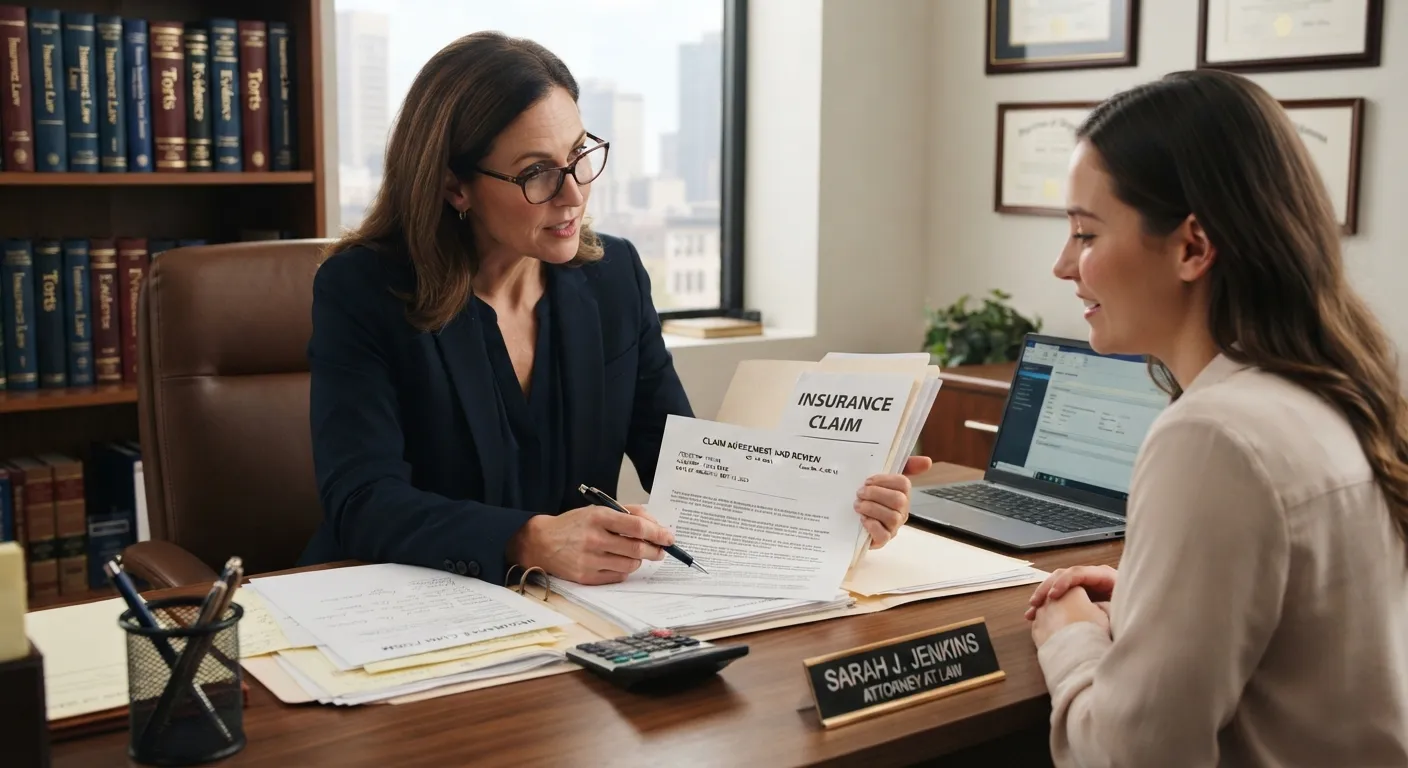
An insurance claim is a request for benefits under an insurance policy after a potentially covered event. The insurer generally reviews the circumstances, examines the policy, investigates the loss, determines coverage, evaluates the amount involved, and then pays, partially pays, or denies the claim.
A claim denial does not automatically mean the insurer acted unlawfully. Insurance policies contain exclusions, conditions, deductibles, limits, and other provisions that can legitimately restrict coverage. At the same time, insurers are subject to insurance laws and regulations governing claims handling, and many jurisdictions regulate practices such as unreasonable delays, inadequate investigations, misrepresentations about coverage, and certain unfair settlement practices. The exact legal standards and available remedies vary by state.
If a claim is denied or underpaid, a policyholder should carefully review the denial, compare it with the policy, gather supporting evidence, and follow any applicable appeal or dispute procedures. Depending on the situation, a policyholder may also be able to file a complaint with the state insurance department. The NAIC explains that state insurance departments can assist with certain complaints involving claim delays, denials, policy issues, and violations of insurance law.
For substantial or complicated disputes, especially those involving significant financial losses, serious injuries, alleged bad faith, or potential litigation, consulting an insurance attorney can help clarify the policyholder's legal options.
Insurance law is highly dependent on the specific policy, facts, type of coverage, and state involved. General information can help explain the claims process, but the actual rights and remedies available in a particular dispute should be determined from the governing policy and applicable law.

Written by
BeastBeast is a seasoned legal content creator and law research specialist with 15+ years of experience in legal writing, legal research, and publishing educational law content. Specializing in Personal Injury, Family, Business, Immigration, Criminal, Tax, and Real Estate Law, Beast creates accurate, well-researched, and SEO-optimized legal guides that help readers understand complex legal topics with confidence. Every article is written with a focus on accuracy, trust, and Google's E-E-A-T guidelines, making Jurnza.com a reliable source for legal information and legal services.
