Deadlines & Filing
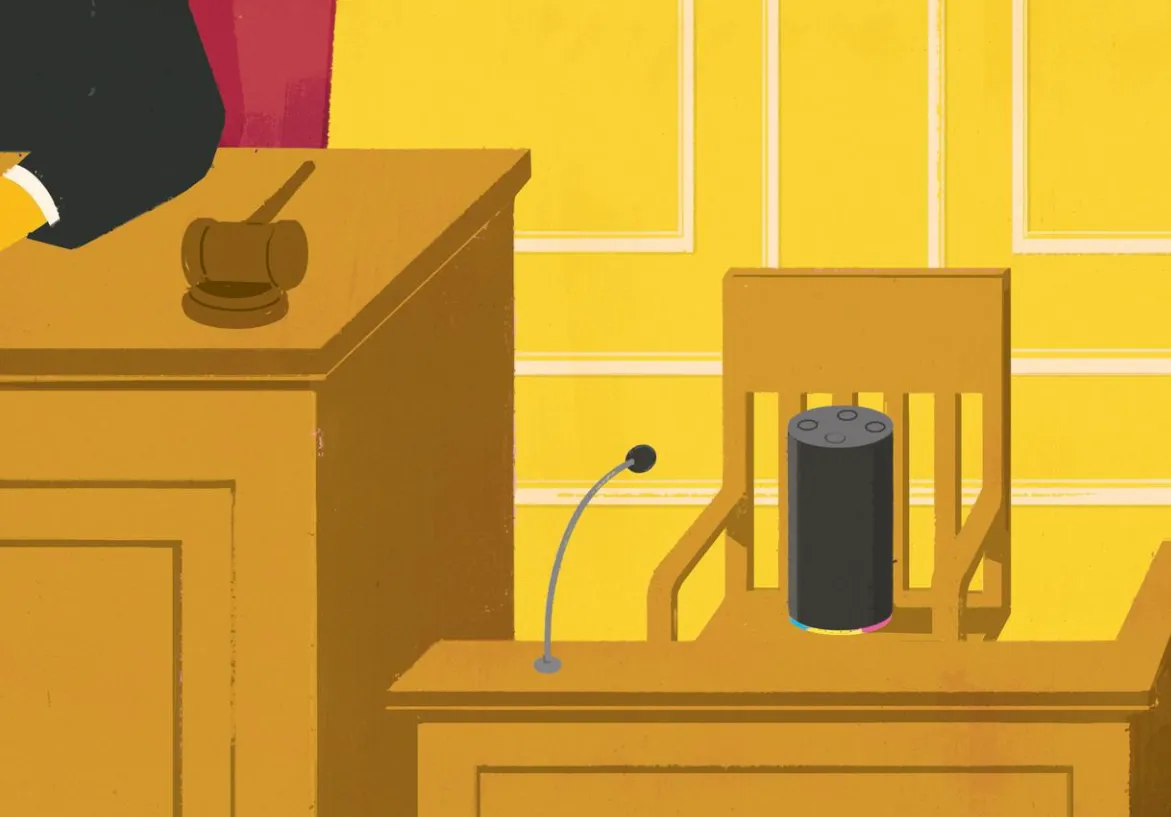
A federal judge has approved Google's $68 million settlement resolving claims that Google Assistant recorded private conversations without proper activation. Explore the allegations, consumer privacy laws, settlement eligibility, the expired claim deadline, and practical steps users can take to protect their personal information.
Smart devices have become part of everyday life in millions of American households. Smartphones, smart speakers, and connected home systems can answer questions, play music, manage schedules, and control household equipment through simple voice commands. However, these conveniences also raise an important legal question: what happens when a voice assistant records a private conversation that its owner never intended to share? That question was at the center of a major U.S. privacy lawsuit involving Google Assistant. On October 13, 2026, a federal judge approved a $68 million class-action settlement resolving allegations that Google Assistant sometimes recorded conversations without proper activation and that related audio information was disclosed to outside platforms. Google denied wrongdoing and agreed to settle the litigation rather than continue fighting the case.
The settlement illustrates the growing legal importance of digital privacy, informed consent, and the responsibilities of companies that develop voice-enabled technology. It also offers an opportunity to understand how American privacy laws apply when a device captures conversations inside a home.
For consumers, the case raises several practical questions. Can a company legally record conversations through a smart device? What rights may users have when a voice assistant activates accidentally? Can consumers bring individual lawsuits over unwanted recordings? And what does a class-action settlement actually mean for the people affected?
Understanding the answers requires looking beyond the settlement amount and examining the legal principles involved.
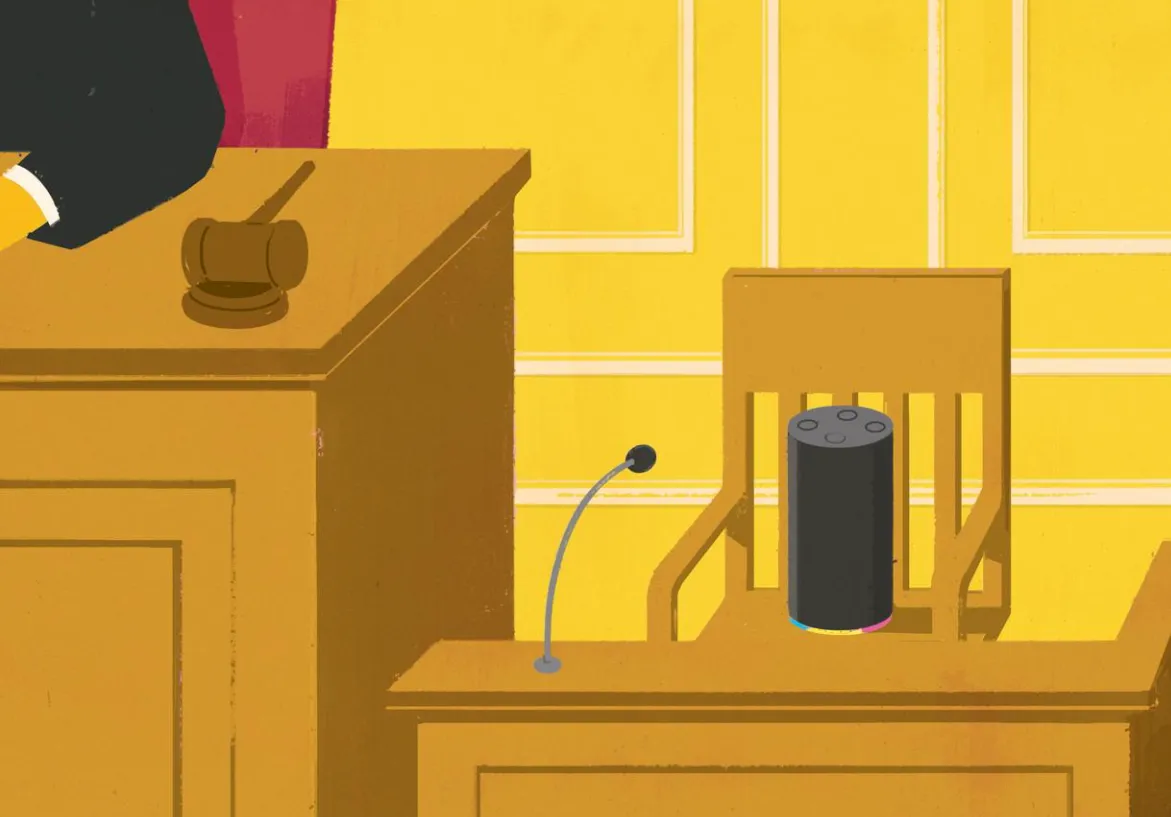
Google Assistant is a voice-activated digital assistant designed to respond to commands such as “Hey Google” and “OK Google.” Depending on the device and settings, users can ask questions, send messages, control smart-home equipment, search for information, and perform other tasks without manually operating a screen.
To provide these functions, voice assistants must detect activation commands and process audio. That process creates a potential privacy problem when a device mistakenly interprets ordinary speech as an instruction to begin listening.
The lawsuit against Google concerned allegations that Google Assistant sometimes activated without users intentionally speaking its wake phrase. These incidents are commonly described as “false accepts” or false activations.
According to the plaintiffs, the assistant could capture conversations even when people had not deliberately asked it to listen. The litigation also raised allegations concerning the handling and disclosure of recorded audio and the possible use of information for advertising-related purposes.
The lawsuit was filed in 2019 and proceeded through years of litigation in federal court in California. The plaintiffs asserted that the alleged recording practices violated privacy protections and applicable laws.
Google disputed the allegations and denied that it had engaged in unlawful conduct. The company nevertheless agreed to a $68 million settlement in January 2026. The proposed agreement subsequently went through the court-approval process before receiving final approval in October.
Courthouse News Service reported the final approval on October 13, 2026. The settlement resolved the covered claims without a trial determining that Google was legally liable for every allegation.
This distinction matters. A settlement can provide compensation and bring litigation to an end, but it should not automatically be described as a judicial finding that every alleged action occurred exactly as plaintiffs claimed.
A false activation happens when a voice assistant mistakenly detects its wake phrase or another activation signal and begins processing audio even though the user did not intend to activate it.
For example, someone might be having a private conversation in the kitchen when a smart speaker misinterprets a phrase as “Hey Google.” The device could then begin recording or processing audio associated with the unintended activation.
The central issue is not simply whether a microphone exists in a device. It is whether the device operates according to the user's expectations, the company's representations, the applicable privacy rules, and the permissions governing the collection and use of information.
Several distinctions are important:
These situations are not legally identical. Whether a particular recording violates the law depends on the circumstances, including the nature of the recording, the parties involved, the user's consent, and the relevant jurisdiction.
A false activation does not automatically establish that a company committed a legal violation. However, repeated unintended recordings may raise questions about reasonable privacy expectations, disclosure practices, and whether the company's conduct complies with its stated policies and applicable law.
The Google Assistant litigation demonstrates how traditional privacy principles can apply to modern consumer technology.
American privacy law does not consist of one universal rule covering every recording made by every smart device. Instead, several federal and state laws may apply, depending on the circumstances.
Three major legal areas are particularly relevant.
The federal Wiretap Act, part of the Electronic Communications Privacy Act, generally prohibits certain intentional interceptions of wire, oral, or electronic communications. It also contains exceptions, including provisions concerning consent and the ordinary course of business.
State laws may provide additional restrictions. California, for example, has privacy and communications-interception provisions that can be relevant when conversations are recorded without the legally required consent.
However, these laws are fact-specific. Courts may need to consider whether a communication qualifies for protection, whether an interception occurred, whether the conduct was intentional, and whether a statutory exception applies.
A user who discovers an unwanted recording should therefore avoid assuming that every accidental activation automatically constitutes illegal wiretapping.
Consumer protection laws can address certain unfair or deceptive business practices.
Suppose a company makes specific representations about when its devices listen, how recordings are handled, or whether information is shared. If the company's actual practices materially contradict those representations, the discrepancy could raise legal questions.
Whether a consumer protection claim succeeds depends on the particular statements, conduct, applicable law, available evidence, and required elements of the claim.
The Google Assistant settlement highlights why companies' public explanations of their technology and their actual data practices can become important in litigation.
Privacy policies describe how a company says it collects, uses, stores, and shares information. Terms of service and other agreements may also establish obligations or define the relationship between a company and its users.
A privacy policy is not necessarily a complete defense against every privacy claim. Nor does every breach of a company's stated policy automatically create a private right to sue.
Courts must examine the applicable law and the facts to determine whether a policy, contract, statute, or other legal duty supports a claim.
Consumers should also remember that accepting terms of service does not necessarily mean that a company has unrestricted permission to record or use every conversation.
The settlement created a fund of $68 million to resolve the covered class-action claims against Google and Alphabet.
The litigation involved two broad categories of settlement class members.
The first category covered qualifying purchasers of Google-made devices during the settlement period, which ran from May 18, 2016, through March 19, 2026.
The second covered qualifying Google Assistant users and certain members of their households whose communications were allegedly recorded or otherwise obtained following a false activation or disclosed to a third-party review vendor during the relevant period.
The exact requirements were governed by the court-approved settlement documents. Not every person who owned a smartphone or used a voice assistant automatically qualified.
Under the settlement information published by the claims administrator, estimated payments depended on the class category and the allocation rules. Earlier estimates placed purchaser payments in a range of approximately $18 to $56, while qualifying privacy-class payments were estimated at approximately $2 to $10. Actual distributions depend on the settlement's terms and the claims process.
The $68 million figure represents the overall settlement fund, not an amount that every affected consumer receives. Attorney fees, administrative expenses, approved awards, and the distribution rules affect how the fund is allocated.
The settlement also does not mean every claimant can receive the maximum estimated payment. The amount available to an individual may depend on eligibility, the valid claims submitted, and the final allocation process.
Most importantly, the agreement resolved covered claims without requiring Google to admit the allegations. Google denied wrongdoing.
As of October 17, 2026, the ordinary claim-submission deadline for this settlement has passed.
The claims administrator listed August 27, 2026, as the deadline to submit a valid claim form. The court subsequently granted final approval of the settlement on October 13, 2026.
Consumers who missed the deadline should not assume that they can still obtain payment simply by submitting a late form. They should review the official settlement website for any applicable instructions or developments rather than relying on social media posts or third-party claims websites.
The official settlement website is:
Google Assistant Privacy Litigation Settlement
The website explains the settlement classes, the claim process, and the legal rights affected by the agreement.
Consumers should also understand that joining a class settlement may affect their ability to pursue separate lawsuits concerning the same released claims. The consequences depend on the settlement's terms and a person's status within the class.
Anyone who believes they have an independent privacy claim should obtain legal advice about the applicable limitation periods, jurisdiction, evidence, and effect of the settlement. Missing the settlement deadline does not automatically mean that a person has a valid separate lawsuit, nor does it establish that every possible claim has expired.
No. Owning a Google-made device does not prove that the device captured a private conversation without proper activation.
The settlement defined eligibility according to particular class criteria. It did not establish that every device owner experienced a false activation or that every household conversation was recorded.
This distinction is important because class-action eligibility and proof of individual harm are not necessarily the same thing.
A person may fall within a settlement class because they satisfy its defined criteria. In other cases, an individual may believe a recording occurred but lack sufficient evidence to demonstrate what happened.
Consumers should avoid making unsupported assumptions about recordings, advertising practices, or the use of personal information.
If someone suspects that a device recorded a conversation unexpectedly, a sensible first step is to examine the device's activity history, available privacy controls, account settings, and relevant service documentation.
The goal is to identify what the records actually show rather than infer a violation from the appearance of a particular advertisement or an unexplained device response.
Evidence can be important when evaluating whether an unwanted recording occurred and whether it supports a legal claim.
Depending on the circumstances, potentially relevant information may include:
Device activity records: Available logs may show when an assistant activated, processed a request, or performed a task.
Account information: The user's account history and privacy settings may help establish which devices and services were enabled.
Audio records: Where recordings are available through lawful account tools, they may help clarify what was captured and when. Users should handle potentially sensitive recordings carefully.
Privacy settings and permissions: Screenshots or dated records of relevant settings may help document how the device was configured.
Company disclosures: Applicable privacy policies, product descriptions, and explanations of recording practices may help establish what users were told.
Communications with the provider: Support requests and written responses can help document a complaint and the company's explanation.
Witness information: Other people who were present may have relevant information about the circumstances surrounding an alleged recording.
The importance of each item depends on the particular legal theory. A privacy claim may require proof of elements that differ from those required for a consumer protection or contract claim.
Consumers should not attempt to access another person's account or obtain private information without authorization. Preserving information lawfully available to them is a safer approach.
Potentially, yes. But whether a lawsuit is available depends on the facts, the law that applies, and the legal requirements of the particular claim.
The Google Assistant settlement does not create an automatic right for every smart-device user to sue Google or another technology company.
A consumer considering litigation should examine several issues.
The first question is whether the alleged recording violated a specific legal obligation. The answer may depend on consent, the type of communication, the company's conduct, and the jurisdiction.
An unintended activation alone may not prove every element of a statutory claim.
In federal court, plaintiffs generally must establish standing, including a sufficiently concrete injury that is fairly traceable to the challenged conduct and likely to be addressed by a favorable court decision.
Different claims may require different proof of harm. A person should not assume that a technical error automatically gives them standing for every possible lawsuit.
Some disputes may be governed by federal law, state privacy statutes, consumer protection laws, or contractual provisions.
The relevant jurisdiction can affect the legal standards, available remedies, and procedural requirements. A case involving a California resident may present different issues from a dispute involving someone who lives in another state.
Limitation periods restrict how long a person has to bring many types of legal claims. The deadline can vary according to the statute, the type of claim, and circumstances that may affect when the period begins or whether it is paused.
Because privacy litigation can involve multiple legal theories, there is no single deadline that applies to every possible smart-device recording dispute.
A qualified attorney can assess the applicable deadlines and whether a proposed lawsuit is legally viable.
The legal questions raised by Google Assistant are relevant beyond a single product.
Voice-enabled services offered by different technology companies can raise similar questions about accidental activation, recording controls, user consent, data retention, and disclosure to third parties.
However, the outcome of one lawsuit does not establish that every other voice assistant has the same technical behavior or violates the same laws.
A company-specific case must be evaluated according to its own evidence, product design, policies, and applicable legal requirements.
Consumers who use several connected devices should review the privacy controls for each service rather than assuming that all products handle audio in the same way.
They should also be cautious about viral claims that a particular advertisement proves a device secretly recorded a conversation. Targeted advertisements can result from multiple data sources and advertising mechanisms. An advertisement appearing after a conversation, by itself, does not establish that the conversation was recorded or used to target the user.
Consumers cannot eliminate every possible technical or privacy risk, but they can take practical steps to reduce exposure.
Check which devices have voice activation enabled and whether the service provides options to disable the wake phrase, microphone, or voice-assistant feature.
The precise controls vary by product and software version.
Review the activity information available through your account. If unexpected activity appears, consult the provider's instructions for managing or deleting eligible records.
Keep in mind that deleting information from a visible account interface may not necessarily explain or resolve every question about previously processed data.
On smartphones and other compatible devices, review application permissions and disable microphone access for applications that do not need it.
Some functions may stop working as expected when microphone permissions are restricted.
Certain smart speakers and connected devices include a physical microphone-mute switch or button. Using that control when voice activation is unnecessary may help reduce the chance of unintended listening through the device's microphone.
Users should check the product's documentation to understand what the control actually disables.
Product features, settings, and policies can change. Periodically review the provider's explanations of audio processing, storage, human review, and data sharing.
Pay particular attention to optional features and settings that control whether recordings are saved or used to improve services.
Use strong, unique passwords and multifactor authentication where available. Account security matters because a compromised account may expose activity history or other personal information even when the underlying device is functioning normally.
These measures can reduce certain risks, but they cannot guarantee that a device will never activate unexpectedly or that every privacy concern will be eliminated.
The Google Assistant case is significant because it shows how disputes involving ordinary consumer devices can become complex class-action litigation.
A voice assistant may be marketed as a convenient tool, but the information it processes can include conversations inside a home. The circumstances in which that information is collected and used can therefore raise serious legal and public-policy questions.
The case also demonstrates the practical role of class actions. When many consumers allege similar conduct, a class action may allow common issues to be addressed through one proceeding rather than requiring every person to file a separate lawsuit.
However, class actions involve procedural requirements. Courts must consider issues such as the definition of the class, whether common questions predominate where required, the fairness of the proposed settlement, and the rights of class members.
Final approval means the court authorized the settlement under the applicable legal standards. It does not mean the court conducted a trial and found every allegation true.
The case may also encourage technology companies to pay close attention to how products behave in practice, how they explain data collection, and how they communicate privacy controls to users.
For consumers, the broader lesson is that privacy expectations should be supported by clear disclosures, meaningful choices, and appropriate safeguards.
The $68 million Google Assistant privacy settlement is an important development in the ongoing debate over consumer technology and personal privacy. The lawsuit alleged that Google Assistant sometimes recorded private conversations following false activations and raised questions about how that information was handled. Google denied wrongdoing, and the settlement resolved the covered claims without a trial determining liability on every allegation.
The court's final approval on October 13, 2026, brought the settlement process to a major milestone. However, the August 27, 2026, deadline to submit ordinary settlement claims has passed. Anyone seeking information about the settlement should consult the official claims administrator rather than rely on outdated articles or promises of guaranteed compensation.
More broadly, consumers should understand their device settings, review privacy disclosures, preserve relevant evidence when concerns arise, and seek qualified legal advice when they believe their rights may have been violated. A recording error does not automatically establish an unlawful act, but neither should privacy questions be dismissed simply because they involve a convenient piece of technology.
For readers interested in related consumer and digital topics, Jurnza provides legal information, Finiuo covers personal finance and money-related issues, and Dryzen Royal publishes food and nutrition guides.
As connected devices become more integrated into daily life, the relationship between convenience, consent, and privacy will remain an important issue for consumers, technology companies, and the courts.

Written by
BeastBeast is a seasoned legal content creator and law research specialist with 15+ years of experience in legal writing, legal research, and publishing educational law content. Specializing in Personal Injury, Family, Business, Immigration, Criminal, Tax, and Real Estate Law, Beast creates accurate, well-researched, and SEO-optimized legal guides that help readers understand complex legal topics with confidence. Every article is written with a focus on accuracy, trust, and Google's E-E-A-T guidelines, making Jurnza.com a reliable source for legal information and legal services.
