Deadlines & Filing
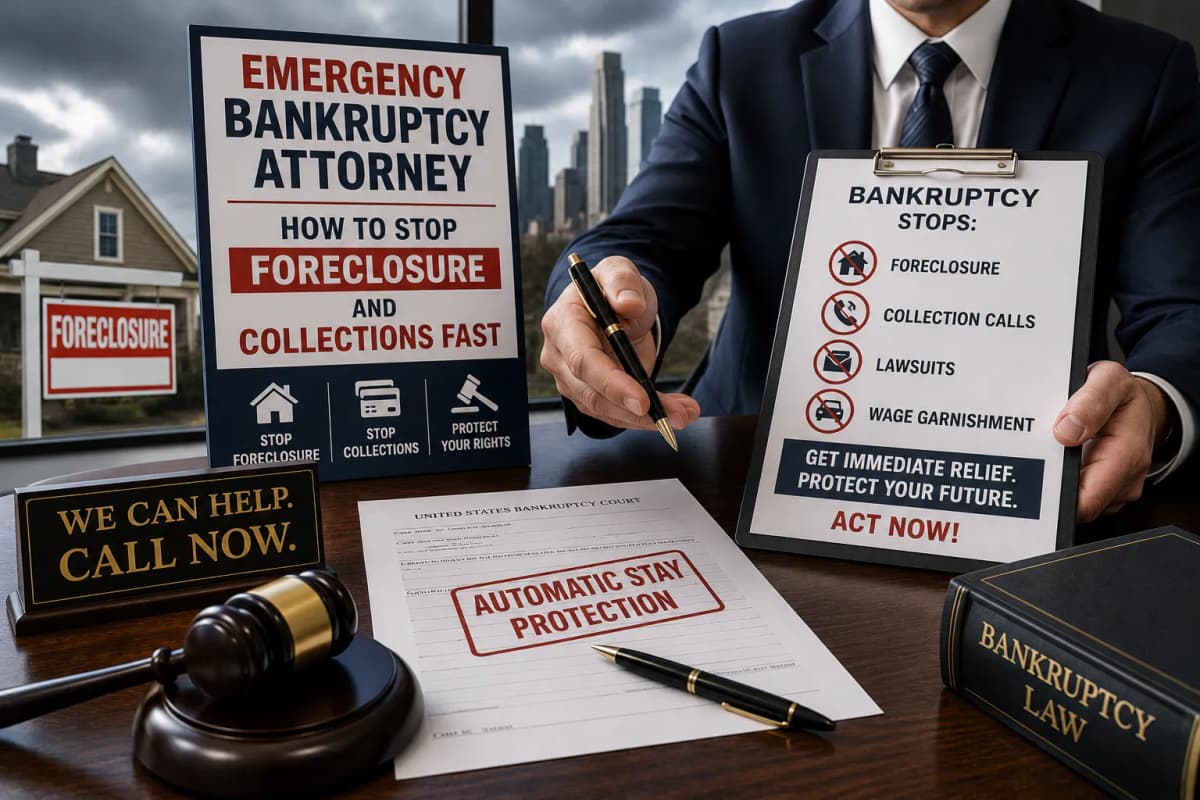
An emergency bankruptcy attorney files a skeleton bankruptcy petition, a bare minimum filing containing only the essential documents, to trigger an automatic stay within hours. This automatic stay immediately stops a foreclosure sale, a repossession, a wage garnishment, or a collection lawsuit, even when the action is scheduled for the same day. The remaining paperwork is due within 14 days under Federal Rule of Bankruptcy Procedure 1007.
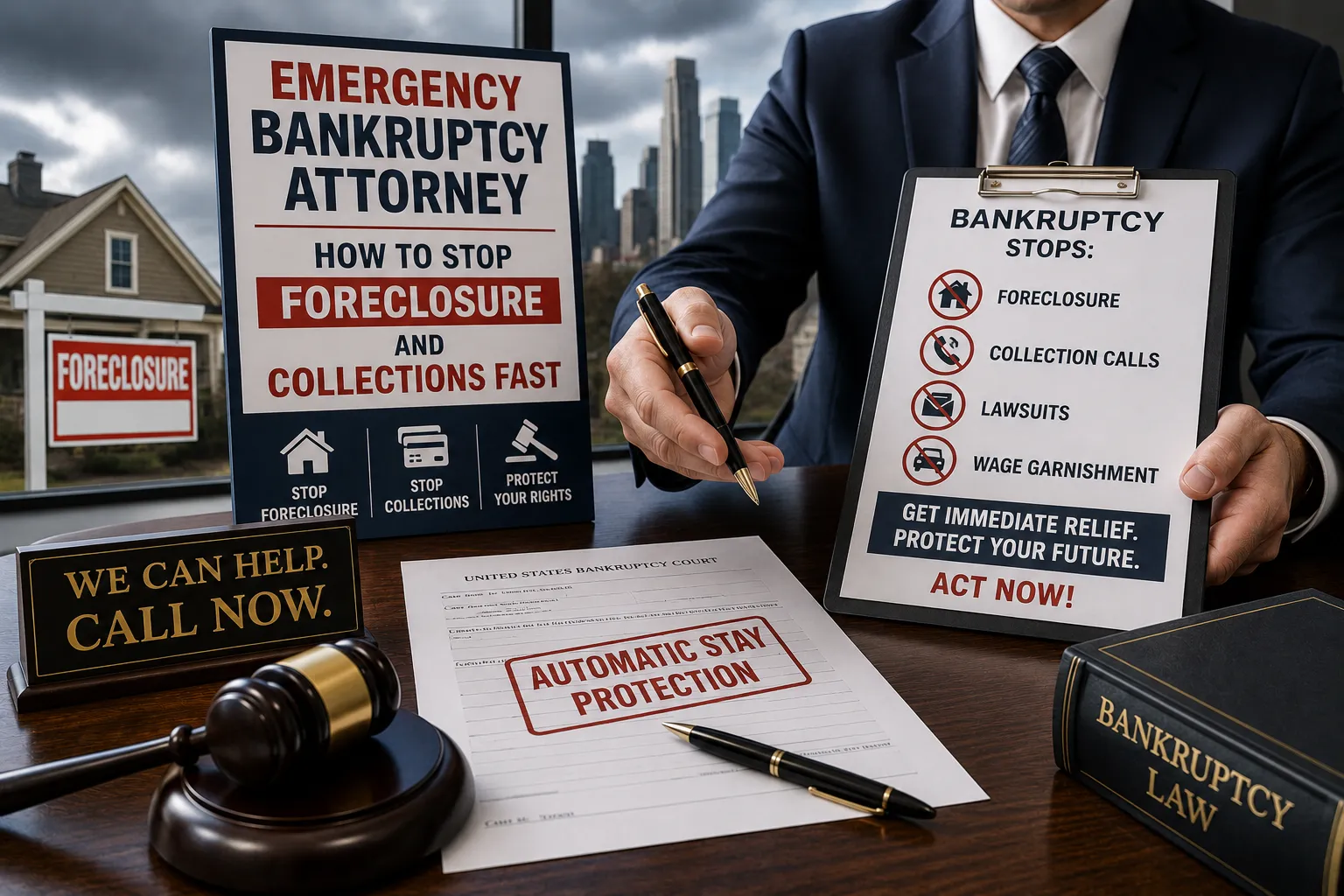
This guide covers how an emergency bankruptcy attorney files a case within hours, what stops the moment filing happens, the 14 day deadline following this filing, and what this protection costs.
Financial emergencies rarely arrive with warning. A missed payment turns into a demand letter, then a lawsuit, then a scheduled sale date, often over months, until the final notice lands with almost no time left to respond. By the time most people search for emergency help, the situation already feels impossible to fix in the time remaining. This is exactly the gap emergency bankruptcy filing closes, a legal tool built specifically for the moment when normal timelines have already run out.
A single missed mortgage payment rarely leads directly to foreclosure. Most lenders wait several months, sometimes longer, before initiating formal proceedings, and state law generally requires specific notices along the way before a sale date gets set. This longer runway explains why so many people underestimate how close a sale sits until the formal notice with a real date finally arrives, often triggering the search for emergency help far later than ideal.
Panic during this window often leads to worse decisions than the deadline itself. Some people avoid answering the phone or opening mail from a lender, hoping the problem resolves on its own. Others attempt a rushed, unqualified loan modification request days before a scheduled sale, a process rarely completing in time even when a lender is genuinely willing to work something out. An emergency bankruptcy attorney offers a concrete, fast-acting alternative to both of these instincts, one backed by real federal legal protection rather than hope.
An emergency bankruptcy attorney files a skeleton petition, sometimes called a bare bones filing, containing only the documents required to open a bankruptcy case. This narrow filing exists for one purpose, triggering the automatic stay as fast as legally possible.
An emergency bankruptcy attorney also manages expectations honestly during this first call. Stopping a scheduled action buys time, not a permanent solution on its own. The bankruptcy case itself still needs to move forward properly, addressing the underlying debt through the standard Chapter 7 or Chapter 13 process once the immediate crisis passes. A responsible attorney explains this clearly from the start, rather than letting a client believe the emergency filing alone resolves everything.
Choosing between Chapter 7 and Chapter 13 during an emergency filing follows the same underlying eligibility rules as any other filing, based mainly on income relative to the state median and the specific goal, keeping a house through a repayment plan versus discharging debt quickly through liquidation. An experienced attorney generally forms an initial view on this choice during the first urgent call, then confirms the direction properly once the full financial picture comes together during the 14 day follow up period.
Speed sits at the center of this entire process. Many emergency bankruptcy attorneys file within 2 to 4 hours of a first phone call, once the minimum required information is gathered.
Gathering creditor information under time pressure trips up many clients during this first call. A full, accurate list matters less at this stage than a reasonably complete one, since the schedules filed later correct and expand this list properly. Bringing recent statements, collection letters, or even a rough memory of who is owed money generally gives an attorney enough to build a workable initial filing within the tight window available.
The moment a skeleton petition gets filed, 11 U.S.C. 362 puts an automatic stay into effect immediately, without waiting for a judge to sign anything. This stay legally halts nearly every collection action against you.
Attorney Insight. Federal law controls this outcome, overriding a state foreclosure timeline entirely. A sale set for 10 in the morning still gets cancelled if a skeleton petition is filed at 9, since the automatic stay takes effect the instant the petition reaches the court, not when a creditor learns about the filing.
Written proof of the filing still matters in practice, even though the stay legally takes effect immediately. A lender, trustee, or repossession company conducting a sale without notice of a filing sometimes proceeds anyway simply because word has not reached the right person yet. A prepared attorney faxes or emails proof of filing directly to the foreclosing trustee, the auctioneer, or the repossession company the moment the case number is assigned, closing this gap quickly rather than assuming notice arrives on its own.
A sale conducted despite proper notice generally counts as a stay violation, giving grounds to challenge the sale afterward, though unwinding a completed transaction is far more difficult and stressful than preventing the sale in the first place. This reality is exactly why fast, direct notice to every relevant party matters so much in the hours immediately following an emergency filing, rather than treating the court filing alone as sufficient protection.
Damages for a knowing stay violation sometimes extend beyond simply undoing the sale, including compensation for actual harm and, in serious cases, punitive damages against a creditor acting with disregard for the law. This remedy exists specifically to give the automatic stay real teeth, discouraging a creditor from testing whether a debtor notices or challenges a violation before proceeding anyway.
Filing a skeleton petition buys time, not a completed case. Federal Rule of Bankruptcy Procedure 1007 requires the remaining schedules, a full list of assets, income, expenses, and additional creditor information, within 14 days of the initial filing.
Some courts grant a short extension to this 14 day deadline for genuine, documented hardship, though relying on this possibility is a poor substitute for careful planning from the start. An attorney experienced with emergency filings generally treats the original 14 day window as the real deadline, building in enough buffer to gather remaining documents comfortably rather than assuming a court will grant extra time if something runs behind schedule.
Pay stubs, tax returns, a mortgage statement, and a full accounting of household expenses generally round out the documents needed to complete the schedules within this window. Clients working with an organized attorney often receive a specific checklist immediately after the emergency filing, breaking this list into manageable pieces rather than a single overwhelming request delivered all at once during an already stressful period.
A short delay of a few days rarely changes the outcome for someone still weeks away from any scheduled action. Rushing into an emergency filing without a genuine deadline forces a client to build a case under unnecessary time pressure, often skipping the careful exemption planning a standard filing allows. Distinguishing a genuine emergency from ordinary financial stress matters enormously for choosing the right path forward.
A quick phone consultation resolves this question fast in nearly every case. Describing the specific letters, notices, or scheduled dates in hand allows an attorney to confirm within minutes whether a genuine emergency filing applies or whether a standard, more carefully planned filing serves the situation better. This short conversation costs nothing in most cases and removes the guesswork from an otherwise confusing decision.
Cost Item | Typical Range |
Attorney fees for an emergency filing | 1,000 to 2,500 US dollars, often higher than a standard filing given the urgency |
Court filing fee, Chapter 7 | Approximately 338 US dollars |
Credit counseling course fee | 10 to 50 US dollars, often waived for low income filers |
Follow up costs to complete full schedules | Sometimes included in the initial fee, sometimes billed separately |
Ask directly whether the quoted fee covers the full case through the 14 day follow up filing, or only the initial emergency petition. This distinction changes the real total cost considerably.
Payment during a genuine emergency deserves a direct question early in the conversation. Some attorneys accept payment plans specifically structured around an urgent filing, understanding a client facing a foreclosure sale rarely has thousands of dollars sitting available on short notice. Asking about payment flexibility during the first call, rather than after committing to a specific firm, avoids an awkward conversation once the clock is already running.
The Chapter 7 filing fee itself often gets paid in installments in some districts, or waived entirely for a debtor meeting income requirements below 150 percent of the federal poverty guideline. An attorney familiar with your local court knows these options well and raises them proactively rather than leaving a struggling client to discover a fee waiver exists only after already scrambling to cover the full amount upfront.
Automatic stay protection changes for someone who filed bankruptcy recently and had this earlier case dismissed. This detail catches many people off guard during an already stressful moment.
This motion generally must be filed within the first 30 days of the new case, adding yet another tight deadline on top of the usual 14 day schedule requirement. Courts weigh whether the earlier case was dismissed in good faith, a genuine change in circumstances, or filed simply to delay creditors without a real intent to complete a case. An attorney presenting clear evidence of changed circumstances, a new job, a resolved medical issue, a completed loan modification attempt, generally has a stronger chance of winning this motion than one offering only a general explanation.
Understanding filing history before the first call saves valuable time during an already urgent conversation. Gathering the case number, filing date, and dismissal reason from a previous bankruptcy, even a rough recollection, helps an attorney assess this restriction accurately within minutes rather than discovering the complication midway through preparing an emergency filing already under a tight deadline.
Location and availability matter more for an emergency filing than for almost any other type of legal work. A firm advertising broadly across a wide region sometimes struggles to move fast on a same day request, while a smaller local firm with direct relationships at the courthouse often files faster purely through familiarity with local procedure and staff. Asking directly whether the attorney has personally filed an emergency case at your specific courthouse recently reveals more than a general claim of bankruptcy experience alone.
After hours availability separates firms genuinely built for emergency work from firms simply willing to advertise the term. A foreclosure sale scheduled for early morning sometimes requires preparation the evening before, and a firm answering only during standard business hours risks already being too late by the time a genuine crisis surfaces late in the day. Confirming direct after hours contact information before an emergency happens, not during one, removes this risk entirely.
An emergency bankruptcy attorney exists for exactly one moment, when normal timelines run out and a foreclosure, repossession, or garnishment threatens to happen today. Filing a skeleton petition in this moment activates real, immediate federal protection, buying 14 days to build out the rest of the case properly.
The hardest part of this entire process is often simply picking up the phone. Shame, denial, and a lingering hope the problem resolves itself keep many people waiting until the final possible moment, sometimes past the deadline entirely. Every day spent waiting narrows the realistic options remaining, while a single phone call the moment a real deadline appears keeps every option, an emergency filing among them, genuinely available.
If a deadline is closing in fast, reach out for a consultation right away, or review our FAQ page for additional common questions.
This article gives general information only and does not serve as legal advice. Bankruptcy law depends heavily on your specific facts and jurisdiction. Speak with a licensed attorney immediately if you are facing an imminent deadline, and keep every notice, letter, or scheduled date in hand ready to share during the first call.
Written by
FranklyFrankly is a legal researcher and content writer at Jurnza, specializing in legal services, legal tools, legal guides, and law-related educational content. Frankly researches topics including business law, family law, immigration law, personal injury law, tax law, employment law, and real estate law to create accurate, easy-to-understand, and up-to-date resources that help readers make informed legal decisions.
