Document Generators
Injury & Compensation
Fees & Support
Deadlines & Filing
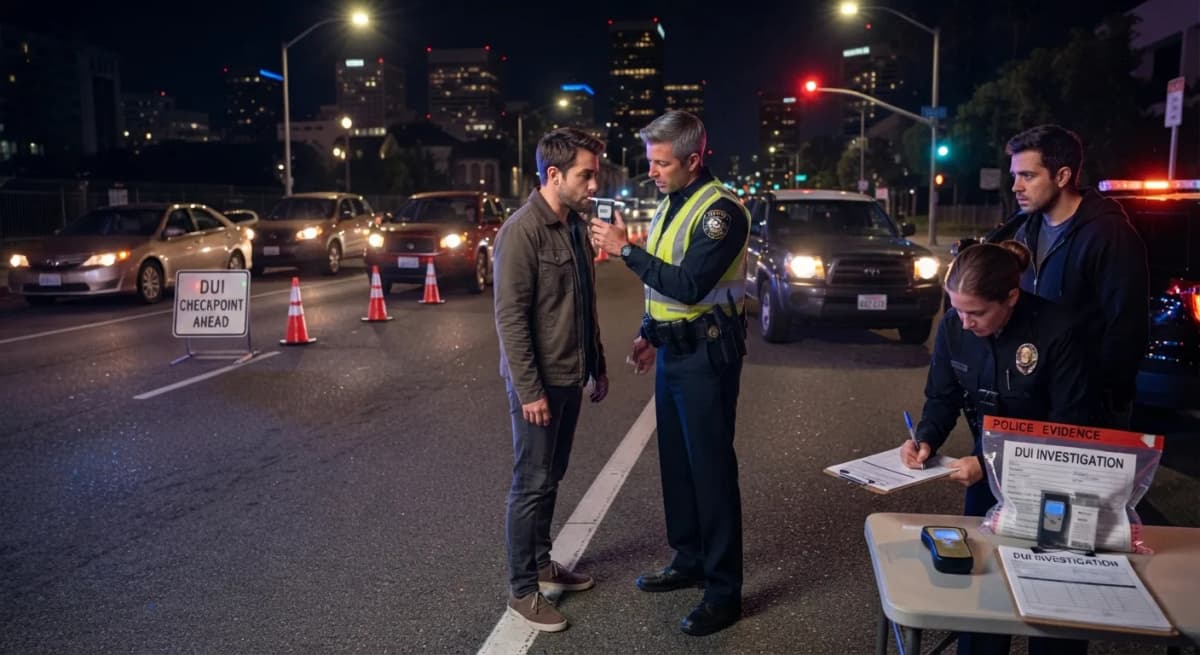
DUI and DWI both refer to laws against operating a vehicle while impaired by alcohol, drugs, or both, but the exact terminology and legal meaning depend on the state. Some states use DUI, others use DWI, and some use multiple terms for different levels or types of impaired driving. This guide explains the difference between DUI and DWI, how blood alcohol concentration (BAC) affects a case, what happens during a traffic stop, potential criminal and administrative consequences, and why state-specific law matters.
If you have searched for information about impaired driving, you have probably encountered two terms repeatedly: DUI and DWI. DUI generally means “Driving Under the Influence,” while DWI commonly means “Driving While Intoxicated” or “Driving While Impaired.” Although the terms sound different, both generally describe laws that prohibit operating a motor vehicle when alcohol, drugs, or another impairing substance has affected a person's ability to drive safely.
The important point is that DUI and DWI do not have one universal legal definition throughout the United States. State legislatures determine how impaired-driving offenses are named and defined. Some states primarily use DUI, some use DWI, and others use additional terms to distinguish between different levels of impairment or different circumstances. The same conduct can therefore be described differently depending on where the alleged offense occurred.
For example, California generally uses the term DUI, while Texas uses DWI. In Texas, a person may be charged with DWI when they are intoxicated because of alcohol, a controlled substance, a drug, or another substance, including when their alcohol concentration reaches the statutory threshold. California, by contrast, generally describes the offense as DUI and has separate BAC rules for different categories of drivers.
Because terminology varies, simply asking whether DUI is “more serious” than DWI does not always make sense. In some states, the terms are essentially interchangeable. In others, they can represent different offenses with different elements or consequences.
Understanding the terminology is therefore only the beginning. To understand a particular case, you need to know the applicable state's law, the alleged substance involved, the driver's age and license status, the BAC evidence if any, and the circumstances of the traffic stop.

DUI generally stands for Driving Under the Influence. It usually refers to operating or being in actual physical control of a vehicle while affected by alcohol, drugs, or another substance to a degree prohibited by state law.
The phrase “under the influence” does not necessarily mean that a person must be visibly drunk or incapable of driving. In legal contexts, impairment can be established through different forms of evidence, depending on the applicable statute. A BAC result can be important, but other evidence may also be relevant.
A DUI law may apply to alcohol, controlled substances, prescription medications, over-the-counter medications, or combinations of substances when they impair a person's ability to operate a vehicle safely. NHTSA's impaired-driving guidance recognizes impaired driving involving alcohol and other drugs, including prescription and over-the-counter substances.
This means DUI does not necessarily mean “drunk driving.” A person may face a DUI allegation involving drugs even when alcohol is not involved.
One common misconception is that a driver cannot be charged with DUI unless their BAC reaches 0.08%.
That is not universally correct.
A BAC of 0.08% is the standard illegal-per-se threshold for ordinary drivers in most U.S. jurisdictions, with Utah being an important exception because its general BAC limit is 0.05%. However, impairment can begin below 0.08%, and state laws can permit impaired-driving charges based on evidence other than a BAC at or above the general threshold.
California, for example, states that a person can be arrested and convicted of DUI even without a BAC measurement if the evidence establishes sufficient impairment. California also applies different BAC limits to certain drivers, including commercial drivers and people under 21.
Therefore, “My BAC was below 0.08, so I cannot have a DUI case” is not a reliable general rule.
DWI commonly means Driving While Intoxicated or Driving While Impaired, depending on the jurisdiction.
Like DUI, DWI laws generally prohibit operating a vehicle while affected by alcohol, drugs, or other substances. The exact elements of the offense vary by state.
The Legal Information Institute explains that DWI can be established through a BAC above the applicable legal limit or through other evidence of intoxication or impairment. A person does not necessarily have to be completely incapacitated for a DWI charge to be supported.
Texas provides a useful example of how the term can be defined by state law. Texas describes intoxication in terms that include losing the normal use of mental or physical faculties because of alcohol, a controlled substance, a drug, a combination of substances, or another substance, as well as having an alcohol concentration of 0.08 or more.
This demonstrates why a DWI case cannot be analyzed simply by looking at the label. The actual statutory definition matters.
The biggest difference between DUI and DWI is not necessarily the driver's conduct. In many situations, the difference is primarily the terminology used by the state.
Some jurisdictions use DUI as the primary term. Others use DWI. Some states use both terms and assign different meanings to them.
For example:
Federal transportation regulations use “driving while intoxicated” and “driving under the influence” as equivalent concepts for purposes of their definitions, but state criminal laws can use the terms differently.
So if someone asks, “Is DUI worse than DWI?”, the legally accurate answer is: it depends on the state and the specific offense.
The label by itself does not tell you the seriousness of the charge.
The United States does not have one single state criminal statute defining DUI or DWI. Each state creates and enforces its own impaired-driving laws.
That creates differences in:
NHTSA maintains state-by-state impaired-driving information because these laws differ across jurisdictions.
This is particularly important when researching legal information online. A statement that is correct in one state may be incomplete or incorrect in another.
BAC, or blood alcohol concentration, measures the amount of alcohol in a person's blood. It is commonly expressed as a percentage or in grams of alcohol per deciliter of blood.
BAC evidence can play a major role in alcohol-related DUI and DWI cases.
For ordinary drivers, 0.08% is the general illegal-per-se threshold in all 50 states, the District of Columbia, and Puerto Rico, except Utah, where the threshold is 0.05%. “Illegal per se” generally means that driving at or above the statutory BAC level itself violates the law, without requiring prosecutors to separately prove impairment through the driver's observed behavior.
However, reaching a particular BAC number should not be treated as the only measure of driving ability.
NHTSA notes that driving impairment can occur below 0.08%. At approximately 0.05 BAC, for example, reduced coordination, difficulty tracking moving objects, impaired judgment, and reduced ability to respond to emergency driving situations can occur. At 0.08 BAC, impairments can include problems with concentration, perception, information processing, speed control, and judgment.
This is one reason laws can address impaired driving even when a driver's BAC is below the general illegal-per-se threshold.
Potentially, yes.
The answer depends on state law and the evidence available.
A BAC below 0.08% does not automatically establish that a person was legally impaired, but it also does not necessarily prevent an impaired-driving charge. Officers and prosecutors may consider evidence such as driving behavior, physical observations, field sobriety performance, statements, chemical testing, and other circumstances when permitted by law.
California explicitly explains that a driver can be arrested and convicted of DUI even without a BAC measurement depending on the evidence of impairment.
Other states use their own statutory standards.
The key distinction is between per-se BAC violations and impairment-based offenses. A per-se law can make driving at or above a specified BAC unlawful without requiring separate proof that the person's driving ability was impaired. An impairment-based charge can rely on evidence that the person's ability to operate a vehicle safely was affected.
Drivers under 21 can face stricter alcohol-related driving rules.
NHTSA reports that all states have BAC limits of 0.02% or lower for drivers under 21. These laws are generally referred to as zero-tolerance laws because they prohibit underage drivers from driving with specified measurable amounts of alcohol in their systems.
The exact rule, threshold, and consequences still depend on state law.
For example, California states that drivers under 21 can face a BAC restriction at 0.01% or higher, while also applying different standards to other categories of drivers.
This means an under-21 driver should not assume that the adult 0.08% standard applies in the same way.
Commercial drivers can also be subject to stricter alcohol-related standards.
A commonly recognized BAC threshold for commercial motor vehicle drivers is 0.04%, although the precise legal framework depends on the applicable federal and state requirements and the type of vehicle or license involved.
Commercial drivers should therefore avoid assuming that the rules for an ordinary passenger vehicle automatically apply to their employment or commercial driving situation.
A commercial-driving case can also create consequences beyond an ordinary driver's license issue because professional driving privileges and employment may be affected.
Yes.
DUI and DWI laws are not limited to alcohol.
Depending on state law, impaired driving can involve:
NHTSA's impaired-driving guidance specifically recognizes driving while impaired by alcohol or other drugs, including prescription and over-the-counter drugs.
Drug-impaired driving can be legally complicated because the evidence used to establish impairment may differ from a conventional alcohol BAC test.
For alcohol, BAC provides a relatively familiar measurement. Drug cases can involve blood or other testing, observed impairment, expert testimony, toxicology evidence, and the circumstances surrounding the driving.
The presence of a drug in a person's system and proof that the person was legally impaired are not necessarily the same question. The applicable statute determines what prosecutors must establish.
A DUI or DWI investigation can begin with an ordinary traffic stop or another circumstance that gives an officer reason to investigate possible impaired driving.
Possible indicators may include:
The exact procedures differ by jurisdiction.
An officer may ask questions and may conduct field sobriety testing or request chemical testing according to applicable law and procedure.
A driver should understand that a traffic stop and a criminal prosecution are separate stages. Being stopped does not automatically mean a person will be convicted. A case may involve an investigation, arrest, administrative license proceedings, criminal charges, negotiations, hearings, or trial depending on the circumstances.
DUI and DWI investigations can involve several types of evidence.
Field sobriety tests are roadside assessments intended to provide information about possible impairment. They are not the same thing as a chemical BAC test.
The specific tests, instructions, administration, and evidentiary treatment vary by jurisdiction.
A person should also understand that field observations are only one potential category of evidence in an impaired-driving investigation.
Breath-testing devices can estimate alcohol concentration from a person's breath.
The reliability and evidentiary significance of a particular test can depend on the device, administration procedures, calibration, maintenance, timing, applicable law, and other circumstances.
Blood testing can be used to measure alcohol or identify substances in a person's system.
A blood test can become important in alcohol or drug-related cases, but its interpretation may involve questions about collection, storage, laboratory procedures, timing, and the relationship between the test result and the person's condition while driving.
Some jurisdictions or circumstances may involve urine testing, particularly in drug-related investigations.
The rules governing whether and how such evidence can be used vary considerably.
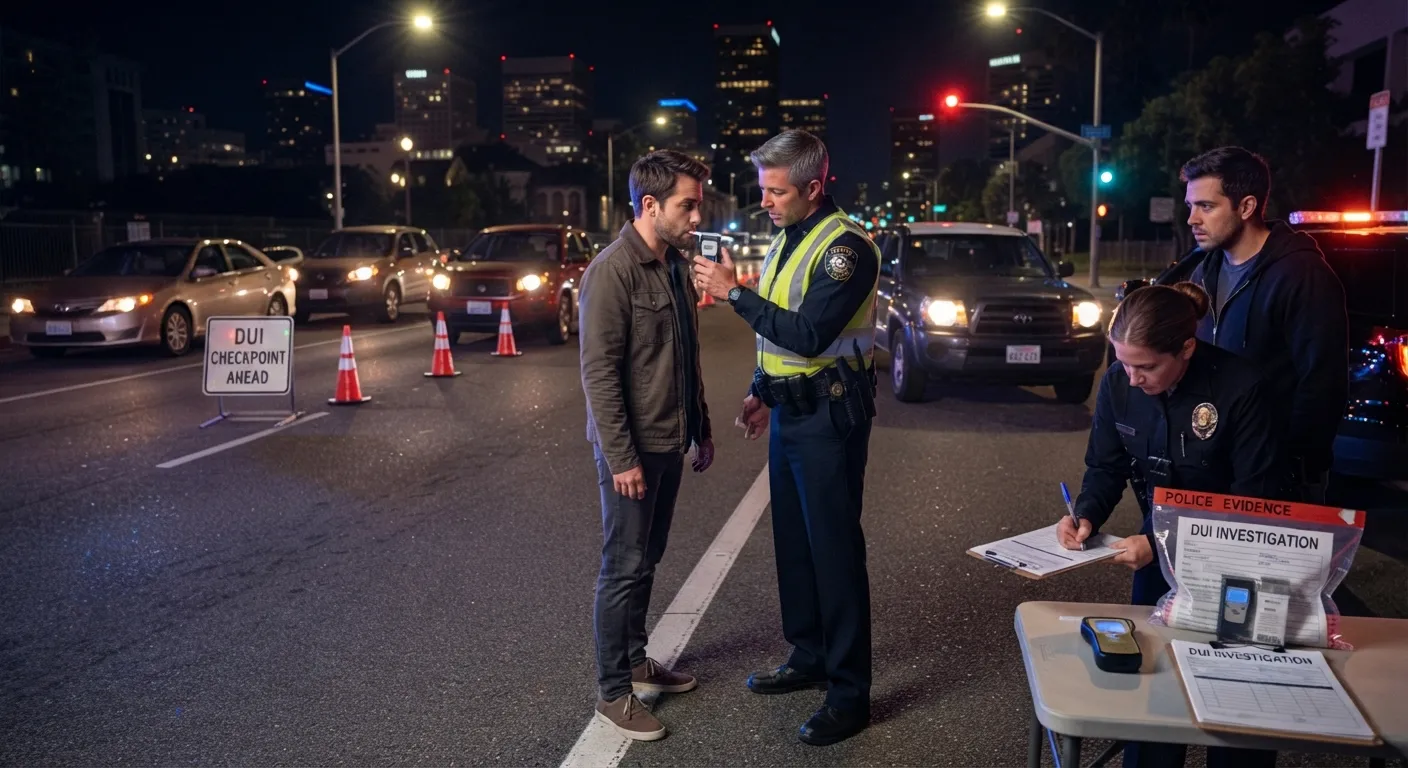
Chemical-test refusal can create a separate legal issue.
The United States has implied-consent laws under which drivers generally agree to certain forms of chemical testing under specified circumstances by obtaining a driver's license. The exact rules and consequences differ by state.
Refusing a test can result in administrative consequences such as license suspension or revocation even when the criminal DUI or DWI case is unresolved.
This is important because there can effectively be two connected but distinct processes:
The two processes can operate under different procedures and deadlines.
For that reason, someone who has been arrested for suspected impaired driving should pay close attention to any paperwork received from law enforcement or the state's motor vehicle agency.
The consequences of a DUI or DWI conviction depend heavily on state law and the facts of the case.
Potential consequences can include:
NHTSA's state impaired-driving materials identify fines, jail terms, community service, restitution, treatment, probation, training, license actions, and ignition-interlock requirements among the types of sanctions used by states.
Not every case results in every consequence.
Penalties can also become more severe when aggravating circumstances are present.
A first impaired-driving offense and a repeat offense may be treated differently under state law.
Repeat-offender provisions are common, and penalties can increase when a person has prior qualifying convictions. NHTSA's impaired-driving guidance specifically identifies repeat offenders as a category for enhanced sanctions.
Other factors can also affect the consequences.
For example, a case involving a high BAC, an accident, injury, death, a child passenger, or another aggravating circumstance may be subject to different rules from a basic first-offense case.
The specific look-back period for prior convictions also varies by jurisdiction. Therefore, it is not enough to know that someone had a prior DUI or DWI; the dates, jurisdiction, offense classification, and applicable statute may matter.
One of the most important things to understand about DUI and DWI is that the driver's license issue may begin before the criminal case is resolved.
Some states have administrative license suspension or revocation procedures triggered by a BAC result or refusal to provide a chemical sample. NHTSA describes administrative per se laws that can permit license suspension or revocation before a criminal conviction in qualifying circumstances.
This means a person may need to address a DMV or equivalent administrative process separately from the criminal court case.
For example, California describes an administrative suspension process following a DUI arrest and provides procedures for requesting an administrative hearing.
The deadlines for challenging an administrative suspension can be short, which makes it important to read the documents issued after an arrest rather than assuming that the criminal court process is the only deadline that matters.
An ignition interlock device, commonly called an IID, is a device connected to a vehicle's ignition that requires a breath sample before the vehicle can start.
If the device detects alcohol above its programmed threshold, it can prevent the vehicle from starting.
Some states require or authorize ignition-interlock devices after certain impaired-driving offenses. The requirements can depend on factors such as the number of offenses, BAC level, probation status, and whether the offense involved injury or other circumstances.
California, for example, describes IID requirements and explains that an IID requires a breath sample before the engine can start.
Because IID rules vary, a person should check the requirements that apply to the specific state and offense rather than assuming that every DUI or DWI conviction carries the same restriction.
Several circumstances can potentially increase the legal consequences of an impaired-driving case.
Many states impose enhanced consequences for higher BAC levels.
NHTSA identifies high BAC, commonly at or above 0.15%, as a category for enhanced sanctions in impaired-driving laws. The exact threshold and penalty depend on state law.
Prior qualifying DUI or DWI convictions can lead to increased penalties.
If impaired driving allegedly causes an accident, injury, or death, additional criminal charges or enhanced penalties may apply.
Some jurisdictions impose additional consequences when a child is present in the vehicle.
A commercial driver's case can have professional consequences in addition to ordinary criminal and license consequences.
Refusing a chemical test can trigger separate administrative consequences in many states.
There is no nationwide rule that DUI is more serious than DWI, or vice versa.
That question can only be answered by looking at the specific state's statutes.
In a state where DUI and DWI are simply different names for essentially the same impaired-driving offense, the terms do not indicate different levels of seriousness.
In a state that uses both terms to distinguish offenses, however, the distinction can matter significantly.
For someone facing an actual charge, the most important information is the statute cited on the charging document, the jurisdiction, the alleged conduct, prior record, BAC or drug evidence, and any aggravating circumstances.
The acronym alone does not provide enough information to determine the potential outcome.
The state where the alleged offense occurred can fundamentally change the legal analysis.
Consider two examples.
California: California generally uses DUI terminology. Its DMV materials identify different BAC rules for drivers depending on age, license type, probation status, and other circumstances.
Texas: Texas generally uses DWI terminology and defines intoxication to include loss of normal mental or physical faculties because of alcohol or certain drugs, as well as an alcohol concentration of 0.08 or more.
These examples demonstrate why a general internet article cannot substitute for the law of the state involved.
A person researching a DUI or DWI case should identify the exact jurisdiction before relying on information about BAC limits, penalties, testing, license suspension, or court procedure.
If you have been arrested or cited for suspected impaired driving, taking the situation seriously is important.
First, read every document you received. There may be information about court dates, license suspension, administrative hearings, testing, or other deadlines.
Second, do not ignore the driver's-license issue. A criminal case and an administrative license proceeding can involve different procedures.
Third, preserve relevant information. Depending on the circumstances, this may include the citation, arrest paperwork, test results, medical records, vehicle information, dashcam footage, photographs, witness information, and communications related to the incident.
Fourth, avoid discussing the details publicly. Social media posts, messages, or other statements can potentially become relevant to a legal dispute.
Finally, consider speaking with a qualified criminal-defense or DUI/DWI attorney in the applicable jurisdiction. An attorney can evaluate the actual statute, evidence, deadlines, and possible defenses rather than relying on general information.
Every case is different, but DUI and DWI litigation can involve questions about how the stop began, how evidence was collected, and whether the prosecution can establish every required element of the offense.
Potential legal issues may include:
These are examples of issues that may arise; they are not automatic defenses.
The strength or relevance of any particular argument depends on the facts, jurisdiction, available evidence, and applicable law.
Not necessarily. Some jurisdictions use the terms interchangeably or primarily use one term, while others distinguish between them.
Not necessarily. The general BAC threshold does not eliminate state impairment laws that can apply below that level.
No. Depending on state law, DUI or comparable impaired-driving offenses can involve drugs and other impairing substances.
Not necessarily. Penalties vary by state and circumstances, and can include license consequences, probation, treatment requirements, ignition-interlock requirements, and potentially incarceration.
No. Refusal can create separate administrative consequences and does not necessarily prevent other evidence from being used. NHTSA notes that states generally have implied-consent laws and separate penalties for test refusal.
Feeling capable of driving is not a reliable legal or safety test. NHTSA notes that people can underestimate their own impairment and that alcohol can affect driving ability at levels below 0.08 BAC.

DUI and DWI are terms used throughout the United States to describe laws involving impaired driving, but there is no single nationwide definition that makes the two terms universally different or interchangeable. State law determines what the acronym means, what conduct constitutes an offense, which BAC limits apply, and what penalties may follow.
For ordinary adult drivers, 0.08% is the general illegal-per-se BAC threshold across the United States, with Utah using a 0.05% threshold. However, lower BAC levels can still be relevant to impairment, and special rules may apply to drivers under 21, commercial drivers, and people subject to particular restrictions.
DUI and DWI cases can involve much more than a BAC number. Traffic-stop procedures, field observations, chemical testing, license consequences, prior offenses, alleged drug impairment, and aggravating circumstances can all affect a case.
If you are dealing with an actual DUI or DWI arrest or charge, general information is only a starting point. The applicable state law, court documents, administrative deadlines, and evidence should be reviewed carefully, preferably with a qualified attorney familiar with impaired-driving law in that jurisdiction.

Written by
BeastBeast is a seasoned legal content creator and law research specialist with 15+ years of experience in legal writing, legal research, and publishing educational law content. Specializing in Personal Injury, Family, Business, Immigration, Criminal, Tax, and Real Estate Law, Beast creates accurate, well-researched, and SEO-optimized legal guides that help readers understand complex legal topics with confidence. Every article is written with a focus on accuracy, trust, and Google's E-E-A-T guidelines, making Jurnza.com a reliable source for legal information and legal services.
