Deadlines & Filing
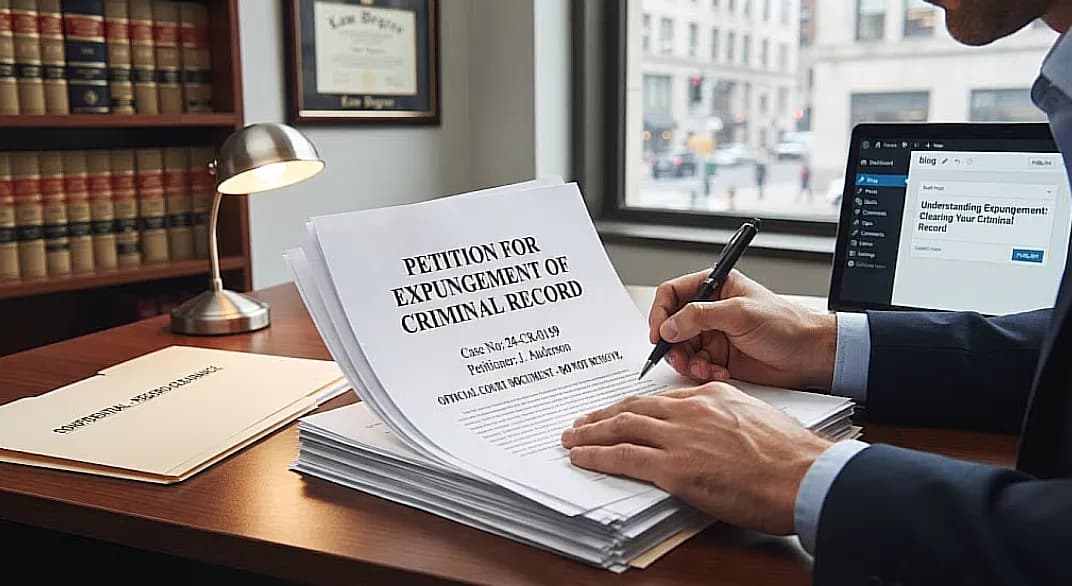
Expungement can help eligible individuals clear or restrict access to certain criminal records, but the rules vary significantly by state. Learn the difference between expungement and record sealing, whether arrests, dismissed charges, convictions, and juvenile records may qualify, how waiting periods and eligibility requirements work, and what happens when a petition is filed. This guide also explains background checks, employment and housing issues, federal convictions, pardons, professional licensing, common mistakes, and what to do if a criminal record cannot be expunged.
A criminal record can continue to affect a person's life long after a criminal case has ended. An arrest, dismissed charge, conviction, or other criminal case may appear during background checks, create questions during job applications, complicate housing applications, or affect professional and licensing opportunities. For people who have completed their cases and want to move forward, one possible legal remedy is expungement.
Expungement generally refers to a legal process that removes, destroys, or otherwise eliminates criminal-record information from public or official records, although exactly what happens varies by jurisdiction. In some states, an expunged record may be destroyed or removed from ordinary databases. In others, the law may use different terminology or preserve certain records for limited purposes.
Another important remedy is record sealing. A sealed record is generally restricted from public access rather than necessarily destroyed. State laws differ substantially regarding who can access sealed records and how they may be used later.
Whether someone qualifies for expungement or sealing depends on the state, the type of case, the outcome, the person's subsequent criminal history, waiting periods, and other requirements. Some jurisdictions make relief available for certain arrests, dismissed charges, juvenile cases, or lower-level convictions, while serious offenses may be excluded.
Federal law presents a separate issue. Federal criminal records do not necessarily follow the same expungement rules available under state law, and federal convictions generally cannot simply be expunged through a state court process. The U.S. Department of Justice explains that federal convictions and state convictions are subject to different procedures and that a presidential pardon does not itself erase a federal conviction.
This guide explains how expungement and record sealing generally work, who may qualify, what happens during the process, how criminal records can affect employment and housing, and what people should know before trying to clear a record.
Expungement is a legal mechanism for removing or eliminating criminal-record information according to the law of the jurisdiction where the remedy is granted.
The precise effect varies. Cornell's Legal Information Institute explains that expungement can mean destroying, obliterating, or striking out records or information. Some states may remove records from databases, while others may retain certain information or impose exceptions concerning how the record can be accessed or disclosed.
Because state laws use different terminology, someone researching expungement should not assume that the word has exactly the same legal effect everywhere.
For example, one state may provide a procedure called expungement, while another may use terms such as:
These remedies can have very different consequences.
The important question is not simply whether a state uses the word "expungement." The important question is what legal remedy is available and what that remedy does to the particular record.
Record sealing generally means restricting public access to a criminal record.
A sealed record may remain in government systems even though members of the public cannot ordinarily access it. The extent of continued access varies by jurisdiction and by the type of record.
Cornell's Legal Information Institute notes that some states permit sealing of criminal records while others may not recognize the remedy in the same form. Where sealing is available, a court may issue an order restricting access, although certain government agencies or courts may retain access under specific circumstances.
This distinction matters because sealed does not necessarily mean destroyed.
An individual may therefore obtain substantial privacy from a sealed record without the record disappearing from every government database.
Whether law enforcement, courts, licensing agencies, employers, or other entities can access a sealed record depends on the applicable law and the particular purpose for which the information is being requested.
The terms are sometimes used interchangeably in everyday conversation, but they can describe different legal remedies.
Generally:
Expungement involves removing, destroying, or otherwise eliminating qualifying criminal-record information under the applicable law.
Sealing generally restricts access to the record while allowing it to remain in existence.
However, there is no single nationwide definition controlling every state. Some jurisdictions use these terms differently or offer different forms of record relief.
This is why a person should examine the statute and court procedure applicable to the specific state rather than relying solely on a general internet definition.
The distinction can also matter when applying for employment, professional licensing, government positions, immigration benefits, or other opportunities where the law may require disclosure of certain records even after they have been sealed or otherwise cleared.
In some jurisdictions, an arrest record may qualify for expungement even when the person was never convicted.
This can be especially important when:
However, eligibility depends on state law and the circumstances of the case.
An arrest is also legally different from a conviction. The fact that someone was arrested does not establish that the person committed a crime. The EEOC specifically distinguishes arrest records from conviction records when discussing employment decisions.
A person who was arrested but never convicted may therefore have a different path to record relief from someone who was convicted.
A dismissed case may be eligible for expungement or sealing in some states.
The reasoning behind such laws is that a person who was never convicted may have less justification for carrying a publicly accessible criminal record indefinitely.
But dismissal alone does not automatically mean the record disappears.
Depending on the jurisdiction, a person may still need to:
Some jurisdictions also provide automatic record-clearing for certain qualifying cases, meaning the person does not necessarily have to file an individual petition.
The exact process is controlled by state law.
Sometimes, yes—but eligibility is generally more restricted than for an arrest or dismissed case.
Some states allow certain convictions to be expunged, sealed, set aside, or otherwise cleared after a person satisfies specified requirements.
Potential eligibility requirements may include:
The list of eligible offenses can vary significantly.
A state may permit record relief for certain misdemeanors but exclude particular violent, sexual, or serious offenses. Other jurisdictions may provide different remedies depending on whether the conviction involved a felony or misdemeanor.
Therefore, a person should not assume that every conviction becomes eligible simply because enough time has passed.
There is no universal nationwide list of crimes that cannot be expunged.
Each jurisdiction establishes its own eligibility rules.
Certain serious offenses are commonly subject to restrictions, but the exact exclusions vary. Cornell's Legal Information Institute notes that states frequently restrict expungement for serious offenses while making relief more accessible for certain juvenile matters, dismissed cases, and lower-level offenses.
A state's law may also distinguish between:
Even if a particular offense is generally eligible, additional circumstances can create a separate bar.
For example, a state might deny relief when the person has another pending case or a later conviction.
Juvenile records often receive different treatment from adult criminal records.
Many jurisdictions have special rules governing juvenile arrests, delinquency proceedings, and juvenile court records.
Possible remedies can include:
The rules can depend on the person's age, the offense, the outcome of the case, and whether the person later committed another offense.
Because juvenile-record laws are highly jurisdiction-specific, parents and young adults should check the rules applicable to the particular state and court.
A waiting period is a period of time that must pass before a person becomes eligible for record-clearing relief.
The waiting period may begin after:
There is no universal federal or nationwide waiting period.
A person may also have to remain free from new convictions or pending charges during the waiting period.
For example, a law could permit expungement several years after completing a sentence, but eligibility could disappear if the person receives another disqualifying conviction before filing.
Because these rules are statutory and state-specific, checking the current law is essential.
Often, a person must complete probation or other court supervision before seeking post-conviction record relief, but this is not an absolute nationwide rule.
The answer depends on the jurisdiction and the particular remedy.
Courts may require completion of:
A person should therefore obtain a copy of the final judgment and sentencing order before applying.
An unpaid fine or incomplete court requirement can sometimes prevent eligibility.
The exact procedure differs by state, but a typical petition-based process can involve several stages.
Start by identifying exactly what appears on the record.
Relevant information may include:
This information helps determine which legal remedy may be available.
The next step is determining whether the case satisfies the applicable requirements.
Eligibility can depend on the offense, case outcome, waiting period, subsequent criminal history, sentence completion, and other factors.
If a petition is required, the applicant generally provides information identifying the case and explaining why the statutory requirements are satisfied.
Some jurisdictions provide standardized forms.
The petition generally goes to the court or government agency designated by state law.
Filing fees may apply, although fee waivers may be available in some circumstances.
Depending on the jurisdiction, the prosecutor, law enforcement agency, or another government entity may need to receive notice.
Some applications can be decided based on the written record.
Others may require a hearing.
At a hearing, a judge may consider whether the legal requirements are satisfied and whether an objection has been raised.
If the court grants relief, it issues an order directing the appropriate agencies to seal, expunge, destroy, or otherwise restrict the record as provided by law.
After an order is entered, it can be important to confirm that the relevant records have actually been updated.
A court order does not necessarily mean every private database or government system instantly changes.
Sometimes.
Some jurisdictions have automatic record-clearing systems for particular categories of cases.
Automatic relief can potentially apply to certain:
But automatic expungement is not universal.
Whether a record is automatically cleared depends on the jurisdiction, the offense, the outcome, and the statutory requirements.
People should also be careful about assuming that an old record disappeared merely because they believe it should have been automatically cleared. If the record continues to appear in a background report, it may be necessary to investigate whether the record was actually cleared or whether the background report contains inaccurate information.

Diversion programs can sometimes provide a path that prevents a criminal case from resulting in a traditional conviction.
Diversion generally involves resolving or interrupting the prosecution through an agreement or program, often requiring conditions such as treatment, counseling, community service, or a period of supervision. Successful completion may result in dismissal or another favorable disposition.
Whether the resulting record can be expunged or sealed depends on state law and the terms of the program.
Before entering a diversion agreement, it can therefore be useful to understand the record-related consequences of successful and unsuccessful completion.
In many circumstances, an expunged or sealed record should not appear on ordinary background reports that are legally required to exclude such records.
The FTC states that sealed or expunged criminal records should not appear in tenant background reports covered by the Fair Credit Reporting Act.
However, background-check systems can contain errors.
A database may have outdated information, a record may not have been updated, or a reporting company may mistakenly attribute someone else's record to the applicant.
If an expunged or sealed case appears on a background report, the person should obtain the report and determine where the information came from.
The Fair Credit Reporting Act can provide dispute rights when consumer reporting companies report inaccurate information.
First, do not assume that the court order failed.
There can be multiple databases involved in a background check.
Depending on the situation, a person may need to:
The FTC advises consumers to check whether criminal records in background reports actually belong to them and whether the reported disposition is accurate.
If a reporting company continues to publish information that should no longer be reported, legal remedies may be available depending on the circumstances.
One major reason people seek record-clearing relief is employment.
Employers may conduct criminal background checks, although the rules governing how employers can obtain and use criminal-history information vary.
The EEOC explains that employers may consider criminal-history information in employment decisions, but federal employment-discrimination laws can restrict discriminatory use of criminal records. It also emphasizes that an arrest is not proof that criminal conduct occurred.
A sealed or expunged record may not appear in an ordinary background report, which can reduce some of the practical consequences of an old case.
However, exceptions may apply.
Certain employers, licensing bodies, government agencies, or regulated industries may have special rules concerning criminal records.
A person should therefore determine whether a particular application legally requires disclosure of a record even after it has been sealed or expunged.
Criminal records can also affect rental applications.
Landlords may use tenant-screening reports when deciding whether to rent property.
The FTC explains that landlords can use tenant background reports, but consumers have rights concerning inaccurate information and adverse decisions based on those reports. The FTC also states that sealed or expunged criminal records should not appear in covered tenant background reports.
If an applicant is denied housing based on inaccurate criminal-history information, the applicant may have rights to obtain the report and dispute the inaccurate information.
Expungement does not guarantee approval for housing, but it can affect what criminal-history information is legally available through covered background reports.
Possibly, but professional licensing can involve additional rules.
Some licensing agencies may have authority to consider criminal history even when ordinary employers cannot access the same information.
Certain professions may also impose statutory disclosure requirements.
These issues can arise in fields such as:
Before assuming that an expunged record never has to be disclosed, check the rules governing the specific license.
An expungement order can change the legal status or accessibility of a record without necessarily eliminating every exception created by another statute.
Not necessarily.
Expungement primarily concerns criminal records. It does not automatically restore every right or remove every legal consequence associated with a conviction.
For example, firearm restrictions, professional licensing requirements, immigration consequences, registration requirements, and other legal disabilities can involve separate laws.
Federal law can also interact with state record-clearing remedies in complicated ways.
The Department of Justice has explained that restoration of certain civil rights and the effect of state-law remedies on federal firearm restrictions can depend on the specific conviction and applicable law.
Therefore, someone seeking expungement because they want a particular legal right restored should investigate that right separately.
This is an area where people should be particularly careful.
Expungement under state law does not necessarily eliminate every immigration consequence of a criminal case.
Immigration law is federal, and federal immigration authorities may apply their own definitions and rules concerning criminal conduct.
A state record-clearing order can therefore have a different effect under immigration law than it does for employment or ordinary public-record purposes.
Someone with an immigration concern should obtain advice from an attorney familiar with both the relevant criminal-record law and immigration law before relying on expungement.
Federal criminal records require separate consideration.
State expungement laws generally cannot be used simply to erase a federal criminal conviction.
Federal court resources state that federal convictions cannot generally be expunged, although other forms of relief, such as a presidential pardon, may exist in certain circumstances.
A pardon is also different from expungement.
The Department of Justice explains that a presidential pardon does not remove the federal conviction from the criminal record. Instead, the conviction and pardon remain reflected in the record.
This distinction is important because someone with a federal conviction should not assume that the expungement process used for a state conviction will work in federal court.
A pardon and an expungement serve different purposes.
An expungement is generally a judicial or statutory record-clearing remedy.
A pardon is a form of executive clemency.
At the federal level, the President has pardon authority for federal offenses. State governors or other state authorities may have clemency powers concerning state offenses under state law.
A pardon does not necessarily erase a conviction.
The Department of Justice specifically states that a presidential pardon does not expunge a federal conviction; the conviction and pardon may both remain on the person's record.
Therefore, someone looking for a way to remove a record should not assume that obtaining a pardon has the same effect as expungement.
Sometimes, but this depends on the applicable law and the particular situation.
Some jurisdictions permit a person whose record has been expunged to lawfully deny the existence of the underlying case in ordinary circumstances.
Other laws may create exceptions for specific applications or government purposes.
For example, an individual may still be required to disclose information to certain licensing authorities, courts, law-enforcement agencies, or regulated employers.
The correct answer depends on the jurisdiction and the question being asked.
A person should therefore avoid making an absolute statement such as "I never had an arrest" simply because a record was expunged unless the applicable law clearly permits that response in the specific circumstances.
Yes.
A petition can be denied when the applicant does not satisfy the statutory requirements.
Possible reasons can include:
Some jurisdictions also give judges discretion in certain circumstances.
If an application is denied, the available options depend on state law and may include correcting the application, waiting until eligibility changes, filing a new petition, or seeking review of the decision.
There is no single nationwide expungement fee.
Costs can include:
Some jurisdictions provide fee waivers for people who meet financial eligibility requirements.
Attorney fees also vary depending on the complexity of the case and the jurisdiction.
A straightforward petition involving a dismissed misdemeanor may require considerably less work than a complicated post-conviction matter involving multiple cases, objections, or questions about eligibility.
Before hiring a lawyer, ask for a written explanation of the fee structure and what services are included.
Not always.
Some jurisdictions have relatively straightforward procedures that allow eligible people to file petitions themselves.
Others can be considerably more complicated.
Legal assistance may be particularly useful when:
A lawyer can also help determine whether expungement, sealing, a set-aside, pardon, or another remedy is actually the appropriate option.
Not every case qualifies.
Eligibility depends on the governing law.
A case being dismissed does not necessarily mean the arrest record disappears automatically.
A sealed record may remain in existence and may still be accessible to certain authorized entities.
A later conviction or pending case can affect eligibility.
Unpaid fines, restitution, or incomplete supervision can create eligibility problems.
Record-clearing procedures can change.
Always use the current forms and instructions provided by the relevant court or agency.
Background-check databases can contain mistaken identities, outdated case information, or incorrect dispositions.
Separate laws can continue to affect immigration, licensing, firearms, professional eligibility, or other rights.
They are not.
Federal criminal records require separate analysis.
The documents required depend on the jurisdiction and the type of case.
Potentially useful records include:
Obtaining an official copy of the case file can make the eligibility analysis much easier.
Before filing an expungement or sealing petition, consider taking several practical steps.
First, identify every relevant criminal case rather than looking at only the record you remember.
Second, obtain the official disposition of each case.
Third, determine whether all fines, restitution, probation, and other requirements have been completed.
Fourth, check the current law governing the jurisdiction.
Fifth, determine whether the record is eligible for expungement, sealing, automatic clearing, or another remedy.
Sixth, identify whether the record could create separate immigration, licensing, employment, or firearm issues.
Finally, keep copies of every filing and court order.
The purpose of this preparation is to avoid filing for the wrong remedy or overlooking a legal consequence that exists outside the ordinary public-record system.
After a court grants relief, the relevant government agencies may be required to update, seal, destroy, or otherwise restrict the record according to the court's order and applicable law.
The process does not necessarily mean that every reference to the case disappears from every location immediately.
A person may want to keep certified copies of:
These records can be useful if a background-check company later reports information that should no longer appear.
If a background report contains inaccurate information after an expungement, the person may need to dispute the report with the reporting company.
Potentially, and this is one of the practical reasons people seek record relief.
The FTC states that sealed or expunged criminal records should not appear in covered tenant background reports.
But the precise effect depends on:
People should also distinguish between public availability and legal disclosure requirements.
A record may be hidden from the general public while still being accessible to a particular government agency under an exception.
There is no universal timeline.
Some automatic processes may occur without a traditional court petition.
A petition-based process can take longer because it may involve:
The timeline can also depend on the court's workload and whether anyone objects.
Someone who needs a cleared record for an upcoming job, license, housing application, or other purpose should investigate the process early rather than assuming the matter can be completed immediately.
Expungement is not the only possible form of post-conviction relief.
Depending on the jurisdiction, alternatives may include:
The appropriate alternative depends on what the person is trying to accomplish.
For example, someone primarily concerned about public access may benefit from sealing even if complete destruction of the record is unavailable.
Someone seeking restoration of a particular civil right may need a different legal procedure entirely.

Expungement can provide a way for eligible people to clear or restrict access to certain criminal records, but it is not a single nationwide process. The rules governing eligibility, waiting periods, filing procedures, fees, qualifying offenses, and the effect of an order differ substantially among jurisdictions.
The distinction between expungement and record sealing is particularly important. Expungement may involve destroying or eliminating qualifying records, while sealing generally restricts public access without necessarily destroying the underlying information. The exact legal effect depends on the jurisdiction.
A person may potentially qualify for relief after an arrest, dismissal, acquittal, diversion program, or certain convictions, depending on state law. Juvenile records can also be governed by separate rules.
Expungement can have practical benefits for employment, housing, and background checks. The FTC states that sealed or expunged criminal records should not appear in covered tenant background reports, while federal employment law separately regulates how employers may use arrest and conviction information.
At the same time, expungement does not necessarily eliminate every legal consequence of a criminal case. Immigration, professional licensing, firearm restrictions, government employment, and other issues can involve separate laws and exceptions.
Federal convictions require particular caution because state expungement procedures generally do not provide a simple way to erase a federal conviction. Federal courts and the Department of Justice distinguish expungement from presidential pardons, and a federal pardon does not itself remove the conviction from the person's record.
Anyone considering expungement should therefore begin by identifying the exact criminal records involved, obtaining their dispositions, checking the current law of the relevant jurisdiction, and determining what type of relief is actually available. When the case involves a conviction, multiple records, immigration concerns, professional licensing, federal charges, or other complicated issues, advice from an attorney familiar with the applicable law can help clarify the available options.
This article provides general legal information and is not a substitute for legal advice about an individual criminal record or expungement case.

Written by
BeastBeast is a seasoned legal content creator and law research specialist with 15+ years of experience in legal writing, legal research, and publishing educational law content. Specializing in Personal Injury, Family, Business, Immigration, Criminal, Tax, and Real Estate Law, Beast creates accurate, well-researched, and SEO-optimized legal guides that help readers understand complex legal topics with confidence. Every article is written with a focus on accuracy, trust, and Google's E-E-A-T guidelines, making Jurnza.com a reliable source for legal information and legal services.
