Deadlines & Filing
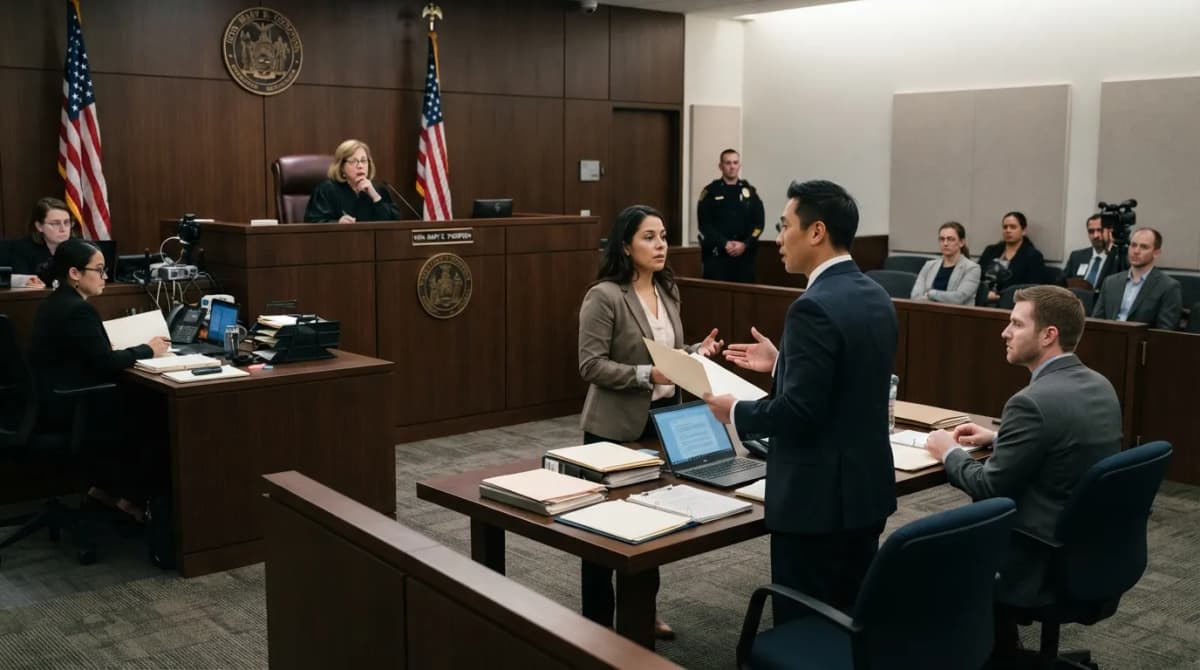
An arraignment is an early court proceeding in a criminal case where a defendant is formally informed of the charges and asked to enter a plea. Depending on the jurisdiction and circumstances, the hearing may also address legal representation, bail or pretrial release, and the next steps in the case. An arraignment is not a criminal trial and does not determine whether the defendant is guilty. This guide explains what happens during an arraignment, the different types of pleas, how the process differs from an initial appearance or preliminary hearing, and what generally happens after the hearing.
An criminal arraignment is one of the early steps in a criminal case when a defendant appears before a court and is formally informed of the criminal charges against them. The court generally asks the defendant to enter a plea, such as guilty or not guilty, and the proceeding may address other immediate issues depending on the jurisdiction and circumstances of the case.
Although the word “arraignment” can sound intimidating, the proceeding itself is usually a procedural stage rather than a trial. The judge is not generally deciding whether the defendant is guilty or innocent at an arraignment. Instead, the hearing helps establish how the criminal case will proceed.
The exact process varies throughout the United States. Federal courts follow the Federal Rules of Criminal Procedure, while state courts follow their own statutes, court rules, and local procedures. In some jurisdictions, an initial appearance and arraignment may be separate hearings; in others, certain functions may occur during the same proceeding. The American Bar Association notes that criminal pretrial procedures can vary substantially depending on the state and how charges are brought.
Understanding what happens at an arraignment can help defendants and their families make sense of the early stages of a criminal case. This guide explains what an arraignment is, what happens during the hearing, how pleas work, the role of a defense lawyer, how bail or release may be handled, and what generally happens after the arraignment.
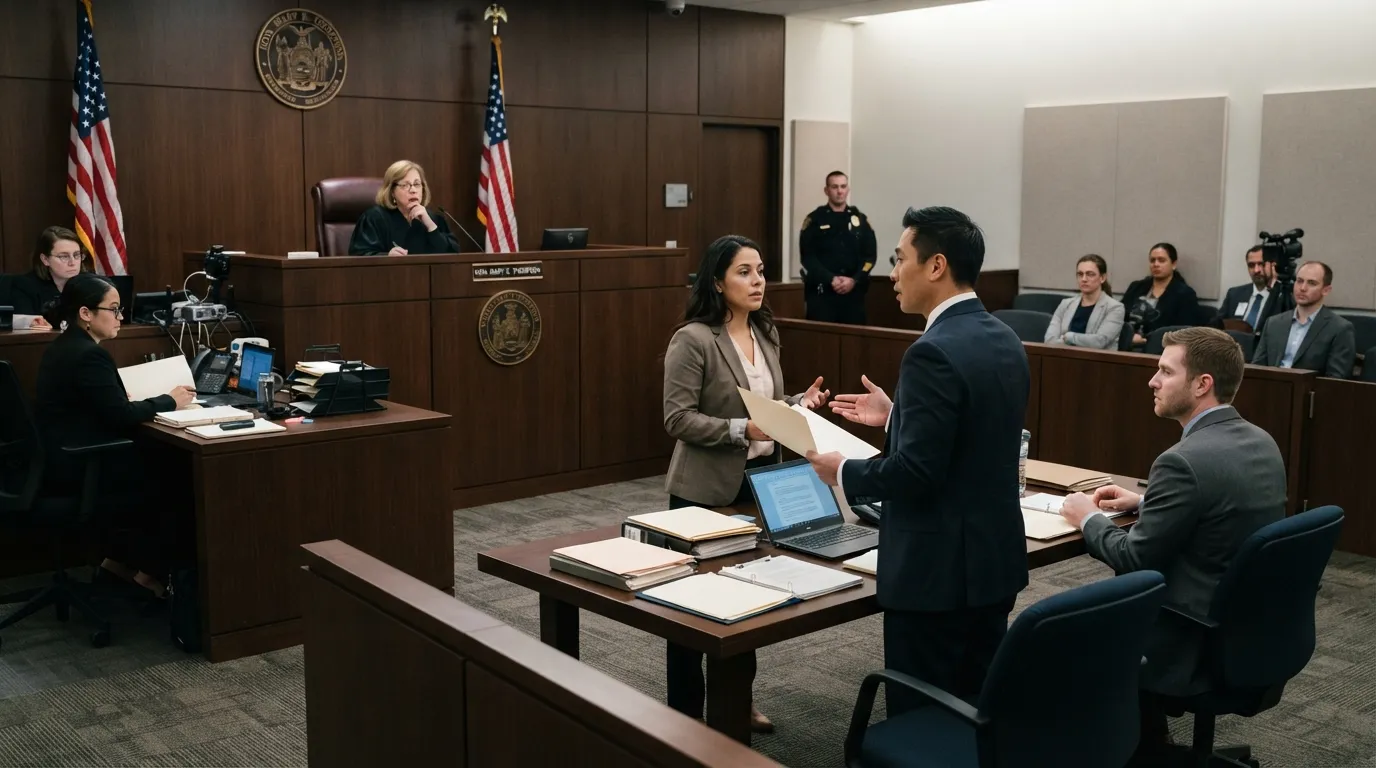
An arraignment is a court proceeding in which a defendant is formally advised of the criminal charges and asked to enter a plea. In federal court, Rule 10 of the Federal Rules of Criminal Procedure provides that an arraignment takes place in open court and involves ensuring that the defendant has a copy of the indictment or information, reading or stating the substance of the charges, and asking the defendant to plead.
The arraignment therefore serves an important procedural purpose. It makes sure the defendant is formally confronted with the accusations and establishes the defendant's response to those charges.
The defendant may plead guilty or not guilty, and federal Rule 11 also recognizes a plea of nolo contendere, or “no contest,” with the court's consent. State rules may differ regarding available pleas and how they are entered.
An arraignment is not the same thing as a criminal trial. A trial is the stage at which the prosecution and defense present evidence and arguments under the applicable rules, with a judge or jury ultimately determining the outcome. An arraignment generally deals with the formal charges and plea rather than deciding guilt.
The timing of an arraignment depends on the type of criminal case, the jurisdiction, and what occurred before the hearing.
A criminal case may begin through an indictment, an information filed by a prosecutor, or, in some circumstances, another charging document such as a criminal complaint. In federal court, an indictment is generally a written accusation returned by a grand jury, while an information is a written charge filed by the U.S. Attorney.
An arraignment generally occurs after formal charges have been filed and the defendant is brought before the court. However, it is important not to assume that every jurisdiction follows the exact same sequence.
For example, federal criminal procedure distinguishes an initial appearance from an arraignment. At an initial appearance, a federal judge addresses matters such as the charges, counsel, and pretrial detention or release. The defendant later enters a plea at an arraignment.
Some state systems use the word “arraignment” for an initial court appearance that combines several of these functions. The American Bar Association explains that, in many states, an initial appearance may involve informing the defendant of the charges, explaining rights, addressing counsel, and entering a plea.
Because terminology and procedure vary, a defendant should look at the rules and instructions applicable to the particular court handling the case.
Although the details differ by jurisdiction, an arraignment commonly involves several basic steps.
The defendant appears before a judge or other judicial officer authorized to conduct the proceeding. Depending on the jurisdiction and circumstances, the appearance may take place in person or, where permitted, through another authorized method.
Federal law generally provides for arraignment in open court. There are also circumstances under federal rules in which a defendant's personal appearance may be waived under specified conditions.
The defendant may appear with a private criminal defense attorney or, if eligible, with court-appointed counsel.
The court identifies the criminal charges against the defendant. Under Federal Rule of Criminal Procedure 10, the defendant must receive a copy of the indictment or information, and the court must read the charging document or state the substance of the charges before asking for a plea.
The charging document generally identifies the offenses the prosecution alleges the defendant committed. A federal criminal case, for example, may proceed on an indictment or information containing one or more counts.
This step is important because a defendant should understand what allegations they are being asked to answer.
The formal statement of charges does not mean the allegations have been proven. Criminal defendants are not found guilty merely because charges have been filed or read in court.
The court then asks the defendant how they plead to the charges.
A guilty plea means the defendant is admitting guilt to the offense charged, subject to the requirements that apply to accepting the plea.
A not-guilty plea means the defendant is contesting the charge and the case will generally continue through the criminal process.
A no-contest plea, also known as nolo contendere, may be available in some jurisdictions and under certain circumstances. In federal court, Rule 11 provides for a nolo contendere plea with the court's consent.
The consequences of each plea can be significant. A defendant should understand the applicable law and the consequences of a plea before entering one.
A guilty plea is an admission to the charged offense. However, a guilty plea is not simply a matter of saying “guilty” and immediately receiving a sentence in every case.
Courts have procedures designed to ensure that a guilty plea is entered knowingly and voluntarily. In federal court, the requirements governing guilty pleas are primarily addressed in Rule 11 of the Federal Rules of Criminal Procedure.
Depending on the circumstances, a guilty plea may occur at a hearing specifically devoted to accepting the plea rather than during the initial arraignment. Criminal cases may also involve plea agreements negotiated between the prosecution and defense.
A defendant considering a guilty plea should understand the charge, possible consequences, and terms of any proposed agreement before accepting it.
A not-guilty plea means the defendant is not admitting guilt to the criminal charge.
It does not necessarily mean that the defendant must immediately go to trial. Instead, the case generally proceeds into the pretrial phase, where the defense and prosecution may address discovery, motions, negotiations, evidence, witnesses, and other procedural matters.
A federal district court describes arraignment as the hearing at which the defendant is advised of the charges and asked whether they plead guilty or not guilty. If the defendant pleads not guilty, the case proceeds toward the later stages of criminal litigation.
A not-guilty plea also does not guarantee that a case will ultimately reach a jury trial. Criminal cases can sometimes be resolved through dismissal, negotiated pleas, or other procedures before trial.
Bail or pretrial release may be addressed around the time of an arraignment, but whether it is decided at the arraignment itself depends on the jurisdiction and the circumstances of the case.
This is an important distinction because initial appearance, arraignment, and bail hearing are not necessarily the same proceeding.
In federal criminal cases, an initial appearance can involve a judge considering whether the defendant should remain in custody pending trial. The court may also consider conditions of pretrial release.
Possible release conditions can vary. Depending on the case and jurisdiction, a defendant may be released on personal recognizance, required to post financial security, or placed under specific conditions designed to address concerns such as appearance in court or public safety.
Conditions can include requirements such as reporting to pretrial services, restrictions on travel, electronic monitoring, or drug testing in appropriate federal cases.
State systems have their own rules governing bail and pretrial release. Therefore, someone facing criminal charges should not assume that the outcome of a bail decision in one state will apply in another.
A defendant generally has important rights relating to legal representation, although the exact procedure for appointing counsel varies by jurisdiction and case type.
The Sixth Amendment provides a constitutional right to counsel in criminal prosecutions under circumstances established by law. Courts may appoint a lawyer for eligible defendants who cannot afford private representation.
The American Bar Association notes that criminal pretrial appearances may include informing a defendant of the right to counsel and appointing a lawyer when the defendant is financially unable to hire one and otherwise qualifies.
A defense attorney can help a defendant understand the charges, evaluate the procedural posture of the case, address pretrial issues, and make informed decisions about pleas and other matters.
Having counsel does not mean the lawyer automatically takes over every decision. Some decisions belong to the defendant, while others involve legal strategy that is generally handled by counsel.
A person who cannot afford a private lawyer may qualify for court-appointed representation, depending on the nature of the case and applicable eligibility rules.
The process differs between jurisdictions. Some courts use public defenders, while others rely on appointed private attorneys or other systems.
Financial eligibility may also matter. A person should not assume that every defendant automatically receives a free lawyer simply because they are facing criminal charges.
If a defendant believes they cannot afford counsel, they should tell the court rather than attempting to navigate a serious criminal case without understanding their available rights.
The rights addressed during an arraignment or related initial appearance depend on the jurisdiction and type of proceeding.
A defendant may receive information about the charges, the right to counsel, the right to remain silent, the right to a trial, and other procedural rights.
The American Bar Association explains that pretrial appearances in many state systems can include advising defendants of their right to trial, the right to a jury trial where applicable, and the right to counsel.
However, defendants should not assume that every right is explained in exactly the same way at every arraignment. Some rights may be addressed at other hearings or through other court procedures.

A defendant should take the proceeding seriously and avoid treating an arraignment like an opportunity to explain the entire case directly to the judge.
In many cases, the central questions at an arraignment concern the charges and plea. A defendant generally should not volunteer unnecessary factual statements about the alleged offense without first understanding the legal consequences and consulting counsel.
This is one reason having a defense attorney can be important. A lawyer can advise the defendant about what decisions must be made at the hearing and what information should or should not be discussed.
If a defendant does not understand a question from the judge, they should ask for clarification rather than guessing.
Charges can sometimes be dismissed at various stages of a criminal case, but an arraignment is not ordinarily a trial on the merits of the prosecution's evidence.
Whether charges can be dismissed at or around an arraignment depends on the circumstances and applicable law. A prosecutor may dismiss charges in certain situations, and a court may dismiss a case when a legal basis exists for doing so.
For example, later motions may challenge the sufficiency of charges, the admissibility of evidence, constitutional violations, or other legal issues.
A defendant should therefore distinguish between entering a plea and challenging the prosecution's case. Those are separate aspects of criminal procedure.
What happens next depends primarily on the plea and the nature of the case.
If a defendant pleads not guilty, the case will generally continue into the pretrial stage. In federal criminal procedure, the stages following arraignment can include motions, discovery-related proceedings, pretrial conferences, plea proceedings, trial, sentencing, and possible appeals.
The defense may review evidence obtained by the prosecution, investigate witnesses, challenge legal issues, file appropriate motions, and negotiate with prosecutors when appropriate.
The prosecution, meanwhile, must continue pursuing the case according to applicable constitutional, statutory, and procedural requirements.
If the defendant ultimately enters a guilty plea, the case may proceed toward sentencing depending on the circumstances.
If the case goes to trial, the prosecution must meet the applicable burden of proof. In federal criminal trials, the government must prove the defendant's guilt beyond a reasonable doubt.
The terms arraignment and initial appearance are sometimes used interchangeably in everyday conversation, but they can describe different proceedings.
An initial appearance generally occurs early after an arrest and can involve informing the defendant of the charges, addressing counsel, and deciding whether the defendant should remain detained or be released under conditions.
An arraignment generally concerns the formal presentation of charges and entry of a plea.
Federal procedure illustrates this distinction. U.S. Courts describes the initial appearance as a proceeding where the judge advises the defendant of the charges, considers detention or release, and addresses counsel, while the defendant enters a plea at the arraignment.
State courts may combine these functions or use different terminology. The American Bar Association specifically cautions that criminal pretrial procedures vary considerably among states.
An arraignment and preliminary hearing serve different purposes.
An arraignment generally establishes the formal charges and plea.
A preliminary hearing, where available, is generally concerned with whether the prosecution has presented enough evidence to establish probable cause that the defendant committed the offense. Not every criminal case involves a preliminary hearing, and the rules governing these hearings vary by jurisdiction.
The two proceedings should therefore not be treated as interchangeable.
A defendant may also encounter a grand jury proceeding. A grand jury can return an indictment in jurisdictions that use that process, but the grand jury's function is different from that of an arraignment.
The biggest difference between an arraignment and a trial is the purpose of the proceeding.
An arraignment is primarily procedural. The defendant is informed of the charges and enters a plea.
A criminal trial is an evidentiary proceeding in which the prosecution and defense present their cases according to the applicable rules. A judge or jury then determines the outcome under the relevant legal standard.
Being arraigned does not mean that a defendant has been convicted.
A person can be charged with a crime, appear at an arraignment, plead not guilty, and later have the charges dismissed or be found not guilty at trial.
Whether a defendant must personally attend an arraignment depends on the jurisdiction and circumstances.
In federal court, the Federal Rules of Criminal Procedure permit certain arraignments to proceed without the defendant's personal appearance when the requirements for waiver are satisfied. For example, a federal district court's guidance explains that a defendant may, under Rule 10, waive personal appearance by submitting an appropriate written waiver accepted by the court.
That does not mean defendants can simply decide not to attend court. A defendant should follow the court's instructions and consult counsel before failing to appear.
Missing a required court appearance can create additional legal problems, including possible warrants or other consequences depending on the jurisdiction and circumstances.
A guilty plea can resolve the issue of guilt without a traditional trial, but the case may still require a sentencing proceeding.
The court must follow applicable rules before accepting a guilty plea. In federal court, Rule 11 establishes procedures designed to ensure that the plea is entered properly.
Sentencing may occur immediately in some cases, while in others it takes place later after additional information is gathered.
The eventual sentence depends on the offense, applicable law, the defendant's circumstances, and the court's authority. Federal criminal procedure includes a separate sentencing stage following conviction or a guilty plea.
A not-guilty plea generally moves the case into the pretrial phase.
The defense may investigate the allegations and review available evidence. Depending on the case, attorneys may file motions, challenge evidence, negotiate with prosecutors, or prepare for trial.
The prosecution must continue to meet its legal obligations throughout the case.
A not-guilty plea does not necessarily mean the defendant will eventually go to trial. Many criminal cases are resolved before a trial through negotiated pleas or dismissal, although the availability and terms of those resolutions depend on the particular case.
A defendant may sometimes change a plea, but changing a plea is not necessarily automatic.
The procedure depends on when the request is made, the original plea, the jurisdiction, and the circumstances surrounding the change.
For example, federal Rule 11 governs the entry of pleas and related procedures, while other federal rules and court decisions address situations involving withdrawal or modification of pleas.
Because a plea can have major consequences, anyone considering a change should discuss the matter with a criminal defense lawyer before taking action.
No. An arraignment does not automatically mean that the defendant will be jailed.
Whether a defendant remains in custody or is released before trial depends on the applicable law and the circumstances of the case. Courts may consider issues related to appearance in court and public safety when making pretrial detention or release decisions.
Some defendants are released subject to conditions, while others may remain detained.
The fact that someone is released does not mean the criminal charges have disappeared. Likewise, detention before trial is not itself a determination that the defendant is guilty.
The exact requirements vary by court, but defendants should carefully review their court notice and any instructions provided by their lawyer.
Depending on the circumstances, useful documents may include identification, court notices, paperwork provided after arrest or charging, and information requested by defense counsel.
If represented by an attorney, the defendant should communicate with counsel before the hearing and understand what is expected.
Most importantly, a defendant should know the date, time, and location of the proceeding and comply with all court instructions.
One common mistake is ignoring the court date. A defendant should never assume that a missed hearing will simply be rescheduled without consequences.
Another mistake is discussing the facts of the case publicly or with people who do not need to know them. Statements, messages, social media posts, and other communications can potentially become relevant to a criminal investigation or proceeding depending on the circumstances.
A third mistake is assuming that a quick arraignment means the criminal case is almost over. In many cases, an arraignment is only an early procedural step.
Another mistake is assuming that state and federal criminal procedures are identical. They are not. Even among states, procedures can differ.
Finally, defendants sometimes make decisions about pleas without understanding the potential consequences. A plea can affect the direction of the entire case, so it should be approached carefully.
A criminal defense lawyer can help a defendant understand what charges have been filed, what the arraignment involves, and what decisions may need to be made.
Before an arraignment, counsel may review the charging documents, discuss the possible pleas, explain pretrial release issues, and identify immediate legal concerns.
After the hearing, counsel may investigate the allegations, examine evidence, communicate with prosecutors, file appropriate motions, negotiate when appropriate, and prepare for trial if necessary.
The exact role of defense counsel depends on the case. Some matters may be resolved quickly, while others can involve extensive investigation and litigation.
For a person facing criminal charges, obtaining advice from a qualified attorney familiar with the relevant jurisdiction can be especially important because criminal procedure and potential consequences vary by state and by the type of offense.

An arraignment is an important early step in a criminal case, but it is not the same as a criminal trial and does not determine whether the defendant is guilty. Its central purpose is generally to formally address the charges and obtain the defendant's plea, while related issues such as counsel and pretrial release may also be addressed depending on the jurisdiction.
The process can look different from one court to another. Federal courts follow the Federal Rules of Criminal Procedure, while state courts operate under their own laws and procedural rules. Even the relationship between an initial appearance and an arraignment can vary.
For anyone facing criminal charges, understanding the purpose of the hearing is only the first step. The consequences of a criminal case can depend on the offense, evidence, procedural history, prior record, and applicable state or federal law. A qualified criminal defense attorney can explain the specific procedure and legal options available in the relevant jurisdiction.
This article provides general legal information and is not a substitute for legal advice about an individual criminal case.

Written by
BeastBeast is a seasoned legal content creator and law research specialist with 15+ years of experience in legal writing, legal research, and publishing educational law content. Specializing in Personal Injury, Family, Business, Immigration, Criminal, Tax, and Real Estate Law, Beast creates accurate, well-researched, and SEO-optimized legal guides that help readers understand complex legal topics with confidence. Every article is written with a focus on accuracy, trust, and Google's E-E-A-T guidelines, making Jurnza.com a reliable source for legal information and legal services.
