Document Generators
Injury & Compensation
Fees & Support
Deadlines & Filing
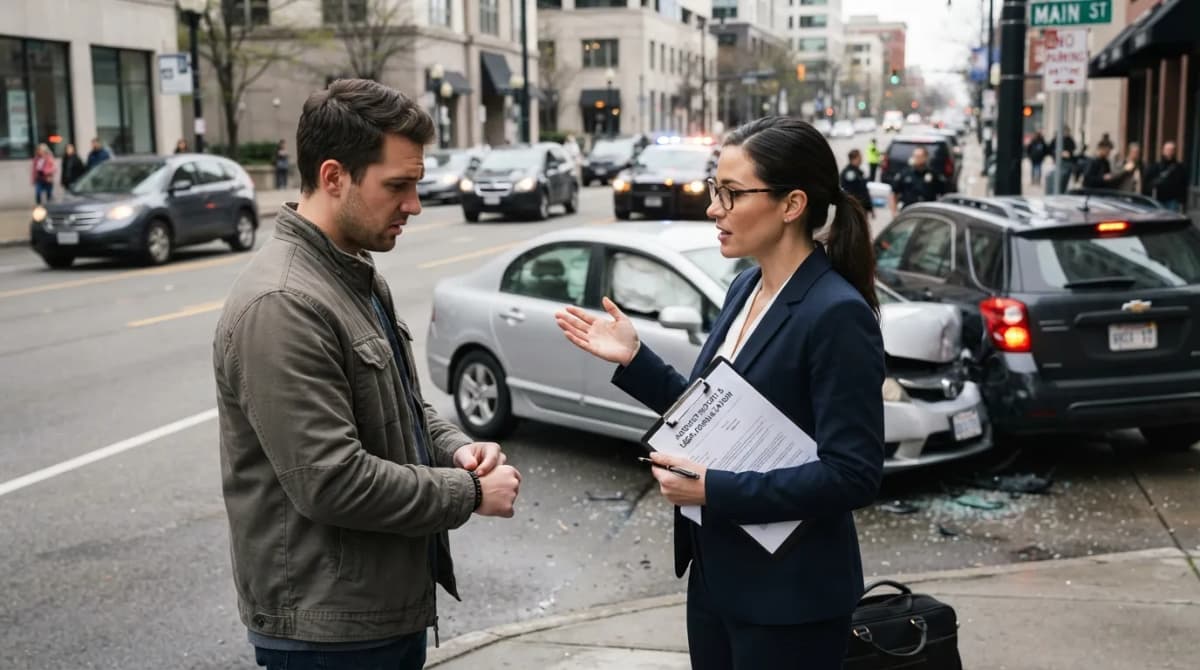
A car accident can create immediate concerns about injuries, vehicle damage, insurance, and legal responsibility. Learn what to do after a crash, how to document evidence, report the accident, deal with insurance companies, understand fault and compensation, and protect your legal rights.
A car accident can turn an ordinary day into a stressful and confusing situation within seconds. Even when the collision appears minor, people may be dealing with injuries, vehicle damage, insurance companies, police reports, medical treatment, and questions about who was responsible. What you do immediately after a crash can also affect your ability to document what happened and pursue an insurance claim or legal action later.
Knowing what to do after a car accident does not mean assuming that you are automatically entitled to compensation or that the other driver is automatically legally responsible. Liability depends on the facts of the crash, applicable state law, insurance coverage, and other circumstances. Some accidents involve clear negligence, while others may involve shared fault, defective vehicles, dangerous road conditions, or other contributing factors.
The safest approach is to focus first on protecting people, then documenting the accident, reporting it when required, obtaining appropriate medical care, notifying the relevant insurers, and preserving evidence. State laws can differ substantially regarding reporting requirements, insurance systems, fault rules, deadlines, and the damages that may be recovered.
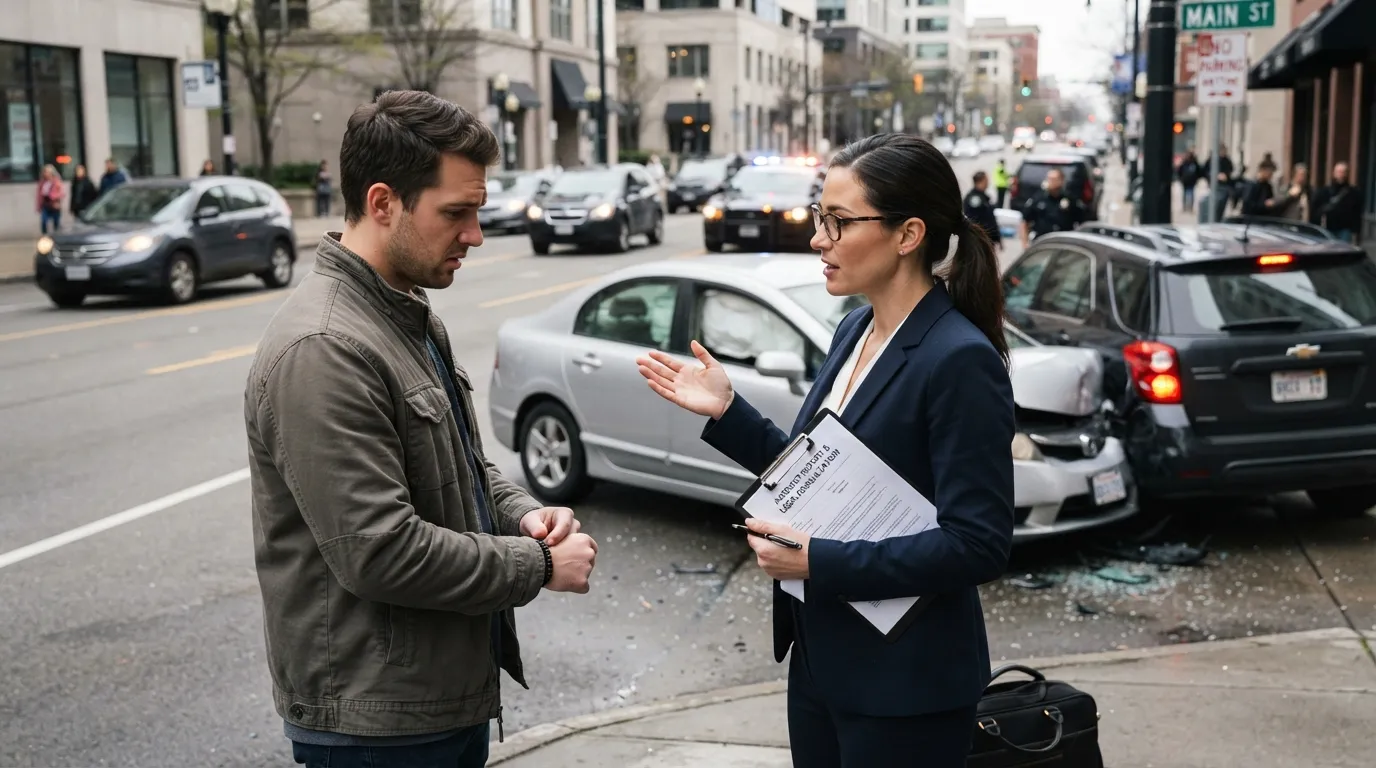
The first priority after a crash is safety. If you are able to do so safely, move the vehicle out of active traffic and to a safer location. Check yourself and others for injuries and call 911 when emergency medical or law-enforcement assistance is needed.
The Insurance Information Institute recommends assessing injuries first, calling 911 when someone is injured, documenting vehicle damage, exchanging information with other drivers and witnesses, and notifying law enforcement after serious accidents.
Avoid leaving the scene when the law requires you to remain there. Leaving after a collision involving injuries or property damage can create serious legal consequences depending on the circumstances and jurisdiction.
Once immediate safety concerns are addressed, gather as much reliable information as possible without putting yourself or anyone else at risk.
Some accident injuries are immediately obvious. Others may not become noticeable until hours or even days later.
If someone appears seriously injured, call emergency services rather than attempting to provide medical treatment beyond what you are qualified to do. Follow medical professionals' instructions and seek medical evaluation when appropriate.
Medical records can later become important evidence concerning the nature and extent of injuries. NHTSA's crash-investigation system, for example, uses medical records along with crash-site evidence and other information when studying crash injuries and outcomes.
Even if you initially believe an injury is minor, keeping records of symptoms and medical treatment can help establish what happened afterward. Do not exaggerate symptoms, but do not ignore them simply because the accident initially seems insignificant.
Whether you must report a collision to police depends on state and local law and the circumstances of the accident.
Police involvement may be particularly important when:
A police report can provide an official record containing information about the vehicles, location, circumstances, and potentially injuries or other relevant details. NHTSA's crash-reporting systems use police crash reports containing information such as crash location, vehicles involved, and whether injured occupants were transported for medical care.
A police report does not necessarily determine legal liability. An insurance company, court, or attorney may still need to examine additional evidence.
If officers respond to the scene, obtain information about how to request a copy of the report. If police do not respond, determine whether your state requires or permits you to file a crash report yourself.
If it is safe to do so, exchange relevant information with the other driver or drivers.
Depending on the circumstances and local requirements, useful information may include:
The Insurance Information Institute also recommends obtaining information from witnesses and recording details such as the accident location, time, weather, and vehicles involved.
Do not assume that the other driver is properly insured simply because they provide an insurance card. Your insurer can investigate available coverage later.
If you are physically able and it is safe to do so, take photographs and videos of the accident scene.
Consider documenting:
Try to capture both close-up and wider photographs. A close photograph may show the extent of damage, while a wider image may help explain where the vehicles were positioned.
Do not put yourself in danger by standing in traffic or entering an unsafe area merely to obtain a photograph.
Crash investigations can involve physical evidence such as skid marks, fluid spills, damaged vehicles, and struck objects. NHTSA's crash-investigation work demonstrates how physical scene evidence can help reconstruct what happened.
Independent witnesses can sometimes provide useful information about what happened before and during a crash.
If someone saw the accident, consider obtaining their:
You should not pressure a witness to take your side or tell them what to say. Simply record their contact information and allow the relevant insurer, attorney, or court to evaluate the evidence.
Nearby businesses or residences may also have surveillance cameras. If you believe a camera may have captured the collision, note the location as soon as possible. Video recordings may not be retained indefinitely.
After a crash, emotions can run high. Drivers may immediately want to determine who was at fault.
Try to avoid arguing about responsibility at the scene.
Provide the information required by law and cooperate appropriately with responding officers. You generally do not need to conduct your own legal investigation beside the damaged vehicles.
Be especially careful about making statements such as:
A casual statement can later be interpreted differently depending on the circumstances.
At the same time, do not lie or deliberately provide false information. If asked for facts by police or an insurer, answer truthfully and accurately.
You should generally notify your auto insurer about the accident promptly and review your policy for specific reporting requirements.
The Insurance Information Institute advises contacting your insurance professional as soon as possible, even when fault is disputed, and determining what coverage applies to the particular loss.
Depending on the policy and circumstances, available coverage may include different types of protection for vehicle damage, injuries, uninsured or underinsured motorists, medical expenses, or other losses.
Do not assume that notifying your insurer means you are admitting fault. Reporting an accident and determining liability are separate issues.
Your insurer may ask for:
Keep copies of documents you provide and records of significant communications.
An insurance claim is not the same thing as filing a lawsuit.
An insurance claim is generally a request for benefits or payment under an applicable insurance policy. A personal injury lawsuit, by contrast, is a court proceeding against a potentially responsible party.
An accident may involve:
The available claims depend on state law, insurance policies, the facts of the accident, and the losses involved.
If you are injured, keep organized records from the beginning.
Useful records may include:
If an injury prevents you from working, keep documentation showing the time missed and, where appropriate, the resulting income loss.
Medical records can help establish the relationship between an accident and subsequent treatment, although causation can become complicated when someone has prior injuries or other medical conditions.
Follow reasonable medical instructions and attend recommended appointments. If treatment changes, document the reason rather than allowing gaps in records to become unexplained.
Vehicle damage can involve more than the first repair estimate.
Keep:
If the vehicle is declared a total loss, the insurance company may use valuation information to determine the amount it believes is owed under the applicable coverage.
Review the policy and applicable state law before assuming that an insurer's valuation is automatically correct.
Evidence can disappear with time.
For example, vehicles may be repaired or destroyed, surveillance footage may be overwritten, road conditions may change, and witnesses may become difficult to locate.
Important evidence may include:
Do not delete photographs, videos, messages, or other potentially relevant material merely because you believe it is unimportant.

Potentially, yes.
Dashcam footage can provide contemporaneous information about traffic conditions, vehicle movements, and what occurred immediately before a collision.
Phone photographs and videos can also help document the scene.
However, evidence must still be evaluated for authenticity, relevance, completeness, and other legal requirements. A short video may show only part of an incident, so it should not automatically be treated as a complete account.
Preserve the original file whenever possible rather than relying only on an edited or compressed copy.
Do not assume that the other driver's statement settles the matter.
Fault can depend on evidence such as:
Some states apply comparative negligence rules, under which a person's recovery can be reduced according to their share of responsibility. Other jurisdictions use different approaches, including forms of contributory negligence.
Because fault rules vary by state, the legal effect of your own contribution to an accident depends on where the claim arises.
More than one person can potentially contribute to an accident.
For example, one driver might have been speeding while another driver failed to yield. Depending on state law, a court may determine that both drivers contributed to the collision.
The consequences of shared fault vary substantially between jurisdictions. Some states use comparative negligence systems, while others apply contributory negligence or modified approaches.
That distinction can affect whether an injured person can recover damages and how the amount may be reduced.
A collision involving an uninsured driver can create additional complications.
Depending on the state and the injured person's policy, uninsured motorist coverage may provide protection for certain losses caused by an uninsured driver. Underinsured motorist coverage may also apply when the responsible driver's liability coverage is insufficient to cover the losses.
The exact availability and requirements depend on the insurance policy and applicable state law.
Do not assume that having uninsured-motorist coverage means every loss will automatically be paid. Coverage limits, exclusions, notice requirements, and other policy provisions can matter.
A driver who leaves without stopping and providing information may be involved in what is commonly called a hit-and-run.
If this happens, prioritize safety and contact law enforcement. Record whatever information you can safely obtain, including:
Do not chase the fleeing vehicle if doing so could endanger you or others.
Insurance coverage may be available in some hit-and-run situations, including potentially uninsured-motorist coverage, depending on the policy and state law.
Not every accident is caused solely by a driver's conduct.
Potential contributing factors can include:
A claim involving a government entity can be particularly complicated because special notice requirements, procedural rules, immunities, and shorter deadlines may apply.
The applicable government entity and state or local law should be identified before assuming that an ordinary personal injury process applies.
A vehicle accident may sometimes involve an allegedly defective product.
Potentially relevant products can include:
Product-liability claims have their own legal requirements and may involve manufacturers, distributors, sellers, or other parties.
Determining whether a product defect contributed to an accident often requires preserving the vehicle and obtaining appropriate technical evidence. Repairs or disposal of a damaged vehicle can make later investigation more difficult.
Depending on the applicable law and circumstances, an injured person may seek compensation for different categories of losses.
Potential damages can include:
These may include reasonable medical expenses associated with accident-related treatment, depending on the claim and applicable law.
An injured person may potentially seek compensation for income lost because of an accident-related injury.
Vehicle repairs, replacement costs, towing, and certain related losses may be recoverable depending on the insurance coverage and legal claim.
Some personal injury claims allow recovery for noneconomic losses such as pain and suffering. The availability and calculation of these damages vary by jurisdiction and type of claim.
Depending on the circumstances, claims can potentially involve disability, reduced earning capacity, emotional harm, loss of enjoyment of life, or other legally recognized damages.
Not every accident produces every category of compensation. The actual damages depend on the facts, evidence, insurance coverage, and applicable law.
There is no single nationwide deadline for every car accident lawsuit.
Statutes of limitations generally establish a period within which a lawsuit must be filed, but the period varies according to the jurisdiction and type of claim.
Different deadlines may apply to:
Some situations can also involve statutes of repose or special procedural requirements.
Because missing a legal deadline can prevent a claim from being pursued, accident victims should identify the applicable deadline early rather than assuming they have a standard number of years.
Not every minor accident requires an attorney. Some people resolve straightforward property-damage claims directly with insurers.
Legal advice may become particularly useful when:
A lawyer can review the facts, identify potentially responsible parties, explain applicable deadlines, evaluate evidence, and communicate with insurers or opposing parties.
The decision to hire an attorney depends on the complexity of the situation and the potential value and risks involved.
Several mistakes can make an already difficult situation more complicated.
Ignoring symptoms can create health risks and may make it more difficult to document an injury later.
State and local laws may require certain crashes to be reported.
Leaving a collision scene can have serious legal consequences when the law requires the driver to remain.
Once vehicles are moved and repairs begin, important evidence may become unavailable.
Avoid making unnecessary conclusions about legal responsibility before all relevant facts are known.
Social media posts, photographs, and comments can potentially become part of a dispute. Consider carefully whether posting anything about an accident is necessary.
Once certain claims are released, additional compensation may become difficult or impossible to pursue. Before signing a release, understand what rights you are giving up.
Evidence becomes harder to preserve over time, and legal deadlines can expire.
If you consult an attorney, organized documentation can make the initial review more efficient.
Consider bringing:
You do not need to have every piece of evidence before contacting a lawyer. An attorney can explain what additional records may be useful.
Every claim is different, but a typical process may involve several stages.
First, the accident is reported and evidence is collected. Medical treatment may continue while injuries are evaluated. Insurance companies investigate the accident and available coverage.
If the parties disagree about liability or the amount of damages, negotiations may follow. A settlement may resolve the dispute without a lawsuit.
If the dispute cannot be resolved, an injured person may file a lawsuit before the applicable deadline. Litigation can involve discovery, depositions, expert testimony, motions, and potentially trial.
Many cases resolve before trial, but no particular outcome should be assumed.
No general rule requires an accident victim to accept the first settlement proposal from an insurer.
However, whether an offer is adequate depends on the available coverage, documented damages, liability issues, medical condition, applicable law, and other circumstances.
Before accepting a settlement, understand what the agreement releases. A settlement may resolve certain claims permanently.
If injuries are still being evaluated or the full extent of losses is uncertain, obtaining legal advice before signing a release may be worthwhile.
Being partly responsible does not necessarily mean you have no legal claim.
The result depends heavily on state law. Comparative negligence systems can reduce recovery based on a person's assigned share of fault, while contributory negligence rules can operate differently.
The specific facts matter as well. A court or insurer may examine traffic laws, witness statements, photographs, video, accident reconstruction, and other evidence before determining responsibility.
A fatal accident can lead to claims that differ from an ordinary personal injury case.
Depending on state law, there may be a wrongful death action brought by eligible surviving family members or representatives, as well as a survival action involving claims that belonged to the deceased person.
These claims are governed by state-specific statutes and can involve different beneficiaries, damages, filing requirements, and deadlines. Cornell's Legal Information Institute notes that survival statutes and wrongful death actions are distinct legal mechanisms.
Because fatal accident claims can involve substantial legal and financial consequences, families should obtain jurisdiction-specific legal guidance promptly.
Passengers injured in a collision may have potential claims even though they were not driving.
Depending on the circumstances, a passenger may potentially pursue compensation through applicable insurance coverage involving:
The exact order and availability of coverage depends on state law, policy terms, and the facts of the accident.
People outside vehicles can also suffer serious injuries in traffic collisions.
Pedestrians and cyclists should follow the same basic principles after a crash: obtain emergency medical care when necessary, contact law enforcement when appropriate, document the scene if safe, identify witnesses, preserve evidence, and report relevant insurance claims.
The legal issues may differ from a typical two-car accident, particularly where right-of-way rules, roadway design, visibility, or comparative fault are disputed.
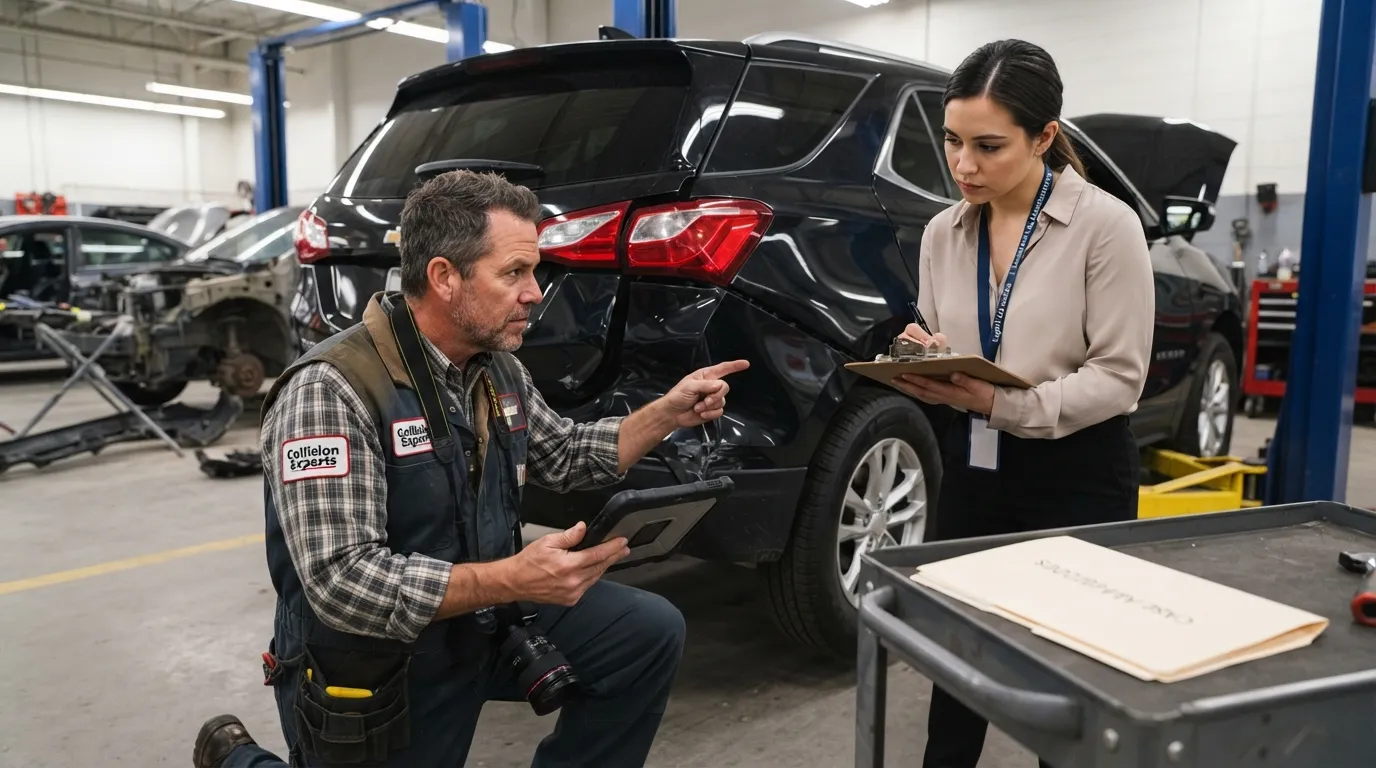
After a car accident, the most important steps are to protect people from further harm, obtain medical assistance when necessary, report the collision as required, exchange relevant information, document the scene, preserve evidence, and notify the appropriate insurance company.
Do not assume that a police report automatically determines fault, that the other driver's version of events is correct, or that an insurer's first settlement offer represents the full value of a claim. Liability and compensation depend on the evidence, insurance coverage, and applicable law.
Time limits also matter. Statutes of limitations differ by jurisdiction and type of claim, and special rules can apply to government defendants, wrongful death cases, and other situations.
For a straightforward accident involving limited property damage, an insurance claim may be relatively simple. When serious injuries, disputed fault, substantial losses, uninsured drivers, multiple parties, or other complicated circumstances are involved, consulting a qualified personal injury attorney can help you understand the legal options available in your jurisdiction.
This article provides general legal information and is not a substitute for legal advice about a specific accident or claim.

Written by
BeastBeast is a seasoned legal content creator and law research specialist with 15+ years of experience in legal writing, legal research, and publishing educational law content. Specializing in Personal Injury, Family, Business, Immigration, Criminal, Tax, and Real Estate Law, Beast creates accurate, well-researched, and SEO-optimized legal guides that help readers understand complex legal topics with confidence. Every article is written with a focus on accuracy, trust, and Google's E-E-A-T guidelines, making Jurnza.com a reliable source for legal information and legal services.
