Document Generators
Injury & Compensation
Fees & Support
Deadlines & Filing
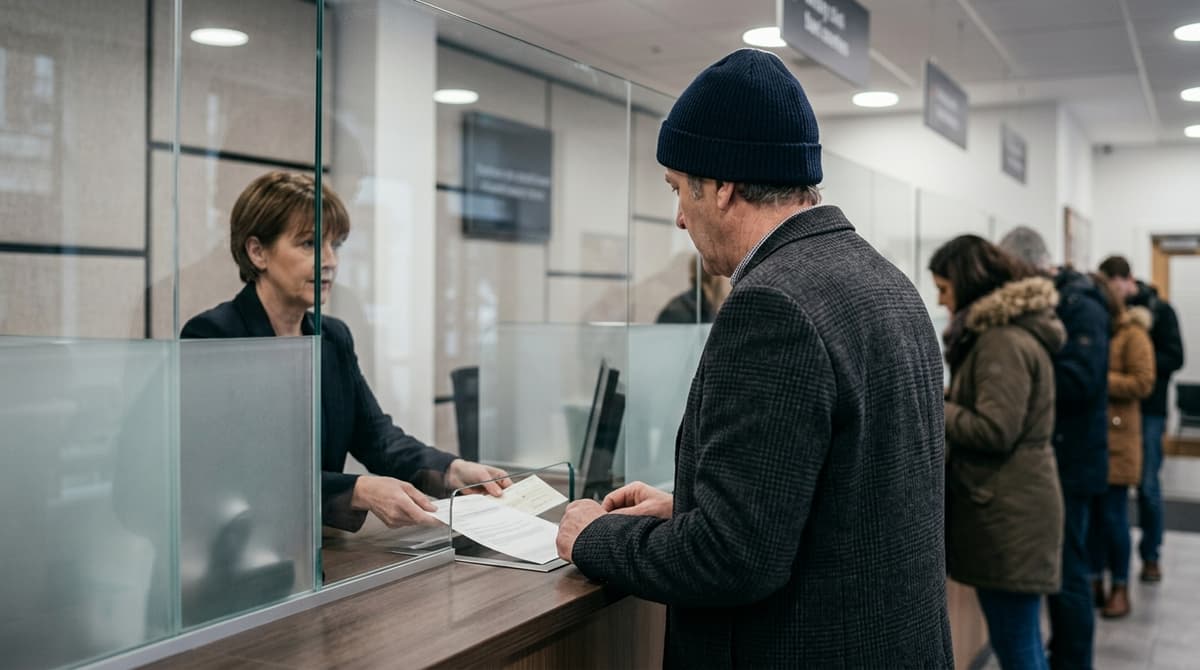
Bank account closed without explanation? Learn why banks debank customers, your rights to your money and records, how to dispute ChexSystems entries, and the exact complaint steps to fix a sudden account closure in 2026.

Picture checking your balance and finding the login rejected, then a letter arriving saying your bank account was closed, effective immediately, followed by a cashier's check for whatever was left inside. No hearing, no warning, and no explanation of what went wrong. A bank account closed without explanation is more than an inconvenience: it can freeze your income, unlock a cascade of missed payments, and quietly blacklist you from opening an account anywhere for years.
This practice is called debanking, and it happens more often than most people realize. This guide walks through why banks close accounts and stay silent about it, what your bank legally owes you when it closes an account, the databases that decide whether you can open a new one, and the exact steps to take to get your money back, repair your banking record, and file complaints that actually get answers.
Debanking is the involuntary closure of a personal or business account by the bank. Sometimes there is a good reason the bank shares: suspected fraud you actually committed, repeated overdraft abuse, or unpaid negative balances. But a large share of closures happen in compliance-driven sweeps where the customer has done nothing obviously wrong. Most people never expect a bank account closed without explanation until the card stops working at the register.
Banks operate under anti money laundering and counter terrorism financing duties that require them to know their customers, monitor transactions, and report suspicious activity. When automated monitoring flags an account, or when the bank's own risk appetite shifts, a closure decision can be made in minutes and executed with a form letter. Common triggers include the following.
None of these require you to have broken a law, which is why perfectly ordinary customers get caught in them.
The silence is not necessarily a cover-up; it is often the law itself. When a bank suspects money laundering, it files a Suspicious Activity Report with the federal government, and 31 United States Code Section 5318(g)(2) makes it illegal for the bank to tell you that a report exists, or even that an investigation is underway. Tipping off a customer is itself a federal offense, so the bank's standard line, that closure decisions are internal and cannot be discussed, is frequently an honest reflection of what the law permits it to say.
That does not mean you are helpless. The bank can still answer practical questions: how your remaining money reaches you, what your official balance was, how to request documents, and how to escalate through its formal complaints process. It simply will not reveal the compliance reasoning. Understanding that boundary keeps your energy focused where it pays off: paperwork, escalation, and your banking record.
Closing an account does not give the bank discretion to keep your money. Several protections apply in almost every case.
If the bank is holding your money beyond the timeline its agreement promises, that is the point where a complaint has teeth, because you are no longer arguing philosophy about debanking; you are arguing a concrete breach of a written contract.
Debanking is legal in most circumstances, but the process still has legal rails.
What the bank generally can do is close a customer relationship for any lawful reason, or no stated reason, and absorb the reputational consequences. Most legal claims after a bank account closed without explanation therefore target process failures: money held too long, false reporting to databases, or breach of the deposit agreement, rather than the closure itself.

The closure itself is often only half the problem. When an account closes involuntarily, banks typically report it to ChexSystems and sometimes to Early Warning Services, the two consumer reporting agencies that most banks consult before opening new accounts. A report of an account closed for cause can block you from opening a new account at thousands of banks and credit unions, and records can stay in the system for up to five years.
Because these databases are consumer reporting agencies, the Fair Credit Reporting Act gives you real rights: a free report after an adverse action, a free annual report, the right to dispute inaccurate or incomplete entries, and a duty on the agency to investigate disputes, generally within thirty days. Order your ChexSystems report immediately after any bank account closed without explanation, read the entry codes carefully, and dispute anything false, exaggerated, or missing the bank's own required notices. Many people first learn what the bank claimed about them only after pulling this report, and the report is also where you discover whether the closure was coded as fraud, which has the longest shadow.
Debanking moved to the center of national policy debate in early 2025, when an executive order on fair banking directed federal regulators to scrutinize account closures perceived to be based on political or religious viewpoints, or on lawful industry categories. Major banks faced hearings and letters over allegations that they debanked crypto businesses, activists, and other lawful enterprises, and regulators in both parties have pushed banks to publish clearer reasons and appeal processes.
Several states are also active. Some now require notice periods before involuntary closures, and a few restrict closures based on lawful industries or political activity; others are studying second chance account programs. None of this changes the practical advice below, but it does mean complaint channels matter more in 2026 than they did a few years ago: regulators are actively collecting data on this issue, and a documented complaint becomes part of that record.
Confirm the final balance in writing and find out how and when you will receive the remainder. Ask whether the bank will wire or transfer funds directly to another bank rather than mailing a check, and update your direct deposit sources immediately so an employer paycheck does not bounce into a closed account. Redirect any autopayments you pay from the account, because missed autopays damage credit and service relationships within weeks.
Download or request full statements, the closure letter, fee history, and any suspicious activity alerts you received before closure. Save everything as PDFs, because portal access often dies the day the account closes. If you later need an attorney, an FCRA dispute, or a regulator's help, this file is the case.
Order both reports and read the closure reason codes. Dispute entries that are wrong, incomplete, or inconsistent with the bank's letters, and note that the dispute clock runs while you wait: agencies generally have about thirty days to investigate. Erasing a false for cause code is often the single most valuable financial fix in the entire debanking aftermath, because it determines whether the next ten banks will open an account for you.
File a formal written complaint through the bank's complaint process, not just a branch conversation. Ask three concrete questions: the final balance, the expected delivery method and date of your funds, and what documentation you need to request customer records. You are entitled to answers on those practical points even where the bank cannot explain compliance reasoning, and a written complaint creates the acknowledgment stamp that regulators later ask about.
The Consumer Financial Protection Bureau accepts complaints against banks and forwards them for response, and most institutions answer within fifteen days, which makes this the fastest external lever available to a consumer: if the bank stalls, complaints tend to move it. File with the regulator that matches your bank's charter, such as the OCC, FRB, FDIC, or NCUA, plus your state banking department and attorney general if you suspect discrimination or false reporting. You can start a federal complaint at the CFPB complaint portal, and regulator profiles on the FDIC site explain which agency oversees which charter type.
Do not let a rejection spiral into unbanked status, because cash-only living carries its own costs and risks. Credit unions are often more flexible than megabanks, and many institutions offer second chance checking designed for people with ChexSystems records, sometimes with a short probation period. Look for Bank On certified accounts, which are built for financial inclusion and often skip ChexSystems hard pulls entirely. Open the replacement account before you need payroll to land in it.
Most debanking never needs a lawyer, but talk to one if the bank held your funds past its own stated timeline, reported false information to ChexSystems that survives a dispute, admitted or implied that your protected characteristics played a role, or irrecoverably damaged a business through the timing of the closure. Small claims court handles balance and contract disputes cheaply in many states, and consumer attorneys often work on contingency for FCRA violations, which carry statutory damages. A consultation is a sensible first step if real money is stuck or your business depends on payment processing that died with the account.
| Problem | Where to Complain |
|---|---|
| Bank is slow to return funds or stonewalls the complaint | CFPB complaint, then your bank's primary federal regulator |
| False or unfair entry on your banking report | ChexSystems or Early Warning dispute, then CFPB if unresolved |
| Suspected discrimination in the closure | State attorney general, CFPB fair lending channel, and a consumer attorney |
| Fees charged to a closed account | Bank complaint process, then your state banking department |
| Direct deposits or payments lost to the closure | Sender first, then the bank complaint process for early return of items |
| Business account closure with processing damage | Bank escalation, industry regulator, and counsel for the contract claim |
Keep every complaint number, and reference prior complaint numbers in each new escalation: stacking a documented record is how quiet problems get settled.

You cannot control a bank's risk appetite, but you can make your accounts boring and easy to defend.
Think of it this way: a bank account closed without explanation is survivable when a backup account exists and your records live outside the bank's portal. The same closure is crushing when it takes your only payment channel and your only receipts.
Business closures hurt faster than personal ones, because payment processing, vendor payments, and payroll can fail in the same week. If a business account is closed without explanation, preserve processor agreements, move to an industry friendly bank fast, and demand written confirmation of the final balance and the return date. Damages claims from businesses are stronger than consumer claims in many cases, because lost profits are easier to plead and quantify once documents exist.
For a retiree whose Social Security lands by direct deposit, a closure can interrupt benefits at exactly the wrong moment. The Social Security Administration can reroute payments to a new account quickly, so the practical priority is opening the replacement account first, then updating the deposit. Elder customers facing sight or mobility limits on complaint paperwork are also well served by a family member added as an authorized user before trouble starts.
If the closure came after overdraft spirals or returned items, second chance accounts, prepaid debit cards with bank features, and time itself are the fixes: ChexSystems records age out, generally within five years, and clean behavior in the interim rebuilds your options.
Banks are allowed to close accounts for any lawful business reason, and when the reason involves suspected money laundering or regulatory issues, federal law actually prohibits the bank from disclosing that a report was filed. You can still demand the practical facts, such as your final balance, the return of your funds, and documentation of the closure.
There is no single federal deadline, and the timing lives in your deposit agreement, though most banks mail a cashier's check or transfer a refund within days to a few weeks. If the timeline your agreement promises passes, file a CFPB complaint and a complaint with the bank's federal regulator, because holding funds past a contractual deadline is an enforceable problem.
Checking account closures generally do not appear on your traditional credit reports, so a closure alone rarely moves a credit score. The damage travels instead through ChexSystems and Early Warning Services, which banks check before opening new accounts, and through any overdraft or linked credit product that did report. Disputing false entries in the banking databases protects your ability to open the next account.
You can sue in specific situations: breach of the deposit agreement, discrimination contrary to fair lending and civil rights law, false reporting to ChexSystems or Early Warning under the Fair Credit Reporting Act, or wrongful retention of your funds. The closure decision by itself is usually lawful, so claims are strongest when process failures and damages are documented.
Pull your ChexSystems report first, dispute wrong entries, and try credit unions or banks offering second chance or Bank On certified accounts, which exist precisely for customers with banking records. Keep the new account clean with conservative activity while any dispute on your record is resolved.
A bank account closed without explanation feels personal, but it is almost always a policy and compliance machine, not a verdict about you. The system responds to paperwork: confirmed balances, preserved statements, prompt database disputes, and regulator complaints stack into either a fast resolution or a documented legal claim.
Move in this order: secure the money and redirect deposits, pull and dispute your banking database reports, escalate inside the bank in writing, and file with the CFPB and your bank's regulator if answers stall. If real money, a business, or a false fraud code is involved, get legal advice early rather than after deadlines lapse. Our consultation page and FAQ section are good starting points, and our legal guides cover the wider consumer protection landscape.
This article is general information, not legal advice. Account closure rules depend on your deposit agreement, your bank's charter, and state law. Consult a licensed attorney about a specific debanking dispute.
Written by
FranklyFrankly is a legal researcher and content writer at Jurnza, specializing in legal services, legal tools, legal guides, and law-related educational content. Frankly researches topics including business law, family law, immigration law, personal injury law, tax law, employment law, and real estate law to create accurate, easy-to-understand, and up-to-date resources that help readers make informed legal decisions.
