Deadlines & Filing
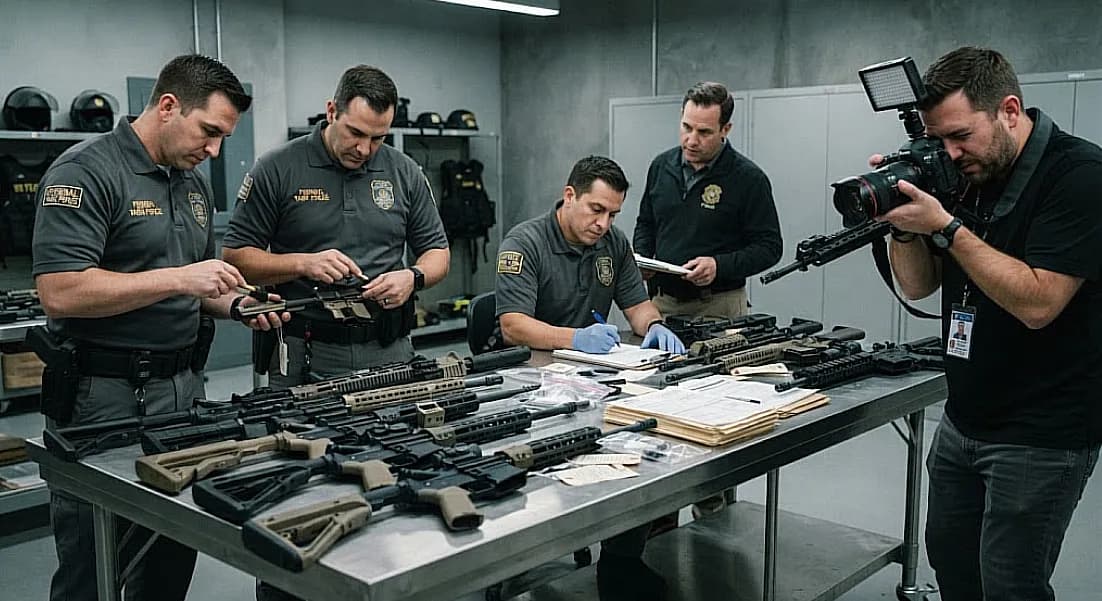
The U.S. Supreme Court is taking up major challenges to AR-15 and assault-weapons bans in Connecticut and Cook County, Illinois. The cases could determine whether the Second Amendment protects the right to possess commonly owned semiautomatic rifles and how far states can go in regulating modern firearms. This guide explains the Supreme Court cases, the historical-tradition test from Bruen, arguments from gun-rights advocates and states, the possible nationwide impact, magazine restrictions, existing gun laws, and what could happen if the Court upholds or strikes down assault-weapons bans.
The debate over gun rights in the United States is entering another major constitutional showdown. The U.S. Supreme Court has agreed to decide whether laws banning AR-15-style rifles and similar semiautomatic firearms violate the Second Amendment.
The cases before the Court involve restrictions in Connecticut and Cook County, Illinois. The outcome could affect not only those laws but also assault-weapons restrictions in other states and cities across the country.
The Supreme Court's decision comes at an important time for Second Amendment law. Since its 2022 decision in New York State Rifle & Pistol Association v. Bruen, courts have increasingly focused on whether modern firearm regulations are consistent with the nation's historical tradition of firearm regulation.
The AR-15 cases present a difficult question: Does the Constitution protect an individual's right to possess a commonly owned semiautomatic rifle, or can governments prohibit particular types of firearms because of their characteristics and potential risks?
The answer could significantly reshape the legal landscape surrounding assault-weapons bans.
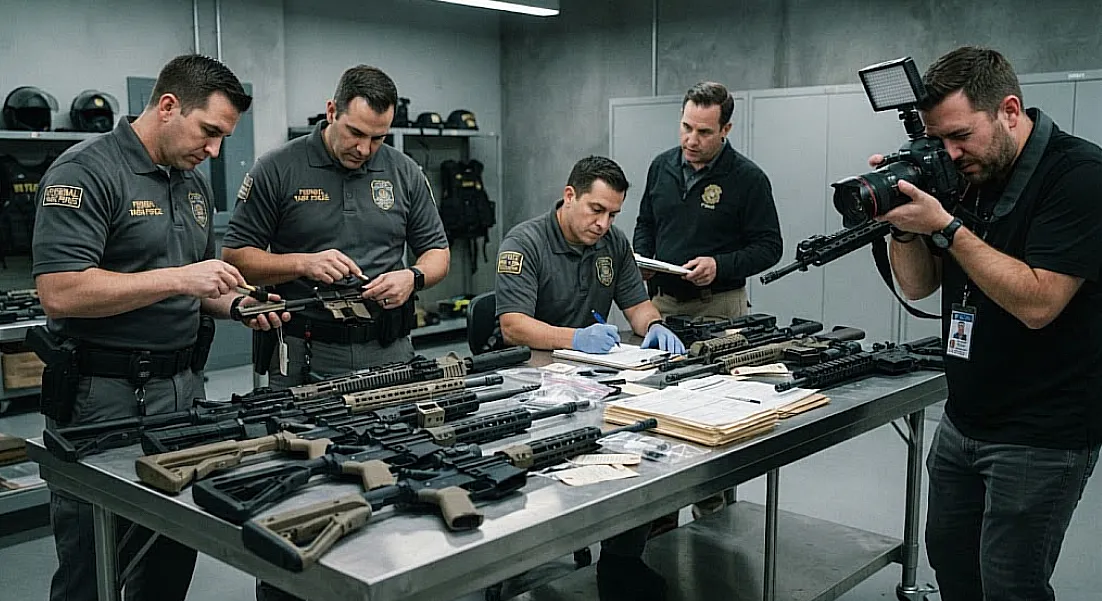
The Supreme Court agreed in June 2026 to hear challenges involving assault-weapons restrictions in Connecticut and the Chicago area.
One case, Viramontes v. Cook County, concerns Cook County's restrictions on assault weapons, including AR-15-style rifles. The other, Grant v. Higgins, involves Connecticut's assault-weapons ban.
The cases ask whether the Second and Fourteenth Amendments protect the right to possess AR-15-platform rifles and similar semiautomatic firearms.
The Supreme Court's decision to hear these cases is significant because the Court has previously addressed broad questions concerning the individual right to possess firearms but has not definitively resolved whether governments may prohibit AR-15-style rifles as a category.
The Court's review therefore has the potential to establish a nationwide constitutional standard.
Similar restrictions exist in multiple states and major metropolitan areas. Depending on how the Court rules, existing laws could be upheld, invalidated, or subjected to a new constitutional test.
The term "AR-15" commonly refers to a family of semiautomatic rifles based on the AR-15 platform.
Despite the name, an AR-15-style rifle is not the same thing as a fully automatic military firearm. A typical civilian AR-15 is a semiautomatic firearm, meaning it fires one round each time the trigger is pulled.
However, the rifles can have features that lawmakers have specifically targeted through assault-weapons legislation.
Depending on the law, restrictions may focus on characteristics such as:
The precise definition of an "assault weapon" varies from one law to another.
This creates an important legal issue. A constitutional challenge may depend not only on what the firearm is called but also on how the statute defines and regulates it.
The Second Amendment states that the right of the people to keep and bear Arms shall not be infringed.
Modern Supreme Court decisions have interpreted this language as protecting an individual constitutional right to possess firearms.
In District of Columbia v. Heller, the Supreme Court recognized an individual right to possess firearms for lawful purposes, including self-defense in the home.
The Court also made clear that the Second Amendment right is not unlimited.
That distinction has become central to modern gun-control litigation.
The constitutional question is therefore not simply whether a firearm is useful for self-defense. Courts must also determine whether a particular regulation falls within the government's constitutional authority to regulate firearms.
The Supreme Court's 2022 decision in New York State Rifle & Pistol Association v. Bruen significantly changed the way courts evaluate many Second Amendment challenges.
The Court rejected a framework that had allowed judges to balance a firearm regulation against important governmental interests.
Instead, the Court emphasized whether the government's firearm regulation is consistent with the nation's historical tradition of firearm regulation.
This historical approach has become one of the most important features of modern Second Amendment litigation.
For AR-15 cases, the question becomes particularly complicated because modern semiautomatic rifles did not exist in their current form during the Founding Era.
Courts therefore have to determine whether historical firearm regulations provide a sufficiently relevant comparison for modern restrictions.
That inquiry can produce very different conclusions.
Supporters of assault-weapons bans argue that governments have historically possessed authority to regulate dangerous weapons.
They contend that the Constitution does not prevent legislatures from restricting weapons that present unusual public-safety concerns.
Gun-rights advocates take a different position.
They argue that the Second Amendment protects firearms commonly possessed by law-abiding citizens for lawful purposes and that governments cannot simply prohibit modern firearms because they consider them dangerous.
This disagreement creates one of the central questions in the Supreme Court cases:
How closely must a modern firearm restriction resemble a historical regulation to satisfy the Second Amendment?
The answer could determine how courts evaluate not only AR-15 bans but also future restrictions on other modern firearms and technologies.
This is one of the most important questions before the Supreme Court.
Gun-rights advocates argue that AR-15-style rifles are "Arms" protected by the Second Amendment and that millions of Americans legally own similar firearms.
They may also argue that the rifles are commonly used for lawful purposes, including self-defense, target shooting, hunting in some circumstances, and recreational use.
Government officials defending assault-weapons bans emphasize different characteristics.
They argue that AR-15-style rifles can accept detachable magazines, fire rapidly, and in some configurations can be equipped with features that make them particularly dangerous in mass shootings.
The constitutional debate therefore involves both the text of the Second Amendment and the historical principles used to determine its modern application.
An assault-weapons ban is a law restricting certain semiautomatic firearms based on specified characteristics.
There is no single nationwide definition.
Some laws prohibit specific firearm models. Others regulate firearms that possess particular combinations of features.
Some laws also regulate large-capacity magazines separately.
For example, a statute might prohibit a semiautomatic rifle with a detachable magazine if it also has certain listed features.
Because definitions vary, a rifle that is legal in one state may be restricted or prohibited in another.
This patchwork of laws is one reason the Supreme Court's upcoming decision could have consequences far beyond Connecticut and Cook County.
Several states and local governments have enacted laws restricting assault weapons or particular semiautomatic rifles.
The specific rules vary considerably.
Some jurisdictions prohibit new sales and transfers while allowing certain previously owned firearms to remain subject to grandfather provisions. Others impose registration requirements, possession restrictions, magazine limits, or combinations of these rules.
New Jersey provides another important example in the current litigation landscape. In July 2026, the U.S. Court of Appeals for the Third Circuit struck down New Jersey's assault-weapons ban and a large-capacity magazine restriction under the Second Amendment. That decision was significant because it represented the first federal appellate ruling to invalidate a state assault-weapons ban on Second Amendment grounds.
At the same time, the Seventh Circuit upheld Illinois' assault-weapons ban.
These conflicting approaches make Supreme Court review particularly important.
The cases provide the Supreme Court with an opportunity to address a constitutional issue that lower courts have treated differently.
In Illinois, a federal appeals court upheld the state's assault-weapons restrictions after earlier litigation concerning Cook County's law.
In Connecticut, the state's assault-weapons ban has also survived challenges in lower courts.
Meanwhile, the Third Circuit's New Jersey decision reached the opposite constitutional conclusion.
The Supreme Court could use the cases to clarify how lower courts should apply the historical-tradition test to modern semiautomatic firearms.
That clarification could influence cases involving similar laws across the country.
If the Supreme Court upholds the Connecticut and Cook County restrictions, governments would likely retain substantial authority to regulate or prohibit AR-15-style rifles.
That would strengthen existing assault-weapons laws and make future constitutional challenges more difficult.
However, an important distinction remains.
Upholding one particular law would not necessarily mean every assault-weapons restriction automatically becomes constitutional.
Courts could still examine the wording, scope, definitions, grandfather provisions, magazine restrictions, and other features of individual statutes.
The Supreme Court could also establish a test that allows some restrictions while invalidating others.
If the Court concludes that the Second Amendment protects possession of AR-15-style rifles and that categorical bans are unconstitutional, the consequences could be substantial.
States and local governments with similar laws could face new challenges.
Some existing bans could become unenforceable or require modification, depending on the precise language of the Supreme Court's decision.
Lawmakers might also respond by changing their statutes rather than attempting to prohibit the firearms outright.
For example, governments could consider regulations involving:
Whether any particular regulation survives constitutional review would depend on the Supreme Court's reasoning.
Possibly.
One of the most significant consequences of the cases could be clarification of the Bruen historical-tradition framework.
Lower courts have sometimes disagreed over how to compare modern firearm restrictions with historical laws.
A Supreme Court ruling could explain what constitutes a sufficiently relevant historical analogue.
For example, the Court could address whether governments need to identify nearly identical historical restrictions or whether broader historical principles are sufficient.
The decision could therefore affect future litigation involving firearms that did not exist in the eighteenth or nineteenth centuries.
Yes.
The Fourteenth Amendment is important because the Second Amendment's protections apply to state and local governments through the doctrine of incorporation.
Without incorporation, the constitutional analysis would primarily concern federal firearm restrictions.
With incorporation, individuals can challenge state and local gun regulations under the Second Amendment.
That is why disputes involving Connecticut, Illinois, New Jersey, and other states can ultimately reach the U.S. Supreme Court.
The Court's ruling could therefore establish constitutional principles applicable throughout the country.
States generally have significant authority to regulate firearms within their borders, but that authority is subject to the U.S. Constitution.
A state cannot enact a firearm restriction that violates a constitutional right.
This creates a balance between state police powers and federal constitutional protections.
States argue that public safety is a traditional area of state authority.
Gun-rights advocates respond that constitutional rights place limits on that authority.
The Supreme Court's AR-15 cases are essentially about where that constitutional boundary lies.
The effect on existing firearm owners will depend on the final Supreme Court ruling and the laws involved.
If a ban is upheld, existing owners may remain subject to registration, grandfathering, possession, transfer, or other requirements under state law.
If a ban is struck down, owners may gain stronger constitutional protection against categorical prohibitions.
However, a Supreme Court decision does not necessarily erase every firearm regulation.
Other laws governing possession, prohibited persons, carrying firearms, storage, transfers, and sales may remain enforceable.
Anyone affected by a specific state firearm law should therefore examine the actual statute and current court orders rather than relying solely on headlines.
Magazine restrictions are related to the AR-15 litigation but can present separate constitutional questions.
Some assault-weapons laws prohibit certain rifles while other provisions regulate magazines capable of holding more than a specified number of rounds.
The constitutional analysis can differ depending on the regulation.
For example, a court may conclude that a firearm ban is unconstitutional while separately considering whether a magazine restriction is permissible.
This distinction matters because some laws combine firearm and magazine restrictions in the same statute.
Potentially, yes.
A Supreme Court constitutional ruling is binding on lower federal courts.
If the Court establishes that categorical bans on certain semiautomatic rifles violate the Second Amendment, lower courts would have to apply that principle when reviewing similar restrictions.
Conversely, if the Court concludes that certain assault-weapons bans are constitutionally permissible, governments defending similar laws would have a stronger legal foundation.
The precise nationwide effect will depend on how broadly the Court writes its opinion.
Challenges to AR-15 bans generally rely on several constitutional arguments.
One argument is that AR-15-style rifles qualify as "Arms" under the Second Amendment.
Another focuses on common lawful ownership.
The challengers may also argue that historical tradition does not support categorical bans on commonly possessed firearms.
They can further argue that modern semiautomatic rifles are constitutionally protected even if their technology differs from firearms available centuries ago.
Under the Bruen framework, the historical evidence becomes especially important.
States defending assault-weapons laws emphasize their authority to protect public safety and regulate particularly dangerous firearms.
They may argue that the Second Amendment does not protect every weapon or every manner of firearm possession.
They can also point to historical regulations involving dangerous weapons and argue that modern assault-weapons laws reflect a longstanding governmental power to regulate unusually dangerous arms.
Connecticut, for example, has defended its law as a public-safety measure adopted after the Sandy Hook Elementary School shooting.
The state has argued that its restrictions are consistent with constitutional principles and historical firearm regulation.
No.
This is an important point.
A ruling concerning AR-15-style rifles would address a specific category of firearm regulation.
It would not automatically invalidate every gun-control law.
Background-check requirements, restrictions on possession by prohibited persons, firearm licensing systems, concealed-carry regulations, storage requirements, and other laws could remain subject to separate constitutional analysis.
The Court's reasoning, however, could influence future challenges involving those laws.
The most important thing to watch is the Supreme Court's legal test.
The final decision may be less important for its headline result than for the constitutional framework it establishes.
Key questions include:
These questions could shape firearm litigation for years.
The cases are part of the Supreme Court's 2026–2027 term.
The Court began its new term in October 2026, and the AR-15 cases are among the significant Second Amendment disputes on the docket.
A decision is expected during the term, although the exact date cannot be predicted.
Until the Supreme Court issues its ruling, existing state and local laws generally remain in effect unless a separate court order changes their enforcement.
People should therefore be careful about assuming that the Supreme Court's decision to hear the cases has already changed firearm laws.
It has not.
The AR-15 cases could become one of the most important Second Amendment battles since Bruen.
The dispute involves more than one type of rifle. At its core, the Supreme Court is being asked to determine how a constitutional right written in the eighteenth century applies to modern firearms that can be manufactured, configured, and used in ways that were unimaginable at the time.
That makes the cases particularly important for constitutional law.
The Court must balance competing legal principles: the text of the Second Amendment, historical firearm regulation, modern firearm ownership, state police powers, and the government's interest in protecting public safety.
Whatever approach the justices adopt could influence courts, lawmakers, gun owners, and advocacy organizations across the country.
The legal consequences may continue long after the Court announces its ruling.
If assault-weapons bans are upheld, litigation will likely continue over the details of individual laws and whether specific restrictions satisfy the constitutional framework.
If bans are struck down, states and cities may need to reconsider existing legislation.
Some jurisdictions could rewrite their laws to comply with the Court's constitutional standards.
Additional lawsuits could also challenge other firearm restrictions using the Supreme Court's reasoning.
The decision may therefore become the beginning of another phase of Second Amendment litigation rather than the end of the debate.
The Supreme Court's upcoming review of AR-15-style rifle bans presents one of the country's most significant current Second Amendment disputes.
The cases involving Connecticut and Cook County, Illinois, give the justices an opportunity to determine whether governments may prohibit commonly owned semiautomatic rifles or whether categorical bans violate the constitutional right to keep and bear arms.
The issue is particularly significant because lower courts have reached different conclusions. Illinois' assault-weapons ban has been upheld, while the Third Circuit recently struck down New Jersey's ban. The Supreme Court's decision could provide much-needed guidance on how courts should apply the historical-tradition framework established by Bruen.
For gun owners, gun-control advocates, state governments, and constitutional lawyers, the ruling could have consequences well beyond the specific laws challenged in these cases.
Until the Supreme Court issues its decision, however, existing firearm laws remain important. Anyone who owns, purchases, transfers, or carries a firearm should follow the laws currently applicable in their state and locality and obtain qualified legal advice when facing a specific legal issue.

Written by
BeastBeast is a seasoned legal content creator and law research specialist with 15+ years of experience in legal writing, legal research, and publishing educational law content. Specializing in Personal Injury, Family, Business, Immigration, Criminal, Tax, and Real Estate Law, Beast creates accurate, well-researched, and SEO-optimized legal guides that help readers understand complex legal topics with confidence. Every article is written with a focus on accuracy, trust, and Google's E-E-A-T guidelines, making Jurnza.com a reliable source for legal information and legal services.
