Document Generators
Injury & Compensation
Fees & Support
Deadlines & Filing
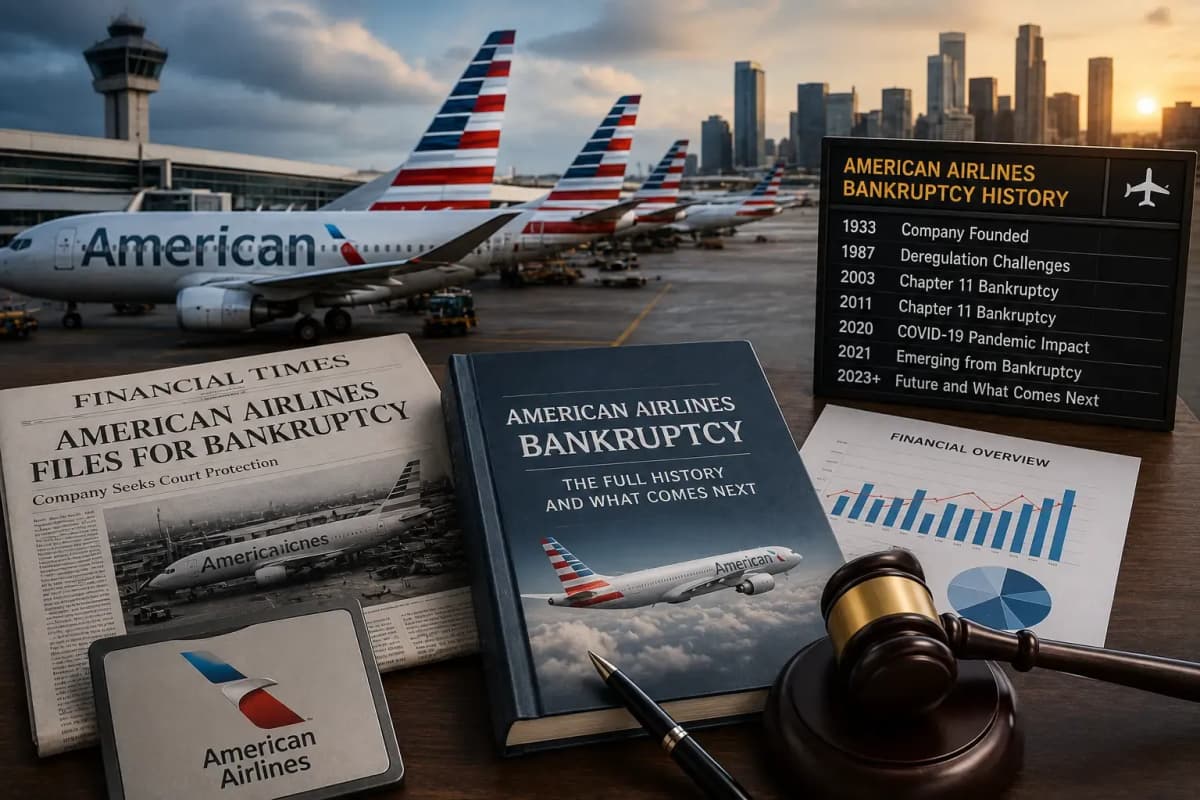
American Airlines filed for bankruptcy. AMR Corporation, the parent company of American Airlines, filed for Chapter 11 bankruptcy protection on November 29, 2011, in the United States Bankruptcy Court for the Southern District of New York. The airline emerged from bankruptcy on December 9, 2013, after merging with US Airways, becoming the world's largest airline under the American Airlines Group name.
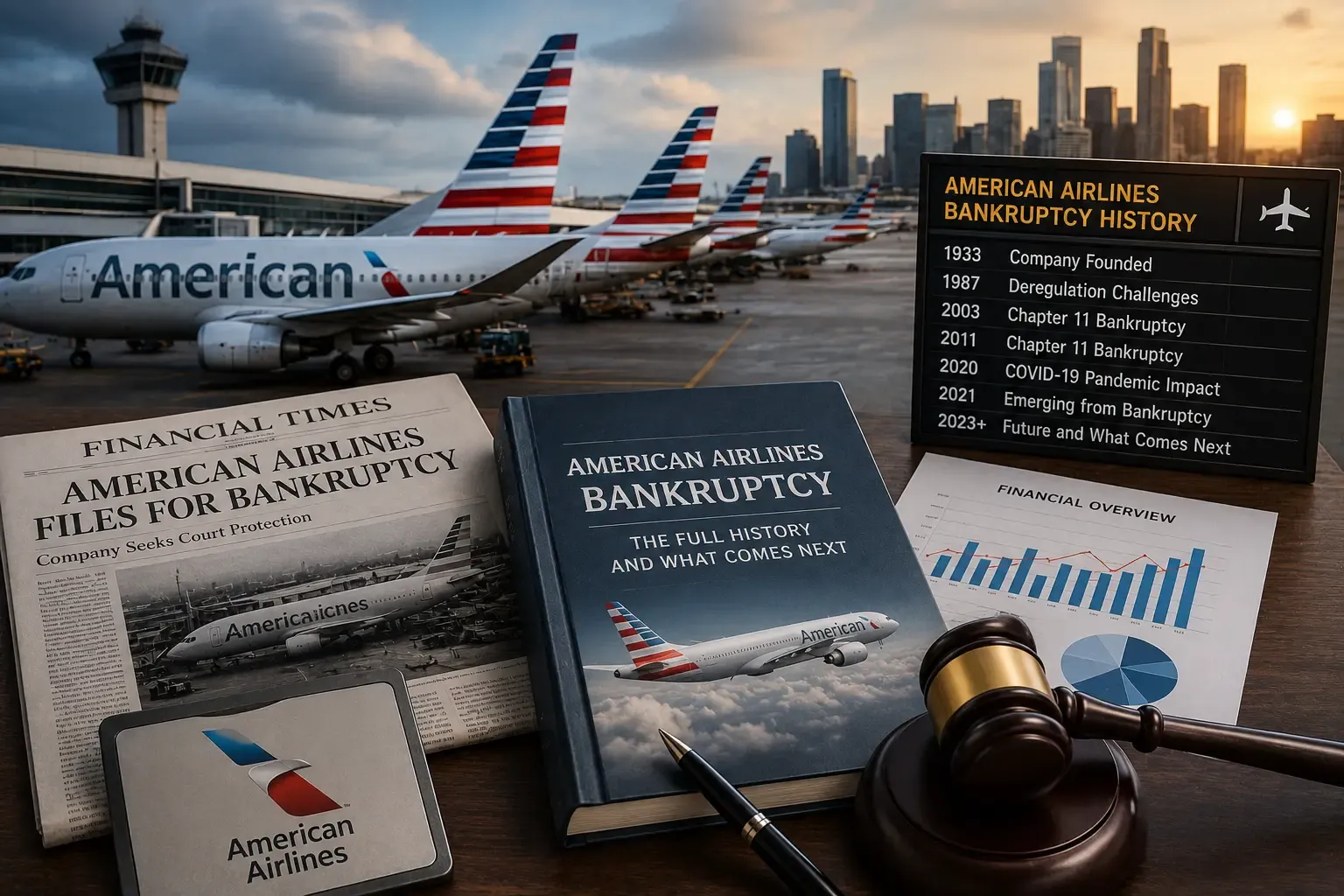
A search for american airlines bankruptcies turns up two different stories, and mixing them up leads to real confusion. The first story is real and settled, American Airlines filed for Chapter 11 bankruptcy in 2011 and came out the other side stronger in 2013. The second story is current and often misunderstood, recent headlines about American Airlines and bankruptcy involve Spirit Airlines, a separate company American is simply watching closely.
This guide covers both stories clearly, starting with the full history of the 2011 filing, then addressing exactly what today's bankruptcy related headlines about American Airlines mean.
Airline bankruptcies carry a specific kind of public attention most other corporate bankruptcies never receive. A struggling manufacturer or retailer files quietly and few people notice beyond financial news readers. An airline bankruptcy touches millions of ticket holders, loyalty program members, employees, and connecting travel plans all at once, which explains why American's 2011 filing generated so much coverage, and why any news even loosely connecting American Airlines to the word bankruptcy still draws attention today.
Yes. AMR Corporation, the parent company of American Airlines, filed a voluntary petition for Chapter 11 bankruptcy protection on November 29, 2011. The filing took place in the United States Bankruptcy Court for the Southern District of New York and covered AMR, American Airlines itself, and several related domestic subsidiaries.
At the time of filing, the Chapter 11 case involved roughly 24.7 billion US dollars in assets against 29.5 billion US dollars in liabilities, a scale placing this filing among the largest airline bankruptcies in history.
This size mattered for how the case unfolded. A bankruptcy of this scale involves thousands of creditors, dozens of law firms, multiple committees representing different interest groups, and a bankruptcy judge overseeing a docket running for years rather than months. AMR entered the case as the last major legacy carrier still standing outside bankruptcy, giving the filing extra weight across the airline industry and financial markets watching closely for signs of how the reorganization would unfold.
Employees also faced significant uncertainty during this period, since a bankruptcy filing of this scale almost always raises questions about job security, pension protection, and future compensation, even when a company continues normal operations throughout the case. AMR union leadership worked to keep members informed as negotiations progressed, a communication effort helping maintain operational stability even as formal labor talks grew tense at points during the two year process.
American held out longer than its major rivals before filing. United, Delta, and US Airways each filed for bankruptcy in the years following the September 11 attacks, using the process to restructure labor costs, debt, and vendor agreements. AMR avoided this path under then chief executive Gerard Arpey, who reportedly viewed bankruptcy as a sign of failure.
United filed in December 2002, Delta and Northwest both filed in September 2005, and US Airways filed twice, first in 2002 and again in 2004, before eventually merging into American in 2013. Watching four major competitors cycle through bankruptcy while AMR stayed out gave the company a public reputation for financial discipline, even as the underlying cost gap between AMR and its restructured rivals widened year after year.
This decade long delay carried real consequences. Each year AMR avoided bankruptcy while competitors emerged from their own restructurings with lower labor costs and leaner balance sheets, the competitive gap widened further. What began as a point of corporate pride, staying out of bankruptcy court when nearly every peer had already gone through the process, gradually turned into a structural disadvantage the company failed to out earn through normal operations alone.
High labor costs relative to competitors who had already restructured through their own bankruptcy filings
Rising fuel prices squeezing margins across the entire industry
An inability to raise fares significantly due to intense competition from lower cost carriers
A heavy debt and pension burden built up over years of losses
By late 2011, competitors who had already gone through bankruptcy carried a meaningfully lower cost structure than AMR, leaving the airline at a persistent disadvantage no longer absorbable without restructuring.
Pension obligations added another layer of pressure many outside observers underestimated. AMR carried some of the largest defined benefit pension plans remaining in the airline industry, a legacy cost structure competitors had already shed through their own bankruptcy filings years earlier. Servicing these obligations alongside mounting operating losses left the company with fewer options each year the delay continued.
Upon filing, chief executive Gerard Arpey resigned and was replaced by Tom Horton, who led the company through the reorganization. The case ran for roughly 24 months and touched nearly every part of the airline's operations.
Leadership continuity mattered greatly during a case of this length. Horton had already served as president and chief financial officer before stepping into the top role, giving him deep familiarity with the company's finances right as the reorganization began. This background helped the company move through early, contentious negotiations with creditors and unions without the added disruption a completely external appointment might have introduced during an already difficult period.
Renegotiated more than 700 facility leases and over 9,000 vendor and supplier agreements
Reached new collective bargaining agreements with labor unions
Achieved balance sheet improvements of approximately 2.5 billion US dollars
Generated estimated principal and interest savings of about 1.3 billion US dollars over five years
Continued normal operations throughout the case, adding new routes and taking delivery of 75 new aircraft
Despite operating under bankruptcy protection, American posted its highest annual revenue in company history during the case, roughly 26.7 billion US dollars in 2013 alone.
This detail surprises many people learning about the case for the first time. Bankruptcy carries a public association with failure and shutdown, yet American expanded its route network, grew revenue, and improved its balance sheet all while operating under Chapter 11 protection. This outcome reflects how Chapter 11 functions for a large operating company, a legal tool for fixing a broken financial structure while the underlying business keeps running and, in this case, keeps growing.
Labor negotiations during the case proved especially difficult. Pilots, flight attendants, and ground crews each negotiated separately, and some agreements required contentious back and forth before reaching terms acceptable to both sides. The bankruptcy court held authority to reject existing labor contracts if negotiations stalled entirely, a significant point of leverage pushing both sides toward reaching new agreements rather than risking a court imposed outcome neither side controlled.
Early in the case, management proposed a standalone reorganization without a merger. Activist investors and labor unions pushed for a different path, a combination with US Airways. Negotiations through 2012 and 2013 led to a merger agreement, and the bankruptcy court approved AMR's plan of reorganization, including the merger, on November 27, 2013.
The merger closed and AMR emerged from Chapter 11 on December 9, 2013, becoming American Airlines Group Inc. The combined carrier launched as the world's largest airline by several key measures. Unusually for a Chapter 11 case, creditors received a full recovery on their claims plus postpetition interest, and stockholders also received a distribution, an outcome bankruptcy attorneys consider rare and notable.
Most large corporate bankruptcies wipe out existing shareholders entirely, since a company generally only reaches Chapter 11 once its debts already exceed its assets, leaving nothing left over for equity holders once creditors are paid. American Airlines reached bankruptcy for a different set of reasons, an unsustainable cost structure rather than a fundamentally insolvent balance sheet, which is part of why the case ended with enough value remaining to pay creditors in full and still leave something for shareholders.
The combined airline, formed from American and US Airways, brought together two separate route networks, two separate fleets, and two separate corporate cultures. Integrating these pieces took years beyond the formal bankruptcy emergence date, covering everything from combining loyalty programs to repainting aircraft and merging reservation systems, a process airlines industry watchers refer to as one of the more complex mergers completed in the sector.
A Chapter 11 filing of this size involves complex legal and financial coordination across creditors, unions, and courts. A firm covering business and bankruptcy law in detail helps explain how a reorganization of this scale works from the legal side, beyond the headlines.
Date | Event |
November 29, 2011 | AMR Corporation files for Chapter 11 bankruptcy protection |
2012 | Management proposes standalone reorganization, unions and investors push for a merger option instead |
February 13, 2013 | Merger agreement signed with US Airways Group |
October 21, 2013 | Bankruptcy court confirms the plan of reorganization, including the merger |
December 9, 2013 | AMR emerges from Chapter 11 as American Airlines Group Inc. |
2017 | American Airlines stock rejoins the S and P 500 index, about four years after the bankruptcy filing |
No. American Airlines is not currently in bankruptcy and has not filed a new Chapter 11 case since emerging in 2013. Confusion on this point traces back to recent, unrelated news involving a different airline.
In December 2025, American Airlines filed a notice of appearance in the ongoing bankruptcy case of Spirit Airlines, a separate, smaller carrier. This filing simply requests American receive copies of Spirit's court documents, operating reports, and any reorganization or liquidation plans going forward. This request does not mean American itself filed for bankruptcy, and American's spokesperson tied the move to an existing airport specific agreement between the two carriers, not a bankruptcy filing of its own.
Spirit Airlines filed for Chapter 11 bankruptcy in November 2024, emerged briefly in 2025, then filed a second Chapter 11 case in August 2025 after continued losses and weak demand for budget domestic travel. As of early 2026, Spirit remains in bankruptcy, cutting routes, reducing its fleet, and exploring a sale or merger to survive.
Spirit expects to operate roughly 20 percent fewer flights in 2026 than the prior year as part of the downsizing, on top of capacity reductions already underway. Rising jet fuel prices, driven partly by wider geopolitical tension affecting oil supply, have complicated an already difficult path toward emerging from this second bankruptcy case, pushing the airline to seek emergency financial support as costs climbed faster than the reorganization plan originally anticipated.
American Airlines requested formal notice of all filings in Spirit's case in December 2025
The request covers operating reports, reorganization plans, and any liquidation statements
American has already done limited business with Spirit during the case, including purchasing gate access at Chicago O'Hare
Industry observers view the move as American positioning itself for possible opportunities, additional gates, slots, or assets, if Spirit's case results in a sale or liquidation
This pattern, a healthy airline formally monitoring a struggling competitor's bankruptcy case, is common and does not signal any financial trouble at the company doing the monitoring.
Airlines routinely watch each other's financial health closely, since a competitor's bankruptcy directly affects route competition, gate availability, and pricing across shared markets. When a carrier the size of Spirit enters bankruptcy, larger rivals including American, Delta, and United all track developments, since the outcome shapes competitive dynamics on dozens of shared routes regardless of whether any of them ends up acquiring assets directly.
Formally requesting notice in a bankruptcy case is also a low cost, low commitment step. Filing a notice of appearance costs little and creates no binding obligation, simply ensuring a company receives copies of public filings as they happen instead of searching for them after the fact. Reading coverage of American's notice of appearance as a sign of financial distress at American itself misunderstands what the filing represents, a routine, inexpensive way to stay informed about a competitor's next move.
American Airlines Group operates as a large, established carrier with regular revenue, an established route network, and access to capital markets, all factors reducing near term bankruptcy risk compared to a smaller or newer airline. The 2011 to 2013 restructuring specifically addressed the cost and debt issues driving the original filing, and the resulting merger created meaningfully more scale and revenue diversity than AMR carried on its own.
Publicly traded companies the size of American Airlines Group also face far more scrutiny than a smaller, private carrier, from analysts, credit rating agencies, and regulators alike. This scrutiny creates ongoing pressure toward financial discipline, since a serious warning sign generally surfaces in earnings calls, credit reports, or regulatory filings well before a bankruptcy filing becomes the only remaining option, giving investors and travelers alike meaningful advance visibility compared to a company operating with less public disclosure.
This does not mean zero risk exists. Airlines remain sensitive to fuel price spikes, economic downturns affecting travel demand, and heavy debt loads carried since the pandemic era. Spirit Airlines' current struggles illustrate how quickly conditions turn for a carrier without American's scale and diversified route network. Investors and travelers tracking airline financial health typically look at debt levels, cash reserves, and route profitability rather than headlines alone when assessing bankruptcy risk for any specific carrier.
Credit rating agencies regularly publish assessments of major airlines, including American, offering a more structured view of financial health than headlines alone provide. These ratings weigh factors including debt maturities, available cash, fleet age, and route network diversity, and a downgrade or upgrade often moves ahead of any dramatic news event, since rating agencies track financial trends continuously rather than reacting only to major announcements.
Scale itself functions as a meaningful buffer for a carrier the size of American. A large network airline serving hundreds of destinations spreads risk across geography, customer segments, and route types in a way a smaller, more concentrated carrier like Spirit cannot easily replicate. This diversification does not eliminate risk entirely, but this spread means a single weak region, route type, or travel segment affects a smaller share of total revenue for a carrier operating at American's scale.
Chapter 11 bankruptcy allows a company to continue operating while reorganizing its debts under court supervision, rather than shutting down. For an airline, this generally means flights continue as scheduled, tickets remain valid, and loyalty program miles typically remain honored, while the company renegotiates debt, leases, and sometimes labor agreements behind the scenes.
This distinction explains why booking a flight with an airline currently in Chapter 11 does not automatically mean losing money on a ticket if the airline eventually stops flying entirely, though real risk still exists in a worst case scenario. Regulators and industry practice generally push airlines toward an orderly wind down with advance notice rather than an abrupt shutdown, giving ticket holders and loyalty program members some practical protection even in a difficult bankruptcy case, though outcomes vary by airline and circumstance.
The company remains in control of daily operations as a debtor in possession, unless the court orders otherwise
Creditors form committees representing their interests during negotiations
A plan of reorganization must be proposed, negotiated, and ultimately confirmed by the bankruptcy court
The company emerges once the plan is confirmed and implemented, sometimes through a merger, as with American in 2013
This is why American Airlines kept flying, hiring, and even growing throughout its own Chapter 11 case, and why Spirit Airlines continues operating flights today despite being in its second bankruptcy case.
Chapter 11 differs sharply from Chapter 7 bankruptcy, the version associated with a company shutting down and selling off assets entirely. An airline generally avoids Chapter 7 whenever a viable path to reorganization exists, since a full liquidation destroys far more value than a court supervised restructuring, both for creditors hoping to recover money owed and for employees hoping to keep their jobs through the process.
Financing during a Chapter 11 case often comes through a specific tool called debtor in possession financing, new loans a bankrupt company takes on with court approval, generally carrying priority repayment status ahead of older debt. This financing keeps day to day operations funded, payroll covered, and fuel purchased while the larger reorganization plays out over months or years in the background.
The American Airlines case remains a widely studied example of a large, complex Chapter 11 reorganization succeeding on terms favorable even to stockholders, an outcome far from guaranteed in a bankruptcy of this size.
Business schools and bankruptcy law courses regularly reference the case for exactly this reason, a rare example where careful management of a difficult restructuring, combined with a well timed merger, turned a defensive legal filing into an offensive strategic move. Few large corporate bankruptcies manage this outcome, which is part of why the American Airlines case continues drawing study and discussion more than a decade after the filing.
Waiting too long to restructure, as AMR did compared to competitors, often leaves a company at a lasting cost disadvantage
A merger negotiated during bankruptcy sometimes creates more value than a standalone reorganization alone
Continued strong operational performance during a case reassures creditors, customers, and employees alike
A well executed reorganization sometimes results in a stronger, more competitive company than existed before the filing
Spirit Airlines' current struggles offer a useful contrast. Spirit entered Chapter 11 once, emerged, and returned to bankruptcy within roughly a year, a pattern showing emergence from Chapter 11 does not guarantee long term stability without addressing the underlying business model.
The ultra low cost airline model Spirit built its business around depends heavily on thin margins and high aircraft utilization, a structure offering little cushion when fuel prices spike or demand softens. American's legacy full service model, by contrast, generates revenue from a wider mix of ticket types, loyalty program partnerships, and premium cabin sales, giving the company more levers to pull during a downturn than a carrier relying primarily on rock bottom base fares.
Industry analysts frequently point to this structural difference when comparing why American's single bankruptcy led to lasting stability while Spirit has now filed twice in less than two years. A business model built around minimal margins leaves far less room for error when external conditions turn unfavorable, regardless of how efficiently a company otherwise runs its operations.
American Airlines, through parent company AMR Corporation, filed for Chapter 11 bankruptcy once, in November 2011, and emerged in December 2013 as part of a merger with US Airways, creating the world's largest airline. The company is not in bankruptcy today. Current headlines mentioning American Airlines and bankruptcy in the same sentence almost always refer to American's role monitoring Spirit Airlines' separate, ongoing bankruptcy case, not any financial trouble at American itself.
Search interest in this topic tends to spike whenever airline industry news breaks, whether the news involves American directly or a competitor working through its own financial difficulties. Keeping the two storylines separate, American's completed 2011 case and Spirit's ongoing 2025 case, avoids the confusion driving so many of the search questions this guide addresses.
For anyone researching airline financial stability more broadly, the pattern across both cases offers a genuinely useful lesson. A completed, well managed reorganization, like American's, tends to produce a stronger, more durable company on the other side. A repeated bankruptcy, like Spirit's current situation, generally signals a deeper structural problem the first restructuring failed to fully resolve. Watching how a specific case unfolds, rather than reacting to headlines alone, remains the more reliable way to understand what a bankruptcy filing means for any given airline.
Understanding a major bankruptcy case like this one helps explain how airlines, and large companies generally, use Chapter 11 to survive serious financial pressure. A closer look at how bankruptcy law works offers useful context for anyone following a company through this process.
This article gives general information only and does not serve as financial or legal advice. Company financial conditions change, and figures here reflect the most recent available reporting at the time of writing. Confirm current financial details directly with official company filings before making any financial decision.
Written by
FranklyFrankly is a legal researcher and content writer at Jurnza, specializing in legal services, legal tools, legal guides, and law-related educational content. Frankly researches topics including business law, family law, immigration law, personal injury law, tax law, employment law, and real estate law to create accurate, easy-to-understand, and up-to-date resources that help readers make informed legal decisions.
