Deadlines & Filing
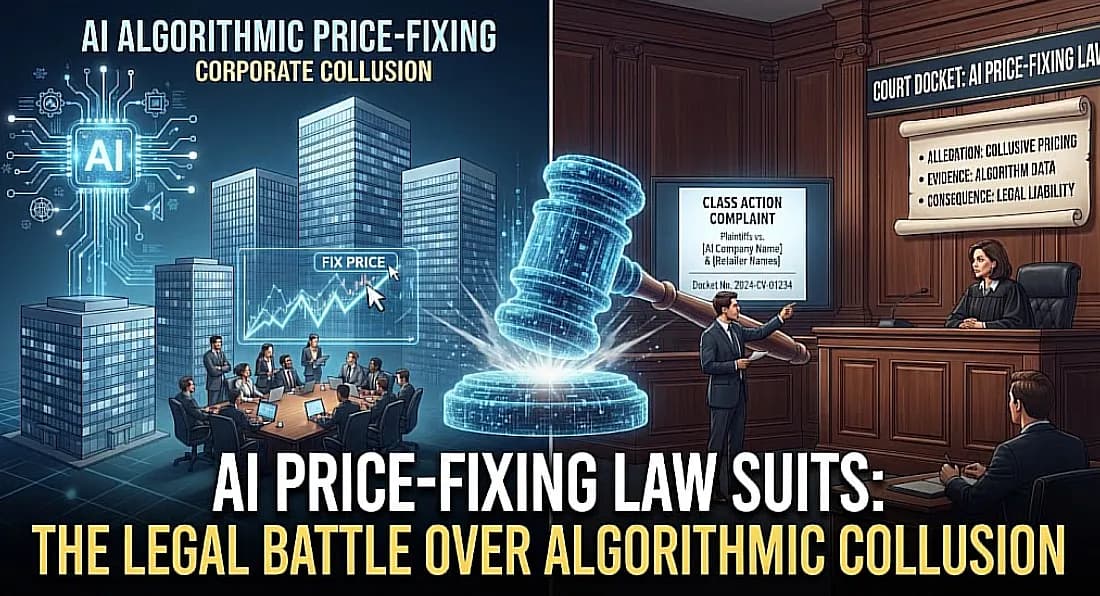
AI-powered pricing tools are changing how businesses set prices, but they also raise serious antitrust concerns. Explore the McDonald’s pricing lawsuit, federal price-fixing laws, potential business liability, consumer protections, and practical steps companies can take to reduce legal risks.
Artificial intelligence (AI) is changing the way American businesses decide what to charge for products and services. Retailers can analyze purchasing trends, hotels can adjust room rates, landlords can evaluate rental markets, and restaurants can use software to recommend menu prices. These tools promise faster decisions, more accurate forecasts, and better control over costs.
However, a growing legal question is attracting attention from regulators, attorneys, business owners, and consumers: When does using an AI pricing system become illegal price-fixing?
The concern is not simply that artificial intelligence might recommend higher prices. In most circumstances, businesses can independently choose prices based on costs, demand, competition, and other legitimate commercial factors. The legal risk becomes more serious when competing businesses use shared systems, exchange sensitive pricing information, or coordinate their decisions in ways that undermine competition.
That debate has taken on new urgency following a federal lawsuit filed against McDonald’s in October 2026. The complaint alleges that an AI-powered pricing tool used within the company’s franchise network facilitates price coordination and contributes to higher menu prices. McDonald’s disputes the allegations and maintains that franchisees retain control over their own prices. The claims remain allegations, not established findings of wrongdoing.
The dispute highlights a broader challenge for U.S. antitrust law. Laws written long before modern AI systems existed must now be applied to software that can analyze enormous amounts of information, recommend prices across multiple businesses, and influence decisions without traditional conversations between competitors.
Understanding these issues matters to consumers who want competitive prices, businesses that rely on automated pricing tools, franchise owners who operate under brand-wide systems, and technology providers that develop commercial algorithms.
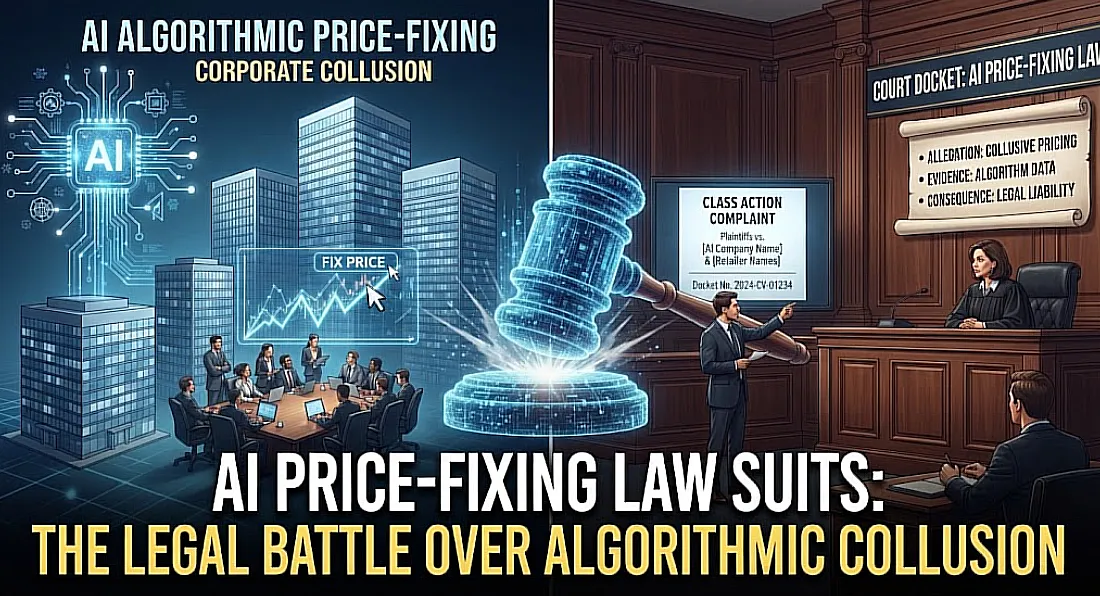
Algorithmic pricing is the use of software, mathematical models, or artificial intelligence to determine or recommend the prices businesses charge. Depending on the system, the software may analyze demand, operating expenses, inventory, historical sales, competitor prices, customer behavior, and other market information.
A simple pricing algorithm might recommend lowering the price of an item when inventory is high. A more sophisticated system might estimate how demand changes throughout the day, compare local market conditions, and recommend different prices for different locations.
AI can make this process faster and more complex. Instead of relying exclusively on fixed rules, some systems can identify patterns in large datasets and generate recommendations based on changing conditions.
Businesses may use algorithmic pricing for legitimate reasons, including:
These functions are not automatically unlawful. Competition law generally does not prohibit a company from using technology to make independent business decisions.
The legal concern arises when a pricing system becomes a mechanism for competitors to coordinate prices or exchange information they would otherwise keep confidential. For example, separate businesses might use a common platform that collects their nonpublic pricing data and recommends prices designed to discourage competition between them.
Whether that conduct violates the law depends on the facts, the relationships among the businesses, the design of the system, and the applicable legal standards.
The technology itself does not determine legality. The critical question is how businesses use it and whether their conduct unlawfully restrains competition.
A federal antitrust lawsuit filed in Illinois has brought the issue into the public spotlight. The complaint alleges that McDonald’s uses an AI-enhanced pricing platform that draws on information from its restaurant network and influences the prices charged by franchise locations. It further alleges that the arrangement undermines independent pricing decisions and contributes to higher menu prices.
The dispute is particularly significant because of the franchise business model.
Many McDonald’s restaurants are operated by franchisees rather than directly by the corporation. Franchisees operate under agreements that establish brand standards and other business requirements. Yet the extent to which individual restaurants independently set prices may matter when evaluating whether a pricing arrangement improperly coordinates decisions among businesses.
According to reporting on the lawsuit, the plaintiff alleges that the pricing system shares nonpublic, store-level information and that franchisees face pressure to use the platform. The complaint seeks class-action status and other legal relief. McDonald’s has disputed the allegations, describing its tool as a source of recommendations and maintaining that franchisees independently determine their prices.
Those competing positions raise several questions.
First, what information does the pricing platform collect, and which parties can access it? Sharing information about sales, demand, and pricing can be commercially useful. However, information about current or future prices may be competitively sensitive, particularly when it enables businesses that otherwise compete with one another to align their decisions.
Second, how much freedom do franchisees actually have? A recommendation that a business can freely reject is different from a pricing system that effectively dictates its decisions. Contractual requirements, financial incentives, penalties, and the practical consequences of refusing a recommendation may all be relevant.
Third, does the platform merely help individual restaurants make independent decisions, or does it facilitate a common pricing strategy that restricts competition? The answer requires evidence about the software, the businesses' relationships, and the way prices are determined in practice.
The lawsuit does not mean that every franchise pricing platform is illegal or that the allegations have been proven. Instead, it illustrates how traditional competition principles may apply when businesses use a shared digital system to influence pricing.
The ultimate legal analysis will depend on the evidence and the court's application of the relevant law.
The primary federal law relevant to agreements among competing businesses is Section 1 of the Sherman Antitrust Act. It prohibits contracts, combinations, and conspiracies that unreasonably restrain interstate or foreign commerce.
In general terms, businesses cannot agree with competitors to fix prices, divide markets, or otherwise eliminate important aspects of competition. Price-fixing can involve agreements to raise prices, maintain them at a certain level, establish minimum prices, or stabilize prices that would otherwise be determined independently.
The Federal Trade Commission explains that competitors are generally expected to establish prices independently rather than agree with rivals about what customers will pay. Naked price-fixing agreements are treated as particularly serious antitrust violations.
Importantly, the law does not require every competitor to charge exactly the same price before authorities can investigate potential price-fixing. The focus is on the alleged agreement or coordinated conduct and its legal significance.
Likewise, a business does not necessarily violate antitrust law simply because it raises prices after a competitor does the same. Companies may independently react to similar market conditions, including higher wages, supply shortages, inflation, or increased demand.
The distinction is between independent commercial behavior and unlawful coordination.
Yes, in appropriate circumstances, an algorithm can be part of conduct that violates antitrust law. Companies cannot avoid legal responsibility simply by replacing human discussions with software.
In 2024, the U.S. Department of Justice and the FTC filed a statement of interest in litigation involving alleged algorithmic price-fixing in the hotel industry. The agencies explained that businesses cannot use pricing algorithms to do something that would be unlawful if accomplished through people. They also argued that direct communication between competitors is not always necessary to allege an unlawful agreement, particularly when a third-party algorithm provider allegedly facilitates coordination.
This principle is important because modern pricing systems can connect businesses through shared data and recommendations.
Imagine several competing hotels that independently decide to subscribe to software. If the software merely helps each hotel assess its own costs and demand, that fact alone does not establish price-fixing. But if the arrangement enables the hotels to share sensitive information and coordinate pricing through a common mechanism, the legal analysis changes.
The same general distinction can apply to restaurants, landlords, retailers, and other businesses.
An algorithm does not need to contain an explicit instruction saying “fix prices” for its use to raise legal concerns. Investigators may examine the agreements surrounding the system, what information it receives, how recommendations are produced, and whether competitors knowingly participate in an arrangement that restrains competition.
At the same time, common software use or similar prices alone does not automatically prove an unlawful conspiracy. The evidence must support the applicable legal elements.
Data is one of the most valuable inputs for modern pricing systems. Information about sales, inventory, demand, customer preferences, and competitors can help businesses make better decisions.
But some information is more sensitive than others.
A retailer's public list prices may be available to everyone in the market. By contrast, nonpublic information about future prices, planned discounts, current sales, margins, or pricing strategies may reveal details competitors would ordinarily keep confidential.
When multiple competing businesses provide sensitive data to a shared platform, several risks can arise.
Businesses normally make pricing decisions based on their own commercial interests and the information available to them. If they can see detailed information about rivals' plans or rely on common recommendations derived from competitors' confidential data, their decisions may become less independent.
The legal significance depends on how the information is shared and used, not merely on the existence of a data platform.
A pricing algorithm may recommend similar prices to several businesses operating in the same market. Similar recommendations can result from legitimate economic conditions, such as comparable costs or demand.
However, uniformity becomes more concerning when it results from an agreement or mechanism that substitutes coordinated decision-making for independent competition.
Historical information is not always harmless, but forward-looking data may be especially sensitive. Knowledge that a competitor intends to increase prices, eliminate discounts, or change commercial terms can reduce uncertainty that would otherwise encourage businesses to compete.
A system that distributes this information across competitors deserves careful legal review.
A technology company that supplies pricing software may not simply be a passive vendor in every situation. Depending on its role, a provider could become relevant to an antitrust investigation if it allegedly facilitates coordination among competitors.
That does not mean software providers are automatically liable when their customers use a common algorithm. Liability depends on the facts and applicable law, including whether the provider knowingly participates in unlawful conduct.
The central compliance lesson is straightforward: businesses should evaluate not only what a pricing tool produces, but also the data relationships, contractual arrangements, and competitive effects surrounding its use.
One of the most important distinctions in this debate is the difference between dynamic pricing and price-fixing. Although the terms are sometimes used interchangeably in public discussions, they describe different practices.
Dynamic pricing means adjusting prices in response to changing conditions. An airline may charge different fares depending on demand, availability, or how close a flight is to departure. A hotel may charge more during a major event. A restaurant may adjust delivery prices to account for operating expenses or platform fees.
These practices are not automatically illegal under U.S. antitrust law.
Price-fixing, by contrast, generally involves competitors agreeing to establish, maintain, raise, lower, or stabilize prices rather than competing independently. Such agreements can violate the Sherman Act even when they are implemented through software rather than direct conversations.
Consider two examples.
In the first, two independent restaurants use separate pricing systems to evaluate their own labor costs, food expenses, sales, and local demand. Both restaurants independently conclude that a menu price needs to increase. Their decisions may be similar, but similarity alone does not establish price-fixing.
In the second, competing restaurants agree to provide a software company with confidential pricing information, and the system is used as part of a coordinated arrangement to discourage them from undercutting one another. That arrangement could raise substantial antitrust concerns.
The difference is not whether a computer was involved. It is whether the businesses engaged in conduct that unlawfully restricts competition.
Companies should also recognize that an arrangement may create legal risk even when participants retain some discretion over final prices. In its 2024 statement concerning hotel pricing litigation, the DOJ and FTC emphasized that retaining discretion to adjust a recommended price does not necessarily eliminate antitrust concerns if the underlying arrangement itself involves unlawful coordination.
For this reason, businesses should avoid assuming that a system is legally safe simply because its recommendations are technically optional.
Algorithmic price-fixing is not the only legal issue associated with AI-powered pricing. Another practice attracting attention is personalized pricing, sometimes discussed alongside the term surveillance pricing.
Personalized pricing involves using information about an individual consumer to determine the price offered to that person. Depending on the system, the information might include browsing behavior, purchasing history, location, or other personal data.
For example, a company might use consumer data to estimate how much a particular customer is willing to pay for a product. Instead of offering every shopper the same price, the company could attempt to charge different amounts based on its prediction of each shopper's willingness to spend.
This practice raises questions about transparency, data privacy, fairness, and consumer protection.
In August 2026, the FTC announced that it was seeking public comment on a proposed enforcement policy statement concerning personalized pricing. The agency highlighted concerns about businesses using personal data to set prices without adequately informing consumers. The proposal did not establish a blanket federal ban on personalized pricing; instead, the FTC discussed how undisclosed or misleading practices could violate laws it enforces. The announced public-comment deadline was September 18, 2026.
That distinction matters. A personalized price is not necessarily illegal merely because it differs from the price another consumer sees. The legal analysis depends on the facts, including how the price was determined, what representations the business made, what information it collected, and whether the practice violates an applicable statute.
Several issues may be relevant.
If a company tells customers that everyone receives the same price while secretly using personal data to set individualized prices, the statement could create consumer-protection concerns. The same may be true if the company makes inaccurate representations about how prices are calculated.
The collection and use of consumer data may trigger applicable privacy laws, contractual obligations, or consumer-protection requirements. Businesses should not assume that information available through digital interactions can be used for every commercial purpose without legal consequences.
Certain pricing arrangements may also raise issues under specific federal or state laws, depending on the product, transaction, protected characteristics, and market circumstances. However, not every price difference is unlawful discrimination, and the applicable legal framework must be evaluated carefully.
Personalized pricing and price-fixing are not identical. A company independently charging different prices to individual customers is not necessarily coordinating with competitors. Nevertheless, a pricing system may raise antitrust concerns if it is also used to facilitate unlawful coordination among competing businesses.
Businesses should therefore evaluate privacy, consumer protection, and competition law separately rather than treating all AI pricing concerns as one legal issue.
When an AI pricing system is alleged to facilitate unlawful conduct, responsibility may extend beyond the organization that owns the software. However, liability is not automatic, and each party's role must be examined under the applicable law.
A company may face antitrust scrutiny if it participates in an unlawful agreement with competitors or uses a pricing arrangement that violates competition law. The fact that its employees rely on software does not necessarily shield the company from responsibility.
Businesses should be able to explain how pricing decisions are made, what information the system uses, and what safeguards prevent improper coordination.
Franchise relationships can make pricing analysis more complicated. A franchisor may establish brand standards, provide business tools, and impose contractual requirements. Franchisees, meanwhile, may operate separate businesses that compete with other restaurants or retailers in their local markets.
The legal question is not simply whether the franchisor provides pricing software. It is whether the relevant arrangement and conduct violate antitrust law.
The McDonald's litigation illustrates why the degree of pricing independence, the handling of confidential information, and the practical effect of the platform may become important issues. The allegations in that case remain disputed.
A vendor that supplies a pricing platform may face legal exposure if the evidence establishes that it participated in or facilitated unlawful conduct. Conversely, simply licensing a tool that customers use for lawful, independent pricing does not automatically make the vendor responsible for every customer decision.
Providers should consider whether their product design encourages inappropriate information sharing, whether customers understand the system's operation, and whether contractual safeguards address antitrust risks.
Individuals may face consequences when they knowingly participate in unlawful price-fixing. Federal price-fixing violations can carry serious civil and criminal penalties, depending on the conduct and the applicable legal provisions. The FTC describes criminal prosecution and substantial fines as potential consequences of unlawful price-fixing agreements.
However, the mere fact that an employee selected software or followed a routine pricing recommendation does not establish individual wrongdoing. Personal liability depends on the individual's conduct, knowledge, role, and the relevant legal requirements.
AI-related antitrust disputes can be difficult to investigate because the relevant decisions may be distributed across software, business contracts, data systems, and internal communications.
A court or regulator may need to understand both the technical operation of the platform and the commercial relationships among the businesses using it.
Potentially relevant evidence may include:
No single category of evidence necessarily establishes a violation. For example, similar price movements could reflect a common increase in ingredient costs rather than collusion. Likewise, an algorithm's recommendation to raise prices does not prove that competing businesses agreed to follow it.
The legal question requires a broader assessment of the evidence and the applicable standard of proof.
Technical transparency can be especially important. If a company cannot explain why its system recommends certain prices, who influences those recommendations, or how competitors' data is used, it may face practical difficulties responding to an investigation—even if the company believes its conduct is lawful.
The consequences of an antitrust violation can be substantial. Depending on the facts and legal claims involved, businesses may face government investigations, civil litigation, financial penalties, court orders, or requirements to change their commercial practices.
Consumers or businesses that qualify under applicable law may bring private antitrust claims. A plaintiff generally must establish the legal elements of the claim, including the necessary connection between the alleged unlawful conduct and the injury for which relief is sought.
A lawsuit may seek monetary damages or other remedies. Whether a proposed class action proceeds as a class depends on the applicable procedural requirements and a court's decision.
The McDonald's lawsuit seeks class-action status and other relief, but filing a complaint does not establish that the plaintiff's allegations are true or that a class will be certified.
The DOJ and FTC enforce federal competition laws within their respective legal authorities. Investigations may examine pricing practices, information-sharing arrangements, contracts, and the use of common technology.
Authorities may challenge arrangements that unlawfully restrict competition, and the consequences can extend beyond monetary sanctions. A business may need to abandon a pricing practice, revise agreements, or implement new compliance procedures.
Certain price-fixing agreements can lead to criminal prosecution. However, not every dispute involving an algorithm, high prices, or similar pricing patterns is a criminal case. The nature of the conduct and the applicable legal requirements determine the potential exposure.
Even without a final finding of liability, an antitrust investigation or public lawsuit may damage consumer confidence, strain relationships with franchisees, and increase legal and compliance costs.
For companies that rely on a trusted brand, concerns about unfair pricing can become a business problem as well as a legal one.
Businesses do not necessarily need to abandon automated pricing to reduce legal exposure. Instead, they should establish governance practices that preserve legitimate commercial benefits while reducing the risk of unlawful coordination or misleading conduct.
Companies should understand what information enters a pricing model, where that information comes from, and who can access it. Particular care is appropriate when a platform processes nonpublic information from businesses that compete with one another.
Data collection should have a documented commercial purpose, appropriate access controls, and a legal review proportionate to the risks.
Before using a third-party system, a business should assess whether the provider serves direct competitors and whether the platform combines their confidential information.
Contracts and technical documentation should clearly describe data use, confidentiality, system functionality, and responsibility for compliance. A vendor's assurance that a product is compliant should not replace the customer's own review.
Where businesses are expected to make independent pricing decisions, their actual practices should reflect that independence. Managers should understand the recommendations they receive and have appropriate authority to assess them.
Merely labeling a recommendation "optional" may not resolve legal concerns if the wider arrangement effectively coordinates competitors' pricing decisions.
Businesses should create procedures for reviewing pricing systems before launch and when their functionality changes. Legal teams, compliance officers, data scientists, and business managers may need to work together to identify risks that are not obvious from the software interface alone.
Review should address not only the algorithm's output but also data sharing, contractual arrangements, communications, and the relationships among users.
Documentation can help businesses understand how recommendations are generated and demonstrate the basis for independent decisions. Periodic audits may identify unexpected data flows, unusual pricing patterns, or changes in how the software operates.
Audits should be designed to detect risks rather than simply confirm that the software is running as intended.
When pricing depends on personal information, companies should examine whether their data practices and consumer-facing statements are accurate. Businesses should avoid making unsupported claims about uniform prices, data use, or the factors that determine what a customer pays.
Legal review should consider applicable federal and state requirements rather than assume that one disclosure satisfies every obligation.
Employees responsible for pricing, procurement, franchise operations, and vendor relationships should understand that technology does not excuse conduct that would otherwise violate competition law.
Training should explain how to handle competitor information, when to escalate concerns, and why communications about pricing strategies require care. Companies should also reassess compliance when a vendor introduces new features or expands the data available to its system.
These measures cannot guarantee that a business will never face litigation. They can, however, help identify risks earlier and support more responsible use of pricing technology.
Consumers do not need to understand the technical details of a pricing algorithm to take reasonable steps when they suspect that pricing practices are misleading or unfair.
First, compare prices across providers when practical. Differences between locations, websites, or purchase times may have legitimate explanations, but comparison can help identify unusual patterns.
Second, pay attention to disclosures about how a price is determined. If a business makes a specific claim about uniform pricing or the use of personal information, consumers can retain a copy of that statement alongside relevant transaction records.
Third, keep receipts, screenshots, advertisements, and records of price quotes when a dispute arises. These documents may help establish what a business represented and what the consumer was actually charged.
Fourth, distinguish a disappointing price from an unlawful practice. A price increase can be frustrating without violating antitrust law. A potential legal issue is more likely to require examination of the underlying conduct, such as an alleged agreement among competitors, a deceptive representation, or an applicable statutory violation.
Finally, consumers who believe they have evidence of unlawful conduct may consider contacting the relevant consumer-protection or competition authority or consulting a qualified attorney. The appropriate route depends on the circumstances and the type of alleged violation.
AI pricing systems are likely to remain an important issue for regulators and courts as businesses adopt more sophisticated tools.
One challenge is that algorithms can make complex pricing decisions faster than traditional manual systems. Investigators may need to determine whether observed behavior results from independent optimization, a common market response, or an arrangement that unlawfully restricts competition.
Another challenge is the role of third-party platforms. A single provider may serve numerous businesses, potentially creating data relationships that would be difficult to reproduce through ordinary bilateral negotiations. The legal significance depends on what the provider does, what its customers agree to, and how the arrangement affects competition.
Courts must also distinguish between legitimate innovation and unlawful conduct. Excessively broad interpretations could discourage useful tools that help businesses manage costs and respond to demand. An approach that ignores algorithm-enabled coordination, however, could leave traditional competition rules ineffective in markets increasingly shaped by automated decisions.
The DOJ and FTC's position in earlier algorithmic pricing litigation is an important reference point: companies cannot make an otherwise unlawful arrangement permissible merely by implementing it through software. Yet the outcome of any particular dispute still depends on the evidence, the governing law, and the court's analysis.
The McDonald's case adds another dimension because it involves a franchise network in which brand-wide systems and individual operators' pricing decisions may intersect. Its significance will depend on how the allegations are tested and resolved, rather than on the mere fact that AI is involved.
For businesses, the most reliable approach is to treat antitrust compliance as part of the design and deployment of pricing technology—not as an afterthought once a dispute emerges.
AI-powered pricing can help businesses respond to market conditions, improve forecasting, and make commercial decisions more efficiently. But the use of sophisticated software does not remove the legal boundaries that apply to competition.
Under U.S. antitrust law, businesses generally must make their pricing decisions independently rather than coordinate prices with competitors. Shared algorithms, confidential data exchanges, and automated recommendations can create legal risks when they facilitate conduct that unlawfully restrains competition.
The McDonald's pricing lawsuit illustrates the growing importance of these questions. The complaint alleges that a pricing platform used within the franchise network undermines independent pricing and harms consumers, while McDonald's disputes those allegations and maintains that franchisees retain pricing autonomy. The claims have not been established merely because the lawsuit was filed.
For businesses, the key is to understand how pricing tools operate, review the data they use, preserve lawful independent decision-making, and implement appropriate legal and technical safeguards. Consumers, meanwhile, should distinguish ordinary price differences from evidence of potentially unlawful coordination or deceptive practices.
Ultimately, the legal question is not whether artificial intelligence sets a price. It is whether the people and businesses using that technology comply with the rules designed to preserve fair competition. As AI becomes more influential in commercial decision-making, that distinction will remain central to the future of U.S. antitrust enforcement.

Written by
BeastBeast is a seasoned legal content creator and law research specialist with 15+ years of experience in legal writing, legal research, and publishing educational law content. Specializing in Personal Injury, Family, Business, Immigration, Criminal, Tax, and Real Estate Law, Beast creates accurate, well-researched, and SEO-optimized legal guides that help readers understand complex legal topics with confidence. Every article is written with a focus on accuracy, trust, and Google's E-E-A-T guidelines, making Jurnza.com a reliable source for legal information and legal services.
