Deadlines & Filing
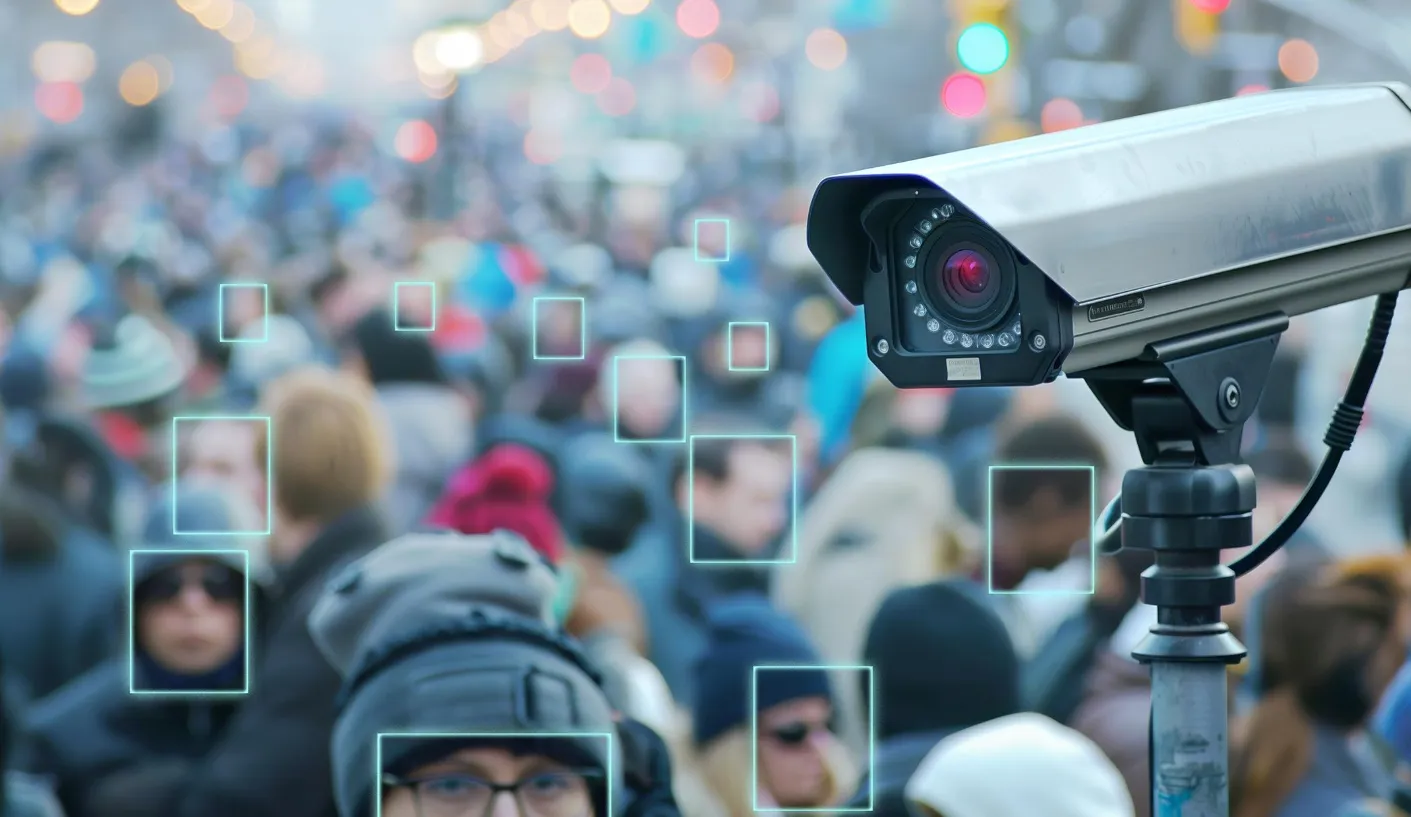
AI facial recognition raises important questions about privacy, consent, data security, and mistaken identification. Learn how U.S. biometric privacy laws in Illinois, Texas, and Washington may apply, how federal consumer protection enforcement fits into the picture, and what steps individuals can take if facial recognition technology is used improperly.
Artificial intelligence facial recognition is changing how businesses, employers, property managers, and government agencies identify people. A camera can capture a face, software can compare it with stored images, and an automated system can flag a possible match in seconds. These tools may help verify identities, improve security, and investigate suspected wrongdoing. However, they also raise serious questions about privacy, consent, accuracy, and the consequences of mistaken identification.
Unlike a password, a person's face cannot simply be replaced after a data breach. Facial recognition systems may convert facial measurements into a biometric template that can be stored, compared, or shared. If that information is collected without proper notice, retained longer than necessary, or used to make consequential decisions, the person affected may have legal options.
Can AI facial recognition violate your privacy rights in the United States? Yes, in certain circumstances. The legality depends on who operates the system, how the information is collected and used, which state laws apply, and whether the conduct violates privacy, consumer protection, employment, or constitutional rules. There is no single federal law that comprehensively governs every use of facial recognition in every setting.
Understanding those distinctions matters. A business using facial recognition to unlock a phone, a retailer scanning customers for security purposes, and a police department identifying a suspect may face very different legal questions.
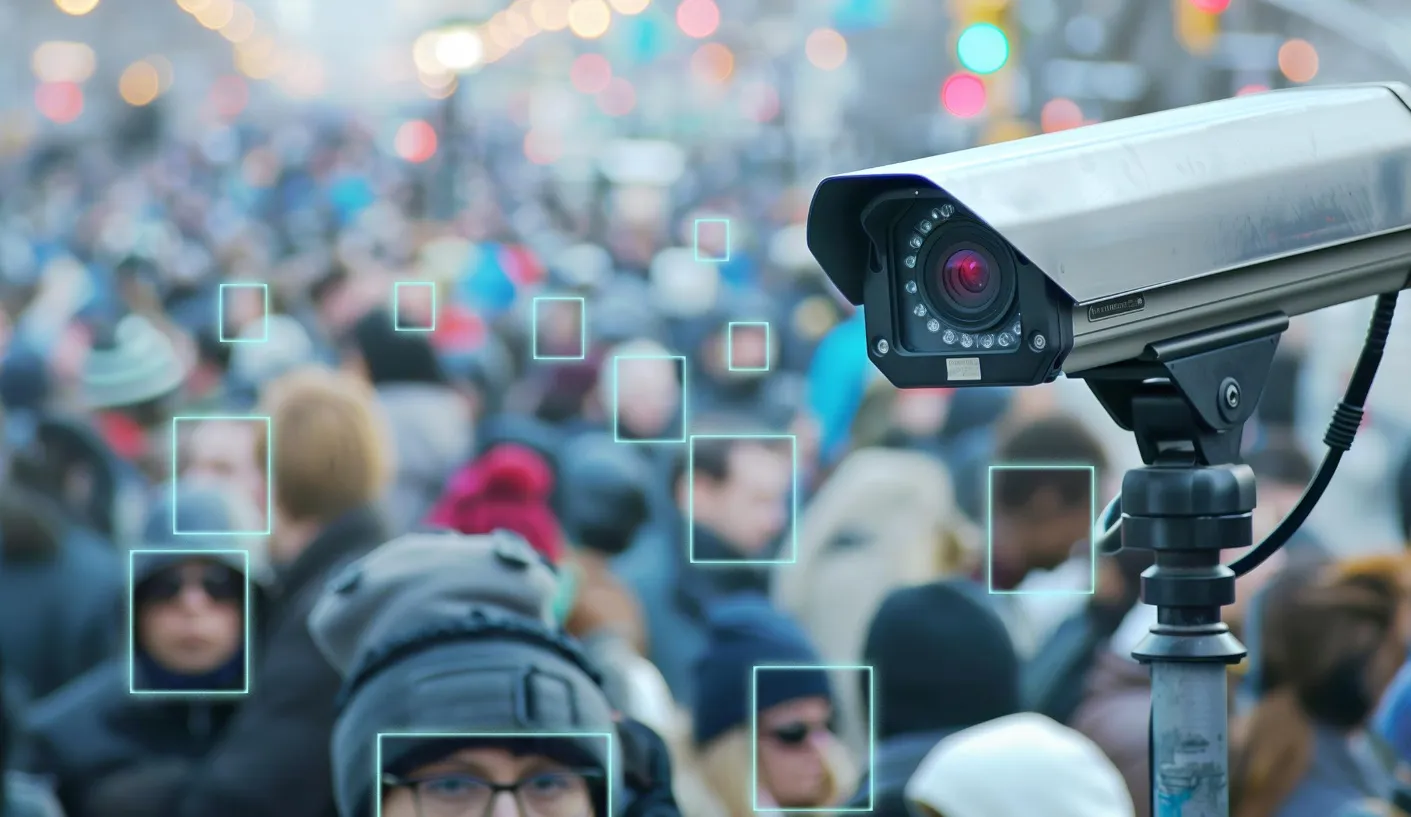
AI facial recognition is technology designed to identify or verify a person by analyzing features of their face. Depending on the system, software may examine the distance between facial landmarks, the shape of facial features, or other patterns that can be converted into a numerical representation.
The system then compares that representation with one or more reference images or templates.
There are two common uses:
The distinction is important because the risks can differ. Verification typically compares a face against a specific claimed identity. Identification may compare one person's face against a large database of possible matches, increasing the importance of accuracy and safeguards.
Facial recognition is also different from ordinary photography. A photograph records a person's appearance. A facial recognition system may analyze that photograph to create or use biometric information for identifying the person. Whether a particular image, measurement, or template qualifies as protected biometric information depends on the applicable law and how the information is used.
For example, a shop may use ordinary security cameras to record activity. If it also uses software to analyze customers' faces, compare them with a database, and flag suspected matches, additional privacy and consumer protection questions may arise.
The legal debate is not simply about whether a camera can record someone in public. It concerns what happens after an image is captured and whether a person can reasonably understand or control the use of their identity.
People may enter a store, office, apartment building, or event without realizing that facial recognition software is operating. A notice about general video surveillance may not clearly explain that a business is analyzing facial features to identify individuals.
Some laws impose specific requirements for notice or consent when biometric identifiers are collected for commercial purposes. Other laws focus on disclosure, retention, security, or the circumstances in which biometric information may be used.
The exact requirements vary by jurisdiction. A person appearing in a photograph does not automatically mean that every subsequent biometric use is legally authorized.
Facial recognition systems may depend on databases containing facial templates, photographs, names, or other identifying details. If a company does not protect this information adequately, unauthorized access or disclosure may create significant privacy risks.
A business may also use an outside technology provider to operate its recognition system. That arrangement can raise questions about who controls the data, which parties can access it, and whether the information is used for purposes beyond the original reason for collection.
Some state laws restrict the sale or disclosure of biometric identifiers and require reasonable protection or deletion practices. Companies must examine the specific rules that apply to their activities rather than assuming that a general privacy notice resolves every issue.
Facial recognition systems are not infallible. A system may incorrectly identify someone as a person in a reference database. Depending on the setting, the error could lead to extra scrutiny, denial of access, a workplace investigation, a retail confrontation, or police attention.
The National Institute of Standards and Technology has studied demographic differences in facial recognition performance. Its research found that the size and direction of those differences vary across algorithms and applications. The consequences of a false match can be particularly serious when a result is treated as proof rather than an investigative lead. NIST research on demographic effects.
An inaccurate match does not automatically establish a legal violation. The facts still matter, including the system's reliability, the operator's conduct, the harm caused, and the legal duties that applied.
Facial recognition can potentially allow an operator to connect appearances across different cameras, visits, or locations. When systems are linked to databases, the information may reveal patterns about where a person goes or which businesses they visit.
That possibility raises questions about surveillance, data minimization, access controls, and the use of information for purposes unrelated to its original collection.
Whether such tracking is unlawful depends on the setting and governing law. A private business, public employer, and government agency do not necessarily have the same legal authority or obligations.
The United States regulates facial recognition through a combination of state biometric privacy laws, general consumer protection rules, sector-specific requirements, and constitutional protections in certain government settings. Their coverage is not uniform.
Illinois has one of the country's best-known biometric privacy laws: the Biometric Information Privacy Act, commonly called BIPA.
The statute defines biometric identifiers to include a scan of hand or face geometry, subject to its statutory exclusions. It also addresses biometric information derived from identifiers and used to identify an individual.
Among other requirements, BIPA generally requires covered private entities to provide written notice and obtain a written release before collecting or obtaining covered biometric identifiers or information. It also imposes obligations involving a publicly available retention and destruction policy, restrictions on disclosure, and reasonable care in storing, transmitting, and protecting covered information.
The law contains exceptions and detailed requirements, so not every photograph or facial analysis automatically falls within its scope. Whether a particular system is covered depends on the data involved, the entity, the conduct, and the statutory language.
BIPA is especially significant because it provides a private right of action for people whose rights under the statute are violated. Depending on the circumstances, a person may seek statutory damages and other relief. However, a potential claim must be assessed under the current statute and relevant court decisions, including applicable limitations periods and rules about how damages may be calculated.
Businesses operating in Illinois or collecting covered biometric information from people in the state should not assume that consent buried in general website terms necessarily satisfies every statutory requirement.
Official source: Illinois Biometric Information Privacy Act.
Texas regulates certain commercial collection and use of biometric identifiers under Chapter 503 of its Business and Commerce Code.
The statute includes records of face geometry within its definition of biometric identifiers. For covered commercial capture, it generally requires a person to inform the individual before capturing the identifier and obtain consent.
The law also restricts certain disclosures and requires reasonable care to protect biometric identifiers. It addresses retention and destruction obligations and includes specific exceptions.
Texas amended its biometric identifier law with provisions effective in 2026, including language addressing the assumption that an image's presence on the internet or another publicly available source, by itself, establishes notice and consent. The law's precise application depends on the statutory wording and the facts of the collection.
Unlike Illinois BIPA, enforcement under Texas Chapter 503 is structured around enforcement by the Texas attorney general rather than a general private right of action under that chapter. This difference matters when assessing which remedies may be available to an individual.
Official source: Texas Business and Commerce Code, Chapter 503.
Washington has a separate law addressing biometric identifiers used for commercial purposes. It regulates certain enrollment, disclosure, and retention practices.
Under the statute, a business may not enroll a biometric identifier in a database for a commercial purpose without first providing notice, obtaining consent, or providing a mechanism to prevent subsequent commercial use, as specified by the law. The notice and consent requirements are context-dependent.
Washington's statute also contains restrictions concerning disclosure and retention and connects violations to the state's consumer protection framework. Its definitions include exclusions, including for certain photographs and recordings, which means the specific data and use must be examined.
A facial recognition system may therefore require a different legal analysis in Washington than it would in Illinois or Texas.
Official source: Washington Revised Code, Chapter 19.375.
Federal law can also matter even when a specific biometric privacy statute does not provide a clear path for an individual claim.
The Federal Trade Commission (FTC) can take action against unfair or deceptive practices within its legal authority. A company's representations about privacy, security, or how it uses consumer information may be relevant if the company fails to follow those representations or engages in conduct that violates applicable law.
In December 2023, the FTC announced action against Rite Aid over its use of AI-based facial recognition in retail stores. The agency alleged that the company failed to take reasonable measures to prevent harm from false-positive matches and did not adequately evaluate and monitor the technology. The case resulted in an order restricting Rite Aid's use of facial recognition for security or surveillance purposes for five years, alongside other requirements.
The matter illustrates how facial recognition practices can raise consumer protection and data security issues, especially when automated results prompt employees to accuse or treat customers as suspected wrongdoers. It does not mean that every use of facial recognition is automatically unlawful.
Official sources: FTC announcement concerning Rite Aid and FTC case record.
The U.S. Constitution may provide protection against certain government searches and surveillance. The Fourth Amendment restricts unreasonable searches and seizures, but its application to facial recognition depends on the circumstances.
Courts may consider factors such as where surveillance occurs, what information is collected, how long it continues, whether authorities access records held by another party, and whether the conduct amounts to a search under applicable precedent.
There is no simple rule that all facial recognition by law enforcement is prohibited or that every public-space scan is automatically constitutional. Different facts can lead to different legal outcomes.
Other constitutional protections may be relevant in particular cases, including when government action affects speech, association, or equal protection. These questions are highly fact-specific and may depend on federal and state law.
Businesses may have legitimate reasons to use facial recognition, including identity verification, access control, fraud prevention, and security. But a legitimate objective does not eliminate legal obligations.
A business should evaluate at least the following issues before deploying the technology.
The business should determine whether the relevant law requires notice, affirmative consent, a written release, or an option to decline biometric processing.
A general sign saying that cameras are in use may not meet a specific biometric statute's requirements. Likewise, a person's presence in a public place or the public availability of a photograph does not necessarily establish consent to biometric identification.
A company should identify why it needs facial recognition and whether a less intrusive method could achieve the same goal. It should avoid collecting more information than reasonably necessary for the lawful purpose.
For example, a business that only needs to confirm that an employee is authorized to enter a secure room should assess whether a less intrusive credential would work. If facial recognition is used, the company should define what data is created and how it will be used.
Biometric data should not be kept indefinitely without a lawful basis. Applicable laws may require a written retention policy, deletion when the original purpose has been satisfied, or other limits on retention.
A business should know whether its vendors retain facial templates, whether copies remain in backups, and what happens when a customer relationship ends or the service contract expires.
The business should assess the security of its own systems and any third-party provider. Relevant safeguards may include access restrictions, encryption, staff training, audit trails, incident response procedures, and contractual limits on secondary use.
A contract with a vendor does not necessarily remove the business's own responsibilities. The legal position depends on the statute, the contract, and the parties' conduct.
Businesses should evaluate the system before deployment and continue monitoring it after implementation. They should understand the limits of the technology and have procedures for responding to inaccurate matches.
A facial recognition alert should not automatically be treated as conclusive evidence that someone has committed misconduct. Meaningful human review can help prevent a technical error from turning into an unjustified accusation.
There is no single test that applies to every situation. However, certain circumstances may create substantial legal risk.
Collecting covered biometric data without required consent. If a statute requires specific notice and consent, a business that skips those steps may violate the law.
Using biometric information beyond the disclosed purpose. A company that collects information for access control but later uses it for unrelated tracking may face legal questions about consent, disclosure, or unfair practices.
Sharing or selling information improperly. Some statutes restrict disclosure or sale of biometric identifiers, subject to defined exceptions.
Failing to safeguard sensitive information. Inadequate security or improper handling may create exposure under biometric privacy, consumer protection, or data security rules.
Making consequential decisions based on an unreliable match. A false match followed by a public accusation, exclusion, or other harmful action may support a legal claim depending on the circumstances and applicable law.
Government surveillance that violates constitutional protections. A particular law enforcement use may be challenged if it violates the Fourth Amendment or another applicable legal rule.
These examples are not automatic findings of illegality. The precise legal analysis must consider the applicable jurisdiction, the data collected, the purpose of the system, the actions taken, and the evidence available.
A person who suspects that facial recognition technology has been used improperly should focus on preserving facts and identifying the relevant law. Not every concern leads to a lawsuit, but careful documentation can help an attorney or regulator assess the issue.
Write down the date, location, people involved, and what was said or done. If a store employee accused you of wrongdoing after a supposed facial recognition match, record the sequence of events while your memory is fresh.
Keep receipts, notices, letters, account messages, and other relevant records. Preserve original electronic communications when possible. Do not trespass, access systems without authorization, or attempt to obtain private information through improper means.
Where appropriate, review the company's privacy notice and any information about biometric data. You may ask what information was collected, why it was collected, whether it was shared, and whether a deletion or access request is available.
Your right to receive an answer or obtain particular information depends on the applicable law. A company may also have lawful grounds to withhold certain information, particularly when investigations or other protected interests are involved.
The state where the collection occurred, the individual's location, the business's activities, and the statute's territorial reach can all matter. Illinois, Texas, and Washington illustrate how requirements and enforcement mechanisms differ.
A lawyer can assess whether a biometric statute applies, whether a private lawsuit is authorized, and whether other legal theories may be relevant. The person should not assume that a law from one state applies identically across the country.
Depending on the facts, a complaint to the FTC or a relevant state consumer protection agency may be appropriate. If government surveillance is involved, other oversight or complaint mechanisms may apply.
A regulatory complaint is not the same as a private lawsuit. Agencies decide whether to investigate or take enforcement action under their authority, and submitting a complaint does not guarantee compensation or a particular result.
An attorney experienced in privacy, consumer protection, civil rights, or technology law can evaluate the facts and explain possible remedies. Depending on the jurisdiction and legal claim, potential relief may include statutory damages, compensation for proven harm, an injunction, or other court-ordered relief.
Not every person affected by facial recognition has a viable claim, and different laws have different standing, proof, limitation, and remedy requirements. Prompt legal advice can be important because deadlines may apply.
The strongest evidence depends on the legal theory, but several categories may be useful.
People should preserve evidence lawfully and avoid posting sensitive personal information publicly. A lawyer can help determine which records are relevant and whether formal preservation or disclosure procedures may be available.
Not necessarily. A publicly visible image does not automatically establish permission for every use of the image or biometric information derived from it. Some statutes expressly address the relationship between public availability and consent.
This is also too broad. The legal requirements depend on the jurisdiction, the type of data, the operator, the purpose, and statutory exceptions. Some laws regulate particular commercial practices, while government use may involve a different constitutional analysis.
A false match may be serious, but it does not automatically establish every element of a legal claim. The person must identify a legal basis for relief and satisfy the applicable requirements, which can include proof of conduct, injury, causation, or a statutory violation.
The U.S. legal framework is fragmented. State biometric statutes, consumer protection law, sector-specific rules, and constitutional protections may apply in different ways. A person's rights can therefore depend significantly on the setting and location.
Not necessarily. Outsourcing the software does not automatically eliminate a company's legal obligations. The responsibilities of the business and the provider depend on the governing law, their respective roles, and the facts.
Facial recognition technology continues to develop, and legal disputes are likely to keep testing the boundaries between security, convenience, privacy, and civil liberties.
Lawmakers may consider clearer rules for biometric consent, data retention, government surveillance, independent testing, and remedies for misuse. Courts may also be asked to address questions about what constitutes a search, how existing privacy statutes apply to new systems, and when inaccurate automated identification creates legally actionable harm.
Technical standards and testing remain relevant to these debates. Research from the National Institute of Standards and Technology shows why system performance should be assessed carefully rather than assuming that every facial recognition tool has the same accuracy or limitations.
However, technological development does not itself change the law. Until a statute is enacted, a court issues a controlling ruling, or an agency takes an action with legal effect, proposals and policy debates should not be described as settled legal requirements.
For businesses, the practical approach is to review the laws that apply to each deployment, document the purpose of collection, assess vendors, establish retention and security policies, and provide meaningful human oversight. For individuals, understanding where and how the technology was used is often the first step toward determining whether their rights were affected.
AI facial recognition can raise significant privacy concerns, particularly when organizations collect biometric information without required consent, share it improperly, fail to protect it, or rely on inaccurate matches to make consequential decisions. But the technology is not automatically unlawful in every setting, and the legal outcome depends on the facts and the governing rules.
Illinois, Texas, and Washington demonstrate that U.S. states take different approaches to biometric information. Federal consumer protection enforcement can also address harmful commercial practices, while constitutional protections may apply to certain government surveillance.
If you believe facial recognition was used to identify, track, or accuse you improperly, document what happened, preserve relevant records, review the applicable law, and consider speaking with a qualified attorney. The availability of a remedy depends on the legal basis, evidence, deadlines, and jurisdiction.
For businesses and public agencies, the lesson is equally clear: facial recognition should not be treated as a risk-free shortcut. Transparency, lawful collection, secure handling, accuracy testing, and meaningful oversight are essential to reducing legal exposure and protecting the people whose identities these systems process.
This article provides general legal information about U.S. law and is not legal advice. Laws and court interpretations may change. Readers should consult a qualified attorney about their specific circumstances.

Written by
BeastBeast is a seasoned legal content creator and law research specialist with 15+ years of experience in legal writing, legal research, and publishing educational law content. Specializing in Personal Injury, Family, Business, Immigration, Criminal, Tax, and Real Estate Law, Beast creates accurate, well-researched, and SEO-optimized legal guides that help readers understand complex legal topics with confidence. Every article is written with a focus on accuracy, trust, and Google's E-E-A-T guidelines, making Jurnza.com a reliable source for legal information and legal services.
