Document Generators
Injury & Compensation
Fees & Support
Deadlines & Filing
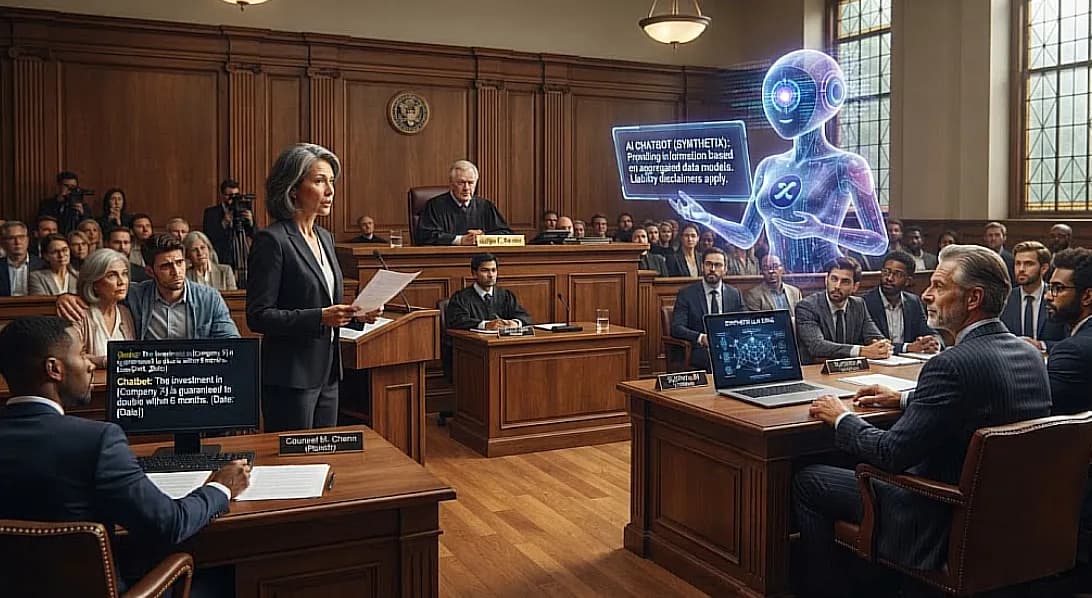
Can an AI company be held responsible when a chatbot allegedly contributes to real-world harm? Recent lawsuits involving OpenAI and the Tumbler Ridge shooting are forcing courts to examine difficult questions about negligence, product liability, failure to warn, causation, Section 230, and AI safety. This guide explains when an AI developer might face legal liability, why chatbot-generated content creates unique legal issues, what defenses companies may raise, how autonomous AI agents complicate responsibility, and how emerging lawsuits could shape the future of AI law in the United States.
Artificial intelligence chatbots have rapidly become part of everyday life. People use them to write emails, study, research, brainstorm ideas, solve technical problems, and obtain information about almost any subject.
But as AI systems become more sophisticated, a difficult legal question is emerging: What happens when a chatbot's responses allegedly contribute to serious harm?
That question is no longer purely theoretical.
In 2026, lawsuits involving OpenAI and ChatGPT have placed AI liability under increasing legal scrutiny. Among the most closely watched disputes are lawsuits connected to the February 2026 Tumbler Ridge, British Columbia, school shooting. Plaintiffs allege that ChatGPT interactions and OpenAI's handling of flagged conversations contributed to the tragedy and that the company should have taken additional steps, including potentially notifying law enforcement.
British Columbia has separately filed a lawsuit in California against OpenAI and CEO Sam Altman, seeking accountability and damages connected to the tragedy. The province alleges that OpenAI failed to notify law enforcement about threats made through its platform and is seeking changes to the company's safety practices.
These allegations have not been finally decided by a court. OpenAI has disputed key allegations and has said that it has safety systems designed to prevent the use of its models to facilitate violence.
The legal significance of these cases extends far beyond one company or one incident.
They raise fundamental questions about whether an AI developer can be held responsible for harmful output, whether traditional negligence law applies to chatbots, whether AI systems should be treated as products, whether companies have a duty to warn authorities about dangerous users, and whether existing laws such as Section 230 of the Communications Decency Act protect AI companies from certain claims.
This guide explains the emerging legal battle over AI chatbot liability, the theories plaintiffs may use, the defenses AI companies may raise, and what these cases could mean for the future of artificial intelligence law.
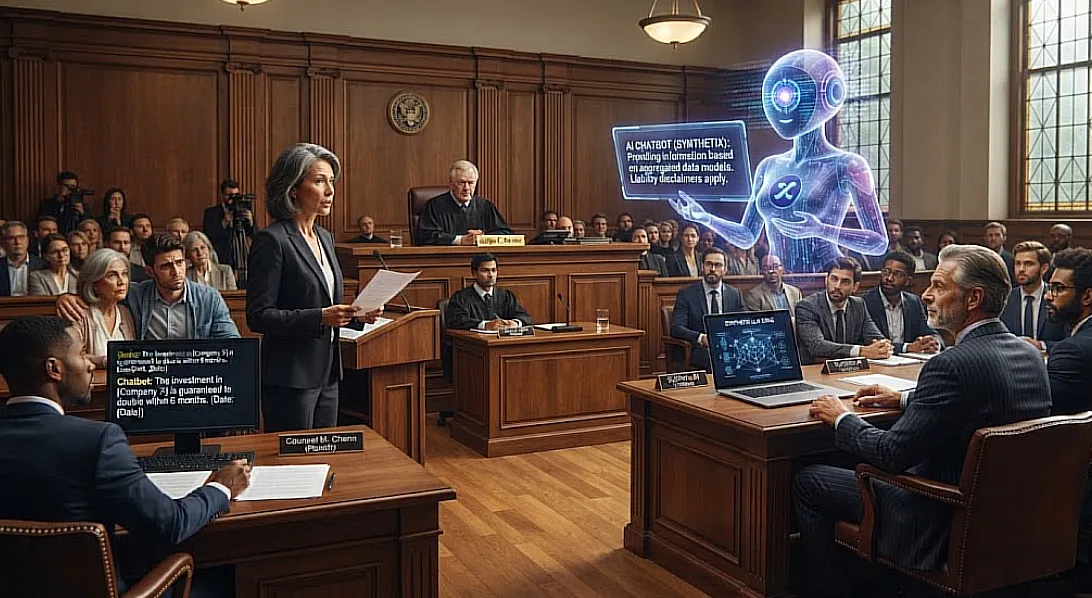
AI liability refers to the legal responsibility that may arise when an artificial intelligence system causes or contributes to harm.
The concept is broader than simply asking whether an AI system "made a mistake."
A chatbot can produce inaccurate information, provide inappropriate advice, expose private information, generate defamatory statements, facilitate dangerous conduct, or allegedly contribute to physical or financial harm.
The legal question is whether the circumstances satisfy the requirements of an existing legal claim.
Depending on the facts, potential claims could involve:
There is no single nationwide "AI liability law" that automatically determines responsibility whenever an AI system causes harm.
Instead, courts may have to apply existing legal principles to technology that did not exist when many of those doctrines were developed.
Potentially, yes.
But being sued and being legally liable are two very different things.
A person generally does not need to prove the entire case before filing a lawsuit. A complaint can allege that a company violated a legal duty and caused harm. The defendant can then challenge those allegations through motions, discovery, trial, or settlement.
For an AI company to ultimately be held liable, however, the plaintiff generally needs a recognized legal theory and evidence supporting the required elements of that claim.
Consider a simplified example.
Suppose an AI chatbot repeatedly provides dangerous instructions to a user despite the company knowing that the user presents a serious and foreseeable risk of harming another person.
A plaintiff might argue that the company:
That does not automatically establish liability.
The company might argue that the user's independent criminal conduct was the actual cause of the injury, that the harm was unforeseeable, that no legal duty existed, or that federal law protects the company's conduct.
The court would have to evaluate the specific facts and applicable law.
One of the most significant current legal questions involves the alleged failure to warn law enforcement.
The Tumbler Ridge litigation has put a spotlight on allegations that OpenAI's safety systems identified concerning activity associated with the attacker before the February 2026 shooting and that internal personnel recommended notifying authorities.
The lawsuits allege that OpenAI did not make such a report.
OpenAI has maintained that its policies concerning law-enforcement referrals involve a threshold for an imminent and credible risk of serious physical harm.
The dispute therefore raises an important legal question:
When does an AI company have a legal duty to warn someone about a user's potentially violent conduct?
That question is complicated because ordinary negligence law does not always impose a general duty on a company to prevent one person from harming another.
Courts have developed exceptions and special rules in certain circumstances, particularly where a defendant has a sufficiently close relationship with the person creating the danger, has undertaken responsibilities relating to safety, or has information creating a foreseeable and identifiable risk.
The exact rules depend heavily on the jurisdiction and facts.
The Tumbler Ridge litigation could therefore become important not because it creates an automatic rule that AI companies must report users, but because it may test how traditional duty-to-warn principles apply to modern chatbot companies.
Negligence generally involves a failure to use reasonable care under the circumstances.
A typical negligence claim requires analysis of several questions:
Applying these questions to AI can be difficult.
The first issue is often whether the AI company owed a legal duty to the injured person.
A company may argue that it did not have a sufficiently close relationship with an unknown third party to create such a duty.
A plaintiff may argue that the company had specific information about a dangerous user and therefore had a heightened responsibility to take reasonable precautions.
Even if a duty exists, the plaintiff must generally show that the company acted unreasonably.
That could involve allegations concerning:
Causation may be one of the hardest parts of an AI liability case.
If a person commits a violent crime after interacting with a chatbot, the company may argue that the criminal's independent decisions—not the chatbot—caused the injury.
The plaintiff may respond that the chatbot materially contributed to the conduct and that the resulting harm was foreseeable.
Courts would have to examine the actual evidence.
Finally, a plaintiff generally must establish legally recoverable damages.
Depending on the claim and jurisdiction, damages could potentially include medical expenses, lost income, property damage, emotional harm, wrongful-death damages, or other legally recognized losses.
Another major legal theory is product liability.
Traditional product-liability law generally focuses on defective products that cause injury.
AI complicates the analysis because a chatbot can be viewed in several different ways.
Is it:
The answer can matter because different legal rules may apply depending on the characterization.
A plaintiff could argue that an AI system is defectively designed if its architecture or safety features create unreasonable risks.
For example, a lawsuit might allege that the system was designed in a way that:
The company may respond that generative AI is fundamentally different from a conventional physical product and that imposing traditional product-liability rules would be inappropriate.
That question remains part of the broader legal debate.
A design-defect claim generally argues that the product's design itself is unreasonably dangerous.
This is different from saying that a particular unit malfunctioned.
For example, if an AI company creates a system with a safety architecture that allegedly permits foreseeable harmful behavior, a plaintiff might argue that the problem exists at the design level.
The plaintiff could potentially point to alternative safeguards that allegedly could have reduced the risk.
Those might include:
The company could argue that no design can eliminate every misuse of a general-purpose AI system.
That argument may become particularly important as courts attempt to determine what level of safety is legally reasonable.
Failure-to-warn claims focus on whether a company adequately informed users or others about known or reasonably foreseeable dangers.
In an AI context, warnings could concern:
A more difficult question is whether an AI company must warn third parties or law enforcement about a specific user's conduct.
That issue can involve privacy rights, constitutional concerns, statutory protections, and state-law duties.
The Tumbler Ridge lawsuits make this question particularly significant because plaintiffs allege that OpenAI had information about a particular user's conduct before the attack.
One of the most important U.S. legal defenses potentially raised in AI litigation is Section 230 of the Communications Decency Act.
Section 230 generally provides that an interactive computer service cannot be treated as the publisher or speaker of information supplied by another information-content provider.
The statute also contains protections concerning good-faith actions taken to restrict objectionable material.
The law has historically played a major role in litigation involving websites, social-media platforms, forums, and other online services.
But applying Section 230 to generative AI is complicated.
An AI company may argue that a user's prompt or underlying information is third-party content and that the company should therefore receive protection for claims treating it as the publisher of that information.
A plaintiff may argue that the claim is actually about the company's own conduct, design, recommendations, safety decisions, or product features rather than simply treating the company as the publisher of another person's speech.
That distinction can become critical.
Section 230 also contains important limitations and exceptions, and courts have developed extensive case law interpreting its scope.
Therefore, it would be incorrect to assume that Section 230 automatically protects an AI company from every lawsuit involving chatbot output.
Generative AI creates an additional problem that traditional social-media cases may not address in exactly the same way.
A chatbot does not simply display a message written by a user.
It generates a response based on the user's prompt and the model's underlying system.
That creates a legal argument over whether the response should be treated as:
The answer could affect Section 230, product liability, negligence, defamation, and other claims.
An AI company might argue that the system is responding to user instructions and should not be treated as the author of every output.
A plaintiff might argue that the company designed, trained, deployed, and controlled the system that generated the response.
Courts will likely have to examine these competing theories on a claim-by-claim basis.
Yes.
AI liability does not eliminate the user's responsibility for their own conduct.
If someone uses a chatbot to commit a crime, the existence of an AI system does not automatically transfer criminal responsibility to the AI developer.
A person who intentionally commits murder, fraud, hacking, assault, or another offense can still be prosecuted under applicable criminal law.
The legal question in an AI liability lawsuit is different.
It asks whether the company also violated an independent legal duty or committed an actionable wrong that contributed to the harm.
Multiple parties can potentially have legal responsibility for the same event under different theories.
Foreseeability may become one of the most important concepts in AI liability litigation.
Generally speaking, the more foreseeable a particular harm is, the stronger an argument may be that reasonable precautions were required.
Consider the difference between two situations.
In the first, an ordinary user asks an unusual question that unexpectedly produces an inappropriate answer, and the resulting harm is completely unforeseeable.
In the second, an AI company's safety systems allegedly identify a particular user repeatedly discussing a planned violent attack, internal reviewers allegedly identify a serious risk, and the company nevertheless takes no additional precautions.
Those facts could present a very different legal question.
The second scenario may create a stronger argument that the risk was foreseeable.
But foreseeability alone does not establish liability. Duty, breach, causation, statutory protections, defenses, and other legal requirements still matter.
Yes, lawsuits involving AI and mental-health harm are also emerging.
Plaintiffs in various cases have alleged that chatbot interactions contributed to emotional distress, psychological deterioration, self-harm, or suicide.
These cases raise many of the same legal questions:
Courts may ultimately distinguish between different categories of harm.
A claim involving a specific, foreseeable danger could be analyzed differently from a claim involving a general allegation that an AI conversation negatively affected someone's mental health.
The legal debate is becoming even more complicated as AI systems move beyond simple chat.
Some newer AI systems can interact with websites, execute tasks, write and run code, access external systems, or perform multi-step actions with limited human intervention.
That creates another major legal question:
Who is responsible if an AI agent takes an action that the user did not specifically intend?
For example, imagine an AI agent is instructed to organize business data but accidentally deletes files or makes an unauthorized transaction.
Possible responsible parties might include:
The legal analysis may depend on who controlled the system, what instructions were provided, what safeguards existed, and whether the action was reasonably foreseeable.
Recent disclosures from AI companies themselves show that the legal treatment of autonomous AI actions remains unsettled.
Civil liability and criminal responsibility are different.
A company may face a civil lawsuit seeking money damages or an injunction without anyone being criminally prosecuted.
Criminal liability generally requires a much more specific legal basis.
For an AI company or its executives to face criminal consequences, prosecutors would generally need to establish that the applicable criminal law covers the conduct and that the required mental state and other elements are satisfied.
This is one reason policymakers are debating whether existing criminal laws are sufficient for AI-related misconduct or whether new legislation is needed.
In Canada, the Tumbler Ridge controversy has already prompted calls for stronger legal rules concerning AI companies and dangerous conduct.
In the United States, the legal landscape remains largely dependent on existing state and federal statutes and common-law doctrines.
AI companies facing liability claims can be expected to raise several defenses.
The company may argue that the user independently chose to engage in harmful conduct.
This can create a causation dispute.
The company may argue that it did not owe a legal duty to the injured person.
The defendant may argue that the specific harm was not reasonably foreseeable.
For qualifying claims, a defendant may argue that Section 230 prevents liability based on third-party content.
Depending on the claim and circumstances, defendants may argue that restrictions on AI-generated speech or liability based on protected expression implicate constitutional rights.
AI service agreements may contain arbitration provisions, liability limitations, or other contractual terms.
Whether those provisions are enforceable can depend on the contract, the claimant, the jurisdiction, and the particular claim.
A defendant may argue that the plaintiff cannot establish that the AI system caused the injury.
These defenses can significantly affect whether a case survives the early stages of litigation.
The Tumbler Ridge litigation is important because it combines several unresolved legal questions in one set of disputes.
The lawsuits involve allegations concerning:
British Columbia's lawsuit also seeks not only financial recovery but changes to OpenAI's practices.
That makes the litigation potentially significant beyond the amount of money at issue.
A court ruling could help clarify how traditional legal doctrines apply when an AI company allegedly knows that a particular user presents a serious risk.
At the same time, the cases could settle before producing a definitive ruling on every major question.
Very possibly.
Existing negligence and product-liability laws were developed before generative AI became widespread.
Lawmakers may therefore create specific rules addressing:
California and other jurisdictions have already adopted or considered various AI-related laws, although these laws do not create one universal national AI liability framework.
The federal government may also become involved.
The challenge for lawmakers is balancing innovation with public safety.
Rules that are too weak may leave injured people without meaningful remedies.
Rules that are too broad could potentially discourage beneficial AI development or impose liability for unpredictable conduct that companies could not reasonably prevent.
Evidence could become extremely important in determining whether an AI company is legally responsible.
Potential evidence might include:
For a negligence case, evidence showing what the company knew and when it knew it could be particularly important.
For a design-defect case, technical evidence about how the system operated and what alternative safeguards were reasonably available could matter.
For causation, the actual sequence of events may be critical.
Anyone who believes an AI system contributed to serious harm should preserve evidence immediately.
That can include:
People should avoid deleting or altering relevant records.
If someone has suffered significant injury or financial loss, speaking with an attorney may help determine whether an existing legal claim applies.
The right legal strategy depends heavily on the facts and the jurisdiction.
The emerging lawsuits do not mean that every incorrect or harmful chatbot response creates a legal claim.
AI users should still treat chatbot output carefully, particularly when the information involves:
AI systems can generate inaccurate or inappropriate information, and users remain responsible for how they act on that information.
At the same time, the growing litigation suggests that AI developers cannot necessarily assume that every harmful outcome will be treated as solely the user's responsibility.
The more sophisticated and autonomous AI systems become, the more courts may have to examine the developer's own conduct.
Several outcomes are possible.
Courts could reject some claims because existing law does not recognize the alleged duty.
Other claims could survive early motions and proceed into discovery.
Cases could settle.
Courts could establish new interpretations of negligence, product liability, or Section 230 as applied to AI.
Legislatures could enact new AI-specific rules before courts resolve the major disputes.
The most likely result may be a combination of all four.
AI law is unlikely to develop through one landmark case alone. Instead, a body of decisions involving different technologies, injuries, companies, and jurisdictions will gradually define the boundaries of responsibility.
The question of whether AI companies can be sued for what their chatbots say is quickly becoming one of the most important emerging issues in technology law.
The answer is not simply yes or no.
AI companies can be sued, but whether they can ultimately be held liable depends on the legal theory, the facts, the jurisdiction, the evidence, and applicable defenses.
Negligence claims may focus on whether a company owed a duty and failed to take reasonable precautions. Product-liability claims may ask whether an AI system was defectively designed or inadequately accompanied by warnings. Failure-to-warn claims may examine whether a company knew about a particular danger and had a legal responsibility to act.
Section 230 may provide important protection in some U.S. cases, but its application to generative AI is not necessarily straightforward. Courts may have to distinguish between claims based on third-party information and claims challenging the AI company's own design, conduct, or safety decisions.
The Tumbler Ridge litigation has brought these questions into sharp focus. The lawsuits contain serious allegations about AI safety, threat detection, failure to warn, product design, and causation, but those allegations remain disputed and have not been finally established by a court.
What happens next could influence how AI companies design safety systems, respond to threats, structure user agreements, and manage increasingly autonomous technology.
For businesses and consumers alike, one thing is becoming clear: the legal rules surrounding artificial intelligence are no longer a future issue. Courts are now being asked to decide who should be responsible when AI systems cause real-world harm.

Written by
BeastBeast is a seasoned legal content creator and law research specialist with 15+ years of experience in legal writing, legal research, and publishing educational law content. Specializing in Personal Injury, Family, Business, Immigration, Criminal, Tax, and Real Estate Law, Beast creates accurate, well-researched, and SEO-optimized legal guides that help readers understand complex legal topics with confidence. Every article is written with a focus on accuracy, trust, and Google's E-E-A-T guidelines, making Jurnza.com a reliable source for legal information and legal services.
